Her Story
About Cassia
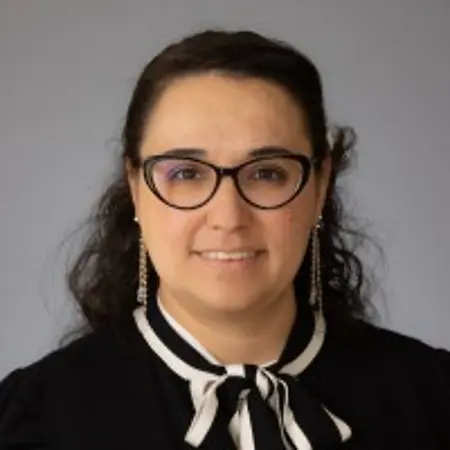
Cassia Bomer Galvao is a maritime business scholar, educator, and industry specialist who serves as an Associate Professor at Texas A&M University’s Galveston campus. With tenure awarded in 2024, she plays a key role in advancing maritime education through innovative teaching and research that bridges business, policy, and real-world industry practice. Her work focuses on preparing the next generation of maritime professionals while strengthening connections between academia and the global shipping and logistics sectors.
Dr. Galvao’s professional philosophy centers on being a “connector” between theory and practice in the maritime industry. She specializes in maritime business development, with particular expertise in port development, shipping routes, and the intersection of business, law, and policy. Her research explores critical aspects of the Blue Economy, including port–city relationships, sustainable shipping, ESG practices, and workforce development. Through both her teaching and scholarship, she is committed to making maritime education more accessible, relevant, and aligned with the evolving needs of global trade and coastal communities.
Before transitioning into academia, Dr. Galvao built an extensive career in international maritime shipping and logistics, working in marketing, sales, and business development for container shipping companies. With over 25 years of combined industry and academic experience, she has firsthand insight into the operational challenges that can arise between ports and shipping companies—an understanding that inspired her pursuit of advanced degrees in political economy and social sciences. A Fulbright Scholar, she later joined Texas A&M Galveston, where she continues to develop new courses, publish research, and expand workforce training initiatives, all while contributing actively to the global maritime community.
Her Interview
Ten minutes with Cassia
01What do you attribute your success to?
I attribute my success to the Fulbright scholarship, which was not just an award itself but a launch pad for everything that came next. I spent a lot of years building my rocket, but the Fulbright was really the launch pad. It was a perfect combination of circumstances - it required full-time education, so I had to quit my corporate job, but it also opened up opportunities for me to interact with this whole new world of applied research in port development and maritime shipping. The timing was also an arrangement of God, because I was able to be full-time at home helping my mom take care of my dad during his illness, while completing my studies to be able to apply for my position at Texas A&M. My dad passed away 2 months after I moved to the United States, but I'm sure he was very happy to see me moving forward. The family influence was also crucial - my parents always pushed us to travel and do study abroad programs, and my dad's work in Customs and Border Control meant our dinner conversations were always about international trade, which shaped my career interests from an early age.
02What’s the best career advice you’ve ever received?
The best career advice I received came from two of my mentors during my Master of Science program in Brazil. They suggested that I should continue pursuing education and maybe earn a PhD. At that time, I thought my PhD wasn't going to do anything for business, because I was already in a company doing what I wanted. But they insisted and said, 'You have this interest for education and scholarship, you should try this.' It took me a few years to fully decide, but their encouragement to pursue the academic path alongside my business career ultimately led me to where I am today. They saw something in me that I didn't see in myself at the time - that I could bridge the gap between the practical business world and academic research.
03What advice would you give to young women entering your industry?
Young women entering the maritime industry should actively seek mentorship, engage with professional and women-focused organizations, and commit to continuous learning while gaining practical experience to effectively bridge the gap between industry practice and policy.
04What are the biggest challenges or opportunities in your field right now?
The biggest challenge and opportunity in my field right now is AI and how it's transforming education. This is no joke - this is the genie out of the bottle type of thing. We have the first generation of students graduating this May who had AI at their fingertips throughout their entire college career, since ChatGPT launched in 2022. We're now getting a new crop of students who had AI during their high school years, and it's changing the way they think and process information. As educators, we had to catch up - there was no way to ignore it or completely avoid it. I fully embrace it as much as I can in my classes, and my students are actually required to use AI for some assignments. But we're making adjustments every semester because there's still a lot of uncertainty. Some students are scared of academic honesty problems, while others are repulsive to it. The challenge is that older generations like mine were wired to look for information and make sense of what we find, but these kids are not wired like that. If AI becomes their reality rather than just a tool, we have some issues. I don't think we've achieved an ideal model with AI in higher education yet - it's still a very fluid situation. Beyond AI, another major opportunity is making maritime education more accessible and visible. Maritime is almost an invisible industry in the United States - people only know about it if they have family involved or if there's a disaster. We need to expand maritime education beyond traditional vessel officers to serve the nine shore-based jobs needed for every officer we produce.
05What values are most important to you in your work and personal life?
The most important values to me are staying relevant and continuing to serve others. We only exist as public servants because we serve the public and our students. I've seen some colleagues get stuck in nostalgia or legacy after achieving something big, but I believe we need to keep moving forward and adapting. Students change, and while I wish we didn't have to spend so much time teaching basic things, these are the students we have, so let's try to help them rather than just criticize. I'm committed to meeting students where they are and providing opportunities for those who may not have the time, money, or ability to be in school for 4 years or even 18 months for an MBA. Another core value is being a connector and making knowledge accessible. I love what I do and I love my students, and I recognize that education shouldn't just be for those who can afford traditional programs. Family is also deeply important to me - I make all financial decisions over $20 with my husband because we share finances 100%, and I don't make decisions without talking to him. The timing of my Fulbright was also meaningful because it allowed me to help my mom take care of my dad during his illness while completing my studies, which I see as an arrangement of God.
Join Influential Women and start making an impact. Register now.