Explore why strategy fails without understanding human behavior. Discover how small shifts in awareness and intentional actions compound to create lasting organizational transformation and meaningful change.
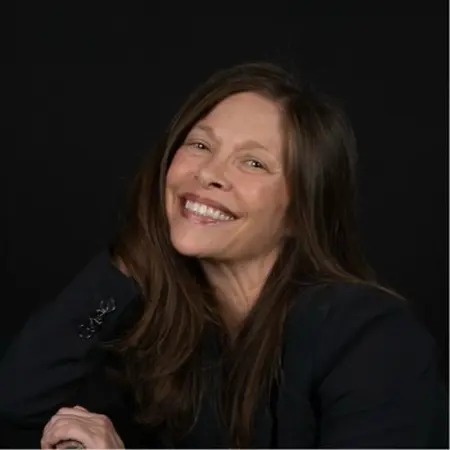
Influential Woman · Sustainability | Circular Economy | Behavioral Systems | Leadership Transformation
Cassie Gruber
Founder, CALM Impact | Circular Economy & Behavioral Systems Leader, CALM Impact & Circular Bound
Buffalo, NY
1Article published
5Awards received
Her Story
About Cassie
I started my career as an entrepreneur, building an electronic recycling company in Buffalo, NY. After transitioning into corporate roles, I spent over 20 years working across global organizations focused on sustainability, circular economy, and systems transformation.
In my most recent role at Jabil, I led Circular Economy strategy and services across 16 industries, with responsibility for Scope 3 and global program development. Over time, I began to see a consistent pattern: organizations had strong strategy, strong capability, and strong intent — but struggled to translate that into sustained, consistent behavior at scale.
That insight led me to build CALM Impact.
CALM Impact is designed to make human behavior — the underlying driver of performance, culture, and decision-making — measurable and visible in a way that organizations have never had access to before. It combines emotional intelligence, habit formation, and behavioral data into a system that supports both individual growth and enterprise-level insight, while keeping all personal data private.
I built the platform independently, including backend development and UX/UI design, drawing on my background in Art/Philosophy and years of applying these methods across teams and functions.
My work is grounded in a simple belief:
we cannot transform systems without first understanding and strengthening the human behaviors within them.
Her Interview
Ten minutes with Cassie
01What do you attribute your success to?
I would attribute my success to perseverance and accountability. I’ve experienced failures, unexpected challenges, and moments where I had to take a hard look at my own decisions. In each case, I chose to take full responsibility, learn from it, and keep moving forward.
I’ve never allowed setbacks to define me. Instead, I use them as data points—opportunities to grow, refine my thinking, and strengthen my approach. That combination of ownership and a forward-looking mindset, especially during difficult moments, has been foundational to everything I’ve achieved.
02What’s the best career advice you’ve ever received?
The best advice I’ve received is to be yourself—to show up as your authentic self.
We often hesitate to do that because of fear, even if we don’t label it that way. It shows up as self-doubt, hesitation, or trying to fit into what we think others expect. But the advice that stayed with me is to lean into who you truly are, rather than hiding behind a version of yourself you think is more acceptable.
Authenticity builds trust, clarity, and consistency. It allows you to lead and contribute in a way that is sustainable and real.
03What advice would you give to young women entering your industry?
Don’t take things personally, and don’t underestimate your value.
We are still operating in environments that can feel imbalanced at times. It’s important to stay grounded in who you are, rather than internalizing external dynamics. Be confident in your perspective, remain open-minded, and lead with both strength and kindness.
Most importantly, don’t settle. Know your worth, continue to grow, and pursue opportunities that align with your potential—not just what feels safe or expected.
04What are the biggest challenges or opportunities in your field right now?
The biggest challenge is that organizations are still hesitant to address human behavior directly. Conversations around behavior often feel uncomfortable because they touch on emotion, identity, and patterns we’ve built over time. As a result, many companies focus on outcomes and performance, without fully understanding the behaviors driving them.
Another challenge is that leadership development is often treated as a one-time event rather than a continuous, measurable system. Without reinforcement, even the best strategies and training programs don’t sustain change.
The opportunity is significant. Human behavior is the operating system behind every decision, relationship, and system we build. When we begin to understand and measure those patterns, we unlock a new level of clarity and impact.
If individuals and organizations can become even slightly more intentional—more aware, more present—we begin to shift how decisions are made, how people interact, and how systems perform. That creates the potential for meaningful, lasting change at scale.
05What values are most important to you in your work and personal life?
At the center of everything for me is family—being present, aligned, and intentional with how I invest my time and energy.
In my work, integrity is non-negotiable. I look for alignment in values, purpose, and how people approach what they do. Diversity, inclusion, and respect are essential components of that, not just as concepts, but in how they show up in real decisions and behaviors.
When I evaluate partnerships or opportunities, I’m not just looking at what an organization does, but why they do it and how they operate. For me, meaningful work and strong relationships are built on a foundation of trust, integrity, and shared purpose.
Her Content Hub
Articles by Cassie
The Operating System Behind Every Decision
Why human behavior, not strategy, is the real leverage point for organizational change.

Most organizations today are not lacking strategy.
They have sustainability goals, transformation initiatives, leadership development programs, and access to more data than ever before. On paper, the path forward is often clear.
And yet, progress stalls.
Not because people don’t care. Not because organizations aren’t capable. But because we are still trying to solve complex, systemic challenges without fully understanding the human behavior underneath them.
Human behavior is the operating system of everything—our decisions, our relationships, and the systems we build and operate within. It shapes how strategy is executed, how teams interact, and how organizations respond under pressure.
But it is also the one area that remains largely unmeasured.
Most organizations track performance, output, and results. Very few have visibility into the behavioral patterns that are driving those outcomes—things like emotional regulation, decision-making under pressure, communication dynamics, or how trust is built and eroded in real time.
As a result, leadership development is often treated as an event rather than a system. Training happens, insights are gained, but without consistent reinforcement, behavior does not change in a sustained way.
Over time, this creates a gap between intention and execution.
We see it in sustainability. We see it in culture transformation. We see it in operational environments where pressure leads to reactive decisions instead of intentional ones.
The opportunity is not to add more strategy.
The opportunity is to better understand and strengthen the human layer underneath it.
Because even a small shift in awareness—becoming slightly more conscious, slightly more present, slightly more intentional—can begin to change how decisions are made and how people interact. And those shifts compound.
One leader shows up differently, and it influences a team. A team begins to operate differently, and it impacts adjacent teams. Over time, those changes begin to shape culture.
This is where meaningful, lasting transformation actually happens.
Not in a single initiative, but in the accumulation of small, consistent behavioral shifts.
If we want to move the needle on the challenges we are facing—whether in business, sustainability, or society—we have to start by looking at ourselves more honestly.
Because the systems we are trying to change are, ultimately, a reflection of us.
Join Influential Women and start making an impact. Register now.