Her Story
About Catherine
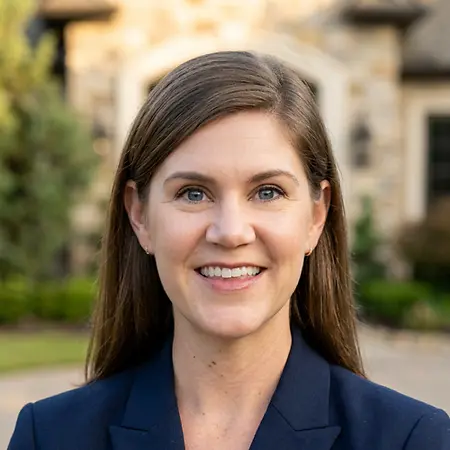
Catherine Gibson is the Project Director of the Southwest Boundless Collaboration with the Arizona Food Bank Network, based in Fort Worth, Texas. In this role, she leads a multi-state, multi-partner initiative focused on increasing access to fresh produce across food banks in the Southwest and within the Feeding America network. With a background in international development and program management, she brings extensive experience in coordinating complex, cross-sector partnerships to advance food security and equitable access to resources.
Prior to her current position, Catherine spent more than a decade working in international development, including senior roles with the Center for International Private Enterprise (CIPE) and the Organization of American States (OAS). Her work focused on program management, democratic governance, private sector engagement, and supply chain security initiatives across Latin America and the Caribbean. She has managed multi-million-dollar portfolios funded by U.S. government and international donors, overseeing projects that strengthened regional collaboration and institutional capacity.
Catherine’s professional path reflects a long-standing commitment to mission-driven, collaborative work. Her interest in food systems began years earlier through exposure to hunger and food access initiatives, which eventually guided her transition into food banking in 2023. Today, she applies her expertise in strategic partnership-building and facilitation to convene more than 20 stakeholders across countries and organizations, working to create systems that move surplus food more efficiently to communities in need.
Her Interview
Ten minutes with Catherine
01What do you attribute your success to?
I can't take full credit for my success. I've been prepared for all of the opportunities that come before me, but a lot of it is just the universal lining, and doors opening, and people wanting to work with me and wanting to give me a chance. You have to be prepared for any opportunity that comes, but at the end of the day, a lot of it is just out of your hands. What I contribute to my success is being prepared and also just being aware that it doesn't all depend on me. You have all of these experiences, and you are prepared for the opportunities, but you don't really know what's going to pop up.
02What’s the best career advice you’ve ever received?
The best career advice I've received is to remember that there are people behind every position. You're not just working on a project or for an organization - you're working with people, and they really are the most important at the end of the day. Yes, you need to keep the project rolling, make your deliverables, and do all these things, but you're dealing with humans. You have to take that into consideration. You have to be accountable for yourself and hold others accountable, but you don't have to be a pushover just because you're people-oriented. Getting the best out of people also includes accountability and a certain level of excellence. I got this advice from someone in my previous position when we were doing a lot of growing - you gotta work with these people, you gotta hire people that your team wants to work with.
03What advice would you give to young women entering your industry?
For young women entering food banking, I would say you really have to protect your mind and your heart. So many people in this industry give all of themselves because the need is so great, and it's on your heart, and it's in you that you want to help people. But you have to create a little bit of space, and you have to remember that this is a professional environment. Yes, I am mission-driven, but I have to take care of myself. You will burn out extremely quickly in this industry if you don't set pretty clear boundaries about that. For international development, my advice would be to wait a few years and see how things go, because that industry has been slashed pretty significantly right now.
04What are the biggest challenges or opportunities in your field right now?
The biggest challenge in food banking right now is that people give so much of themselves to their jobs in this industry that it becomes personal. Any programming that someone has been working on is not a program at work, it's their program. So if you want to change things, if you're trying to make things more efficient, or if you're trying to include another actor in a system, it is very, very difficult. It's not a normal professional environment because people give so much of their own blood, sweat, and tears, money, and time outside of work to this mission. That's beautiful and really unique, but it also creates different challenges. You have people who are like, 'This is my industry, this is my food bank, this is my program,' and times have changed. We have apps on our phone now, and we have to update what we're doing. The trickiest thing is learning how to navigate and how to be respectful of how much people are invested, but also navigate the fact that things have to change sometimes. Nothing can stay the same or it's not gonna survive.
05What values are most important to you in your work and personal life?
One of the most important values I've been wrestling with this past year is accountability, because before I really saw it as punitive, and now I see it as empowering. If you don't know where you stand towards reaching your goal, you're not going to reach it. That definition shift has been really empowering to me in my work, and it takes all the shame away from not having completed something the way I wanted to. I strive for excellence, so if I don't get it, I can be rather hard on myself and others, to be honest. Having this kind of definition of accountability which isn't punitive - it's just saying, this is where we are, this is where we're going - is really important. You can switch your finish line because of certain factors, but you can't do that unless you're clear and accountable. I also believe that one of my goals in life is to make a positive impact through good relationships. You want to remember that you're not just working on a project or for an organization - you're working with people. They really are the most important at the end of the day. My faith also inspires my work - it's mission-driven, feeding the hungry. There are different verses in the Old Testament and the New Testament about making sure that you're taking care of your community, feeding the hungry, clothing the naked, and taking care of people.
Join Influential Women and start making an impact. Register now.