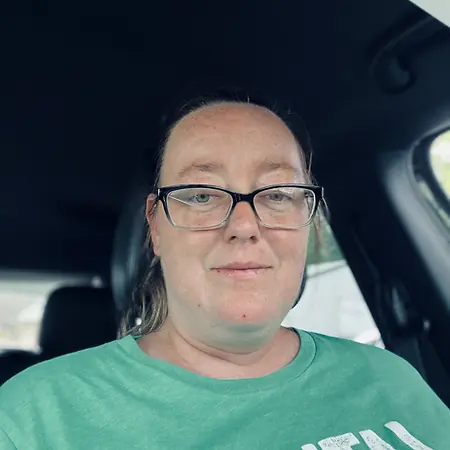
Her Story
About Catherine
Catherine Mitchell is the founder of Unstoppable Faith, a community-centered initiative dedicated to supporting individuals and families across the rural areas of Black, Missouri, and surrounding communities. Backed by nearly 30 years in medical, mental health, and social services, she built her foundation on the front lines as a Certified Nursing Assistant and Level 1 Medication Aide before serving as a community caseworker with organizations like Mineral Area CPRC and the Community Counseling Center.
Through Unstoppable Faith, Catherine closes vital service gaps in rural resource deserts. She provides direct community navigation—connecting individuals to stable housing, utility assistance programs, food pantries, and public benefits—alongside practical life-skills coaching in areas like household budgeting and time management. Currently completing her Bachelor’s degree in Social Work with plans to pursue professional counseling licensure, she continually pairs real-world frontline insight with ongoing academic training.
Catherine’s work is driven by creative problem-solving and an unwavering commitment to meeting people exactly where they are. Inspired by early career mentors who taught her that human struggle rarely fits into rigid, black-and-white boxes, she steps outside standard systems to craft flexible, dignity-centered solutions for complex challenges. Anchored by her personal faith and centered by her family—especially her mother and three daughters—Catherine is dedicated to creating a safe, welcoming harbor where rural families can lay down heavy burdens, rebuild stability, and move forward with confidence.
Her Interview
Ten minutes with Catherine
01What do you attribute your success to?
At its core, my success hasn’t come from sitting behind a desk or handing someone a stack of paperwork—it has come from truly walking alongside people when life feels overwhelming. I built this work out of my own lived understanding of resilience, single parenthood, and what it really takes to rebuild steady ground when the odds feel stacked against you. By choosing authentic connection over red tape, meeting neighbors right where they are, and ensuring support is accessible regardless of financial strain, I’ve been able to earn the kind of trust that bureaucratic systems simply cannot manufacture. My clients don't just see a service; they see someone who believes in their dignity, understands their daily battles firsthand, and refuses to let them navigate the road to self-sufficiency alone.
02What’s the best career advice you’ve ever received?
Early in my career as a caseworker, my supervisor gave me advice that permanently redefined how I serve others: human struggle rarely exists in black and white, and you cannot solve messy, real-life crises with rigid, textbook rules. He challenged me to look past surface behaviors, truly observe the daily battles people are fighting, and draw upon my own lived resilience to meet them with genuine empathy. That perspective taught me to think outside conventional systems, discard cookie-cutter checklists, and build creative, dignity-centered solutions that honor the full complexity of every individual I walk alongside.
03What advice would you give to young women entering your industry?
The most critical advice I can give to any woman entering this field is to never let pride talk you out of reaching for support when life starts unraveling. In this industry, we spend our days being the rock for everyone else, which can make you feel like you aren't allowed to crack, struggle, or show vulnerability. But needing help is not a failure, and it does not make you weak or unqualified—it makes you human. Put your pride aside, reject the fear of judgment or condemnation, and give yourself the exact same grace, compassion, and practical care you fight so hard to give to others every single day.
04What are the biggest challenges or opportunities in your field right now?
In a rural pocket like Black, Missouri, geographic isolation and resource deserts present both our steepest hurdle and our greatest opportunity. When basic medical care or mental health counseling requires an hour of highway driving and reliable transportation that many families simply don't have, standard referral systems fail. That systemic gap creates an urgent, practical opening: bringing services directly to where people live instead of waiting for them to travel. My primary focus is bridging that divide by building community partnerships to host monthly mobile healthcare days and visiting mental health providers right in town. By turning resource scarcity into decentralized, hyper-local outreach, we can replace long-standing barriers with consistent, dignity-centered access.
05What values are most important to you in your work and personal life?
The values that anchor my life and work are rooted in unwavering faith, intentional peace, and deep devotion to family. My faith is my compass and fuel; it reminds me daily why I show up, gives me strength through the valleys, and fuels my commitment to serving others. Because you cannot pour from an empty vessel, I protect small, non-negotiable moments of stillness—even if it is just five or ten quiet minutes to breathe, pray, and reset my spirit. In my work, that inner peace translates directly into creating an absolute safe haven for my clients, offering a judgment-free space where people can lay down their burdens and be met with genuine dignity. Underneath it all is my family: my daughters and my mother are my constant heartbeat, holding me accountable to what matters most and keeping my feet firmly planted on the ground no matter what storm comes our way.
Join Influential Women and start making an impact. Register now.