Her Story
About Catherine
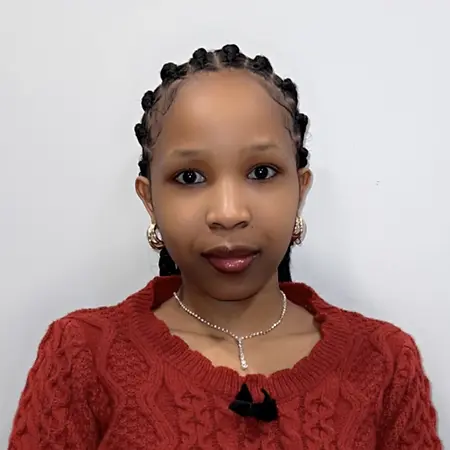
Dr. Catherine Rono is a cancer immunology scientist at Roswell Park Comprehensive Cancer Center, focused on harnessing the immune system to better recognize and eliminate cancer. Her work centers on understanding how tumors evade immune detection and developing strategies to restore effective immune responses. By uncovering ways to reprogram immune cells and overcome tumor-driven suppression, she aims to help advance safer, more precise therapies that improve survival and quality of life for patients with limited treatment options.
Dr. Rono’s scientific journey began at Spelman College, where she earned her Bachelor’s degree in Biology with a minor in Public Health. It was there that her curiosity deepened into purpose. She became fascinated by how cells sense stress, adapt, and fight to maintain balance, questions that now sit at the heart of her cancer immunology research. As an undergraduate researcher and scholar in the Ethel Waddell Githii Honors Program, she contributed to peer-reviewed publications spanning molecular, computational, and translational science and graduated with honors. She went on to earn her PhD in Biological Sciences from Michigan Technological University, where her research excellence was recognized through multiple competitive awards, including the 2024 Doctoral Finishing Fellowship, the 2023 Songer Research Award for Human Health, the 2023 HRI Summer Graduate Fellowship, and an Outstanding Teaching Award.
Today, Dr. Rono continues to actively contribute to the scientific community by presenting at scientific meetings, serving as a journal editor and reviewer, participating in admissions committees, and mentoring emerging scientists. Her career reflects a deep commitment to improving human health, advancing inclusive research environments, and supporting the development of the next generation of scientists.
Her Interview
Ten minutes with Catherine
01What do you attribute your success to?
I attribute my success to a deep commitment to research that translates into better treatments, longer lives and greater equity in healthcare. That passion keeps me motivated, pushes me to continuously grow and allows me to bring energy, focus and purpose to my work every day.
02What’s the best career advice you’ve ever received?
To stay resilient and keep an open mind. Opportunities do not always come in the form we expect, so being adaptable matters. Networking is essential not just making connections, but maintaining genuine relationships over time. Ask for feedback, learn from every experience and keep moving forward.
03What advice would you give to young women entering your industry?
I would encourage young women to step boldly into STEM fields. Do not let the fear of doing something imperfectly stop you from doing it at all. Representation truly matters and we stand on the shoulders of women who pushed boundaries and created opportunities we now benefit from, and we have a responsibility to continue that legacy.
04What are the biggest challenges or opportunities in your field right now?
Cancer research today faces interconnected scientific, structural and societal challenges that slow progress and deepen inequities. These include persistent disparities in outcomes across racial, ethnic, and socioeconomic groups driven by delayed diagnosis, limited access to quality care and underrepresentation in clinical trials. Progress is further slowed by unstable funding, costly and complex clinical trial systems, and restrictive eligibility criteria that limit participation and perpetuates existing disparities. Addressing these issues through sustained investment, robust data infrastructure, and equity-focused policies is essential to ensure that advances in cancer research benefit all communities.
05What values are most important to you in your work and personal life?
I believe in showing up as my authentic self and staying consistent and committed to my craft. I understand that growth is built through dedication to the process, not perfection. A willingness to learn and adapt matters more to me than having everything figured out. I also value mentorship, advocacy and creating spaces where others feel supported, seen and truly valued. If my presence in science can help even one person believe they belong here, that is the kind of impact worth striving for.
Join Influential Women and start making an impact. Register now.