Her Story
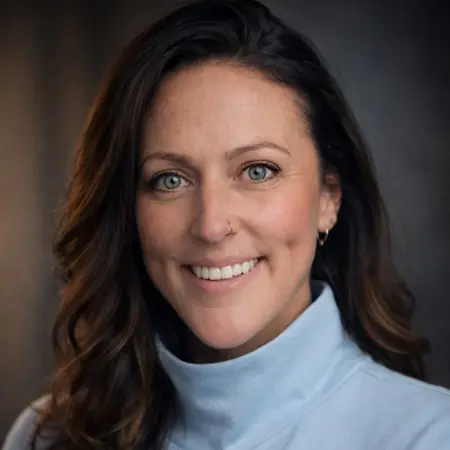
About Celina
Celina Toney doesn’t wait for permission, she builds what’s missing.
As a Department Chair and Associate Professor at Red Rocks Community College, Celina leads high-impact allied health programs designed to do more than educate, they launch careers. Known for her bold, systems-level thinking, she has reimagined traditional healthcare education into something far more relevant, immersive, and workforce-aligned.
But her work doesn’t stop in the classroom.
As Board President of Casa Inmigrante, Celina is helping drive a movement across Colorado to expand access to healthcare for underserved communities. From large-scale health fairs to the development of student-led clinics, her work connects education directly to impact, training future healthcare professionals while actively serving those who need it most.
Her leadership style is unapologetically action-oriented: if there’s a gap, she fills it. If there’s a better way, she builds it.
Outside of higher education, Celina is the founder of Hive House Holdings, LLC. A creative and entrepreneurial platform where strategy meets lifestyle. Through her brand Vibe Hive, she curates elevated spaces, experiences, and events that feel intentional, high-impact, and accessible, proving that great design and unforgettable experiences don’t have to come with an unrealistic price tag.
She is also quietly developing forward-thinking projects that challenge how we approach career exploration and workforce readiness, bringing a more modern, intuitive, and human-centered lens to how people discover and pursue their paths.
At her core, Celina is a builder. Of programs. Of partnerships. Of people.
Whether she’s leading in higher education, shaping community health initiatives, or creating something entirely new, one thing is consistent, she doesn’t just participate in systems, she transforms them.
Her Interview
Ten minutes with Celina
01What do you attribute your success to?
I attribute my success to learning how to turn vision into execution, and being bold enough to act on it.
I’ve always had big ideas, but I realized quickly that ideas don’t create impact, follow-through does. Once I became intentional about what I take on and committed to seeing it through, everything started to shift.
I also made a conscious decision to stop waiting for permission. If I see a gap, I move on it. If there’s an opportunity to build something better, I step into it. That mindset has allowed me to lead, create, and expand in ways I wouldn’t have if I had waited to be invited.
And a huge part of my “why” comes from my personal health journey. It shaped how I see healthcare, how I teach it, and the standards I expect from my students. For me, it’s not just about training competent professionals, it’s about developing people who lead with both skill and humanity.
My success comes from that combination: vision, execution, and purpose, and a willingness to show up fully in every space I’m in.
02What’s the best career advice you’ve ever received?
The best professional advice I’ve ever received completely reframed how I move in my career: be intentional, not just ambitious.
I’ve always been someone with big ideas and a lot of energy, but I learned that ideas alone don’t build impact. Execution does. Being intentional about what I start, and committed enough to finish it, has been one of the biggest shifts in how I lead.
I was also told something I think more women need to hear: you don’t need permission to lead.
If you see something that needs to be built, fixed, or elevated, go do it. Step into the role before anyone formally gives it to you.
And the one that still pushes me every time I walk into a new room: stop waiting to be chosen.
Introduce yourself. Start the conversation. Take up space. The people who create opportunity aren’t always the most qualified, they’re the ones willing to show up and engage first.
That advice gave me the confidence to move differently, and it’s something I carry into every room I walk into.
03What advice would you give to young women entering your industry?
The advice I would give to young women entering this field is simple: don’t wait to be chosen, decide that you belong and start moving.
This industry, like many others, can feel intimidating at first. You may walk into rooms where you don’t see yourself reflected, or where it feels like everyone else has more experience, more connections, or more confidence. But the truth is, the people who create the most impact aren’t always the ones with the most traditional path, they’re the ones willing to show up, do the work, and keep going.
I truly believe the future belongs to the disruptors and the underdogs, the ones who think differently, challenge outdated systems, and aren’t afraid to stand on their own two feet. If that’s you, don’t shrink it. Lean into it.
Your background does not define your ceiling. Where you come from, how you were raised, or who you know does not determine how far you can go. What matters is your commitment, your willingness to learn, to stay consistent, and to keep moving forward even when things feel uncertain.
And above all, don’t wait until you feel “ready.” Confidence comes from action, not the other way around.
Start where you are. Speak up. Take up space. And trust that you are capable of building something meaningful, because you absolutely are.
04What are the biggest challenges or opportunities in your field right now?
The biggest challenge in healthcare education right now is that the system hasn’t caught up to reality.
We’re operating in a time where federal funding priorities are shifting, access to healthcare is still inconsistent, especially for underserved communities, and the demand for skilled professionals continues to grow. And yet, many education models are still built for a version of the workforce that no longer exists.
We can’t keep preparing students for a system that’s already behind.
But the opportunity in that is huge.
This is the moment to disrupt what’s not working. To build programs that are actually aligned with workforce needs. To create learning environments that reflect real clinical settings, not just textbooks. And to stop treating education and community impact as separate things.
Because they’re not.
When we connect education directly to service, through things like student-led clinics and community partnerships, we’re solving two problems at once: we’re training better professionals, and we’re expanding access to care in real time.
The future of this field belongs to the people willing to challenge outdated systems and build something better. And honestly, that’s where the most exciting work is happening right now.
The institutions and leaders who are willing to adapt, collaborate, and think differently are the ones who will define the future of this field.
05What values are most important to you in your work and personal life?
The values that matter most to me are simple: be intentional, be real, and make it count.
I don’t believe in doing things halfway. If I’m building something, whether it’s a program, a partnership, or an opportunity—I’m all in, and I expect that same level of commitment from the people around me. Ideas are great, but execution is what actually changes lives.
I’m also very big on honesty and authenticity. I’m direct, I’m unapologetic, and I don’t believe in shrinking to make other people comfortable. I want my students, especially women, to see that you can be strong, clear, and confident and still be respected for it.
And at the end of the day, everything comes back to impact. Education by itself isn’t enough. Access, exposure, and real-world experience are what actually move people forward. That’s why I push so hard to connect what we teach to real life, because there’s always a human on the other side of it.
For me, this work isn’t theoretical. It’s personal. And I carry that into everything I do.
Join Influential Women and start making an impact. Register now.