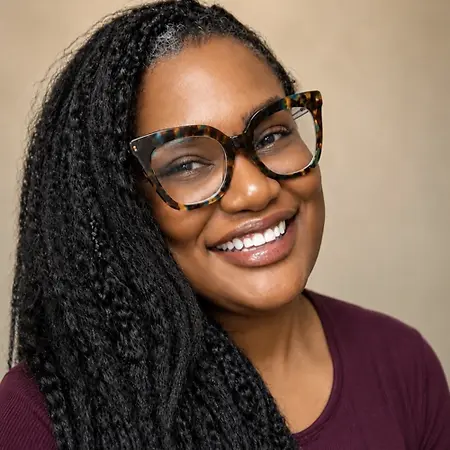
Her Story
About Cerissa
Cerissa A. Brown, LBSW, is a licensed bachelor's social worker, mental health advocate, nonprofit leader, and national speaker with more than 15 years of experience in mental health advocacy, community empowerment, program development, and social services. She is the founder of Cerissa A. Brown & Associates, where she has provided independent mental health advocacy, crisis intervention, resource coordination, education, and community outreach since 2008. She is also the founder and executive director of Reecee’s Reach, a nonprofit focused on culturally responsive mental health advocacy and support for Black women.
Her experience includes children’s mobile crisis response, medical respite social work, case management, crisis intervention, supportive counseling, housing justice, environmental justice, nonprofit leadership, and community organizing. She was a 2023 Express Talk Speaker at NAMICon 2023 (National Alliance on Mental Illness, provided testimony during the 2023 EPA Coal Ash Hearing (U.S. Environmental Protection Agency), and advocated for policies and resources addressing mental health, racial equity, and underserved communities.
Brown earned her Bachelor of Social Work from Walden University and is completing an advanced-standing Master of Social Work program at Herzing University with a clinical mental health focus. Her professional work is shaped by both formal training and lived experience with mental illness. She is committed to challenging stigma, expanding access to culturally responsive care, and ensuring that Black women are heard, understood, and treated with dignity.
Her Interview
Ten minutes with Cerissa
01What do you attribute your success to?
I attribute my success to being resourceful and willing to create my own opportunities. I have never believed that I had to wait for someone else to recognize my value or give me permission to do meaningful work. I live by the belief that if they don’t give you a seat at the table, build your own.
02What’s the best career advice you’ve ever received?
The best career advice I received came from my mother when I entered an affluent, predominantly White school system. She told me, "Learn everything you can, then bring it back to your community." That has guided me throughout my career. For me, success has never been only about what I can accomplish for myself. It is also about sharing what I learn, helping others navigate systems that are not always easy to access, and creating more opportunities for Black people in my community.
03What advice would you give to young women entering your industry?
I would tell young women entering social work to listen before assuming they understand and never lose sight of the person behind the diagnosis. The work is rewarding, but it can also be difficult, and the systems we work within do not always serve people well. Learn your role, understand ethics, document carefully, ask questions, and be willing to advocate even when it is uncomfortable. You do not have to know everything when you enter the field, but you do have a responsibility to keep learning and to treat every client with dignity.
04What are the biggest challenges or opportunities in your field right now?
One of the biggest challenges in behavioral health is that the system is still designed to respond after someone reaches a crisis instead of providing consistent support before, during, and after it. People may receive an assessment or short-term stabilization, but follow-up care is often limited by cost, insurance, provider shortages, transportation, and long waiting lists. Black women face additional barriers, including stigma, dismissal, misdiagnosis, and care that does not fully consider culture, race, gender, trauma, or lived experience. The opportunity is to build a system that is more accessible, community-based, culturally responsive, and connected. Crisis intervention should not be the end of care. It should be the beginning of coordinated support that follows the person beyond the immediate emergency.
05What values are most important to you in your work and personal life?
<blockquote>Integrity, fairness, accountability, dignity, and advocacy are the values that guide both my work and personal life. I believe in telling the truth, even when it is uncomfortable, and holding myself to the same standards I expect from others. In my work, I believe people deserve to be heard, given accurate information, and treated as whole human beings rather than being reduced to a diagnosis, crisis, or difficult period in their lives. I also value authenticity, loyalty and the willingness to question policies, practices, and systems when they are not serving people fairly.</blockquote>
Join Influential Women and start making an impact. Register now.