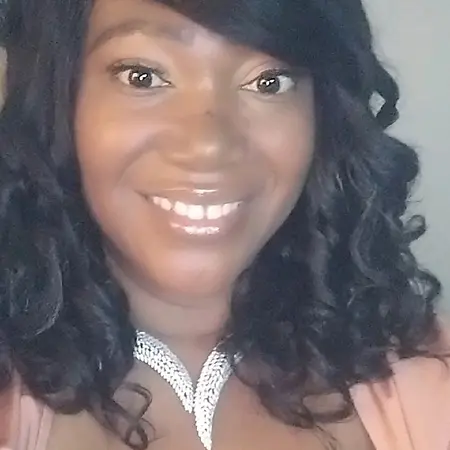
Her Story
About Chakita
Chakita Fitzpatrick, MHA, BSHM, CST, CRCST, CIS, CHL, CER, is a healthcare professional specializing in sterile processing and surgical technology with over 20 years of experience in clinical and educational settings. Based in Scottsdale, Arizona, she currently serves as a Sterile Processing Analyst and system-wide clinical educator, focusing on ensuring compliance with instrument processing standards and manufacturer instructions for use (IFU). She is actively engaged in advancing professional standards within the field through her work with the Healthcare Sterile Processing Association (HSPA), where she contributes as a subject matter expert.
Throughout her career, Chakita has held diverse roles across major healthcare institutions including Mayo Clinic, the U.S. Department of Veterans Affairs, Banner Health, Detroit Receiving Hospital, and Mount Sinai. Her professional background includes work as a surgical technologist, sterile processing educator, quality auditor, and clinical instructor. She has also served in academic roles such as adjunct instructor in sterile processing and contributed to workforce development initiatives focused on certification and competency advancement within perioperative services.
She earned both her Bachelor of Science in Healthcare Management and Master of Health Administration from the University of Phoenix. Chakita is widely certified in her field, holding credentials including Certified Surgical Technologist (CST), Certified Registered Central Service Technician (CRCST), Certified Instrument Specialist (CIS), Certified Healthcare Leader (CHL), and Certified Endoscopy Reprocessor (CER). She is also affiliated with professional organizations such as the Association of Surgical Technology (AST) and remains focused on education, certification advancement, and improving patient safety through sterile processing excellence.
Her Interview
Ten minutes with Chakita
01What do you attribute your success to?
I think I'm most proud of my experience, what I'm able to bring to the table, and the fact that I can reach people. It's all about inspiring, motivating, and educating. The key is being humble with the education, because if I'm humble when I try to teach other people, we can learn from each other. No matter what I bring to the table, I'm still a lifelong learner. I'm always learning from other people. When you come with this type of attitude, you're able to reach people, and then the learning ensues.
02What advice would you give to young women entering your industry?
Just be humble, be strong, because the thing is, you have to be strong in order to work in the OR. It's a different kind of language, it's a different kind of people. Everybody's educated. You have to be able to talk, you gotta have the app, and even with the surgeons, you need to be able to speak to them in a way that they understand, and y'all can converse and get the job done at the same time. I'm always learning. You never stop learning. It's a lifelong learning, especially when you are an educator, because my field, I think the most difficult part about this job always is that it's a changeland. Things are always changing. The apparatuses that we use to process the instrumentation change, the way that we process the new instrumentation that's coming in. We got new robots. Since I've been doing this, we've had 3 different types of surgical robots, and then we even got robots for certain services.
03What are the biggest challenges or opportunities in your field right now?
I think the most difficult part about this job always is that it's a changeland. Things are always changing. The apparatuses that we use to process the instrumentation change, the way that we process the new instrumentation that's coming in. We got new robots. Since I've been doing this, we've had 3 different types of surgical robots, and then we even got robots for certain services. We got one for ENT, it's a single site, and then we got another one that's just for orthopedics, and that's the Mako robot. My next initiative is to get everybody certified. I need to get everybody at least past the CRCST, so that's the initial exam for processing, but then the other exams, if they want to do that too, I can help them get past those also.
04What values are most important to you in your work and personal life?
I think always trying to make sure that I'm always trustworthy. I've been in situations where I've had to write people up, and it's about making sure that I'm saying exactly what happened to the best of my knowledge. Those are very delicate situations, and you can't lie on somebody, because how can you even live with yourself? So I try to be as trustworthy as I possibly can. I try not to lie about things, anything, because it always comes back. Giving the best of yourself in whatever role you're in, and not neglecting people, because you have to make sure that you put people on high, and keep them on high.
Join Influential Women and start making an impact. Register now.