A powerful testament to transformation, this piece explores how survival can blossom into purpose. The author shares her journey through CPTSD, grief, and adversity to reveal that healing isn't about proving strength—it's about choosing joy and helping others rise.
“
When everything feels like too much, don't quit. Just rest. Resting means catching your breath and recentering, so you come back stronger and clearer.
Chana Moskowitz · In Her Own Words
Her Story
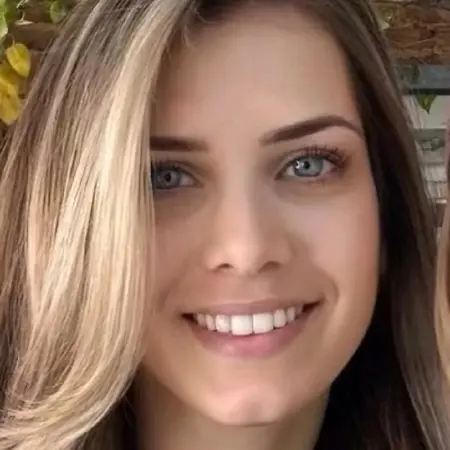
About Chana
My journey has been anything but linear, it has been a winding path that, in hindsight, has come together in deeply meaningful ways.
I got married at a young age and later divorced. Where I come from, it’s not common for women to pursue higher education, but I felt pulled in that direction. I began with culinary school, then continued on to college, eventually earning my undergraduate degree in Food Studies from NYU. Now, I am pursuing my PhD, focusing on ARFID research, a field that feels both academically important and personally meaningful.
Along the way, I’ve worn many different hats. Right out of high school, I completed an intensive hair course and later ran a small salon from my home, selling wigs, something I had always imagined doing so I could build a business while still being present at home. I also became a caretaker for a young girl with a brain injury, starting as a volunteer in high school and eventually becoming part of her family through that role. More recently, I assisted the PhD director in teaching, supporting students in an academic setting.
But beyond the titles and roles, there has always been a constant thread: caring for people.
I’ve always been drawn to feeding others, cooking, hosting, and volunteering. Growing up, my father would take us to an old age home on the Sabbath, where my brothers and I would perform concerts and help serve food to the residents. Those moments stayed with me.
My relationship with food began even earlier. I started cooking and experimenting in the kitchen at five or six years old. My mother wasn’t always home, but she trusted me, and I stepped into that space naturally. As the oldest of seven children, born to very young parents, I was often treated with a level of responsibility beyond my years. Cooking became both a necessity and a form of expression and, in many ways, it helped me navigate my own challenges around eating.
Looking back, every experience, even the ones that once felt unrelated has shaped me. Each step has expanded my compassion, patience, and resilience. Now, for the first time, everything feels like it’s coming together. And that feeling, more than anything, is incredibly meaningful.
Her Interview
Ten minutes with Chana
01What do you attribute your success to?
I attribute much of my success to persistence, to not giving up, and to my willingness to seek out and accept support. I consider myself a strong person, but I’ve learned that strength doesn’t mean doing everything alone. I’m not embarrassed to say that I rely on practices like meditation, my dog, and the support of a community that uplifts one another. There is no shame in using the tools and support systems available to us, there is strength in it.
I come from a lineage of strong women. My mother and grandmother carried so much and kept everything together. But I’ve also come to understand that life takes a toll, even on the strongest people. Part of my journey is honoring that legacy while also reshaping it and learning how to live with more ease, not just endurance, while still striving for success.
Life is challenging enough as it is. The more support we allow ourselves to receive, the more grounded and resourced we become and the more we are able to give to others. In many ways, leaning on support isn’t just helpful; it’s essential. It allows us not only to sustain ourselves, but to show up more fully for the people and work we care about.
02What advice would you give to young women entering your industry?
You’re going to reach a certain age with the degree or dream, or not. When I started college, I was surrounded by students much younger than me. It wasn’t easy, and it wasn’t always comfortable, but I’m so grateful I chose to do it anyway.
I think about my uncle, who once wanted to go to law school at 40 but felt he was too old. Years later, when he was 60, he told me, “I could have been a lawyer by now.” That stayed with me. We’re never guaranteed how long we have or what life will bring, but we do have a choice in our next step, in our next action.
For me, it comes down to asking: What do I really want? How do I want to feel? And then taking the next small step in that direction. No matter your age or stage in life, that step is never a waste.
Every experience I’ve had, even the ones that seemed unrelated at the time has shaped me. They’ve deepened my compassion, strengthened my patience, and built my resilience. The moment you make a choice, you’re already pivoting; you’re already turning a corner.
It’s not about controlling the outcome, because we can’t. What we can control is our willingness to take action. When I went back to school, I had a sense of where I was headed, but I didn’t have everything figured out and that’s okay. You don’t need the full picture to begin.
03What values are most important to you in your work and personal life?
One of the most important values to me is that my suffering and challenges should not be in vain. For as long as I can remember, I’ve wanted to help others, to take what I’ve lived through and transform it into something meaningful and useful for people who may be struggling in similar ways.
A big part of that journey has been learning how to create in a sustainable way. I come from a lineage of incredibly hard-working women. My mother and grandmother carried so much, but I’ve come to understand that I’m highly sensitive and can become overstimulated easily. Because of that, I’ve had to redefine what productivity looks like for me. Rest isn’t optional; it’s essential. Learning how to balance creation with rest has been one of my greatest lessons, and I’ve developed tools and insights that allow me to work in a way that is both effective and sustainable.
I truly believe that we’re able to create more, not less, when we honor that balance. Sustainability allows things to come together more naturally, with less force and more alignment.
That’s part of why I love the PhD program I’m in. It’s holistic, and the community feels genuinely aligned with my values. It’s something I would choose to do even without the degree, that’s how much I enjoy it. I’m not doing it just for the outcome; I’m truly present in and fulfilled by the process.
And I’ve found that when something is aligned in that way, it doesn’t feel forced; it feels easier, more natural, and more sustainable.
Her Content Hub
Articles by Chana
You Don’t Have to Suffer to Be Worthy
From Survival to Purpose: How Healing Became My Greatest Strength
There was a time when survival was the goal.
Not thriving. Not dreaming. Not building something meaningful—just getting through the day without collapsing under the weight of everything life had placed on my shoulders.
I was carving my own path while quietly unraveling.
Navigating divorce.
Grieving the unimaginable loss of two siblings.
Living inside a body and mind shaped by severe CPTSD that, at one point, made even the simplest things feel impossible.
There were moments when doctors told me this might be my life—that I would be managing, coping, surviving… indefinitely.
And for a while, I believed them.
Because when your world shrinks that small, when your nervous system feels like it’s constantly under threat, hope doesn’t arrive as a grand vision. It arrives as something much quieter:
Maybe I can just be okay.
That was the beginning.
Not ambition. Not success. Just the desire to feel safe in my own body again.
But something unexpected happens when you keep choosing, even in the smallest ways, not to give up on yourself.
You begin to meet parts of yourself you didn’t know were there.
Resilience that doesn’t shout, but steadies you.
Courage that doesn’t look fearless, but shows up anyway.
A deeper awareness that says there is more here than just pain.
And slowly, almost imperceptibly at first, “just being okay” begins to expand—
Into curiosity.
Into strength.
Into possibility.
For me, that growth became anchored in something bigger than my own healing. I didn’t want my life, my pain, my experiences to be in vain. I wanted it to mean something. I wanted it to help someone else feel less alone.
But along the way, I learned something I wish more women were told:
You don’t have to suffer to deserve a meaningful, successful life.
Pain is not a prerequisite for purpose.
Struggle is not the price of worthiness.
Yes, adversity can shape us. It can deepen us. It can crack us open in ways that lead to profound transformation.
But your value is not measured by how much you’ve endured.
You are allowed to choose joy without guilt.
You are allowed to seek ease without explanation.
You are allowed to build a life that feels good, not just one that proves how strong you are.
And if you’re in a season where life feels heavy, where everything feels blurred by stress, grief, or overwhelm, I want you to know this:
There is still so much available to you.
Sometimes it’s not that opportunities aren’t there.
It’s that exhaustion, pain, and survival mode have clouded your ability to see them.
Healing, in part, is about gently clearing that lens—
Creating space in your mind.
Calming your body.
Letting yourself breathe again.
Because when you do, even just a little, something shifts.
You start to notice openings where there were only walls.
Possibilities where there was only pressure.
A quiet sense of direction pulling you softly toward something that feels like you—
Toward your joy.
And that’s the direction that matters most.
Not the one defined by expectations.
Not the one shaped by fear.
But the one that feels aligned, even if it’s unfamiliar.
Because someone out there is desperately waiting to be lit by your flame.
However you define success, know this: it is not just in what you build, but in what you awaken in others. It is the quiet, powerful act of igniting someone else’s hope, courage, or possibility that gives your success a life far beyond you.
And maybe that’s the real legacy—
Not just what you overcome,
but who you help rise because you chose to keep going.
P.S. I recently published three books on early childhood emotional resilience, created to help set our children up for a stronger, more grounded future. And I know this is just the beginning…
I would truly love to hear from you—moms, aunts, sisters, and incredible grandmothers. Your voice, your experience, your wisdom… it all matters more than you know.
Thank you for living in this strangely beautiful world, in this time and dimension.
Join Influential Women and start making an impact. Register now.