Her Story
About Cheryl
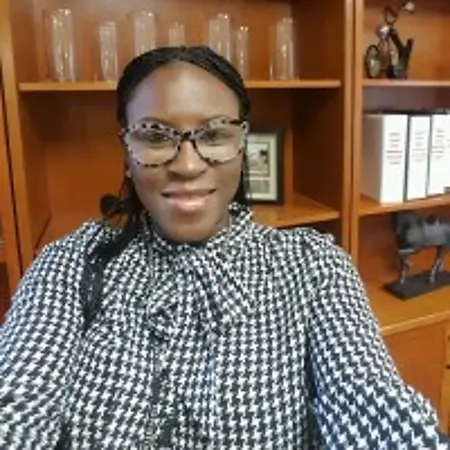
Cheryl Anderson is a highly strategic legal and compliance professional and the founder of Professional Noble Steward, a consultancy dedicated to strengthening the operational health, governance, and funding readiness of churches and nonprofit organizations. Based in Orlando, Florida, Cheryl brings a rare blend of legal training, executive leadership, and regulatory expertise, supported by a Master of Laws (LL.M.) in Nonprofit Law from Regent University. Her work centers on document execution, compliance audits, and systems-based solutions that ensure mission-driven organizations are structurally prepared to grow and serve with integrity.
After retiring from a 20-year career in healthcare administration—where audits, compliance, and financial oversight were central—Cheryl boldly stepped into entrepreneurship, encouraged by her mother to pursue her next chapter through education and faith. Over the past decade, she has combined legal insight with deep administrative experience to draft governance documents, conduct organizational audits, and guide leaders through complex regulatory environments. Her entrepreneurial calling was affirmed early on when she successfully helped launch a nonprofit focused on gun violence prevention, solidifying her commitment to high-impact, purpose-driven work.
Cheryl’s work is also deeply personal. She is actively involved in juvenile justice initiatives that provide clinical services, employment pathways, and housing support for incarcerated individuals and their families—an area shaped by her own life experiences. Looking ahead, she envisions expanding Professional Noble Steward nationwide and launching a nonprofit arm to provide confidential financial, healthcare, and insurance support for pastors and missionaries. Grounded in faith, family, and service, Cheryl hopes her story inspires other women—especially those from modest beginnings—to believe that reinvention, education, and purpose can create lasting impact.
Her Interview
Ten minutes with Cheryl
01What do you attribute your success to?
I attribute my success first and foremost to my faith. My faith has definitely shaped my journey and helped me get to where I am. I can say it's the funniest thing - my mom, who's a praying woman, has been a part of every job I've ever had. It always started with 'hey, go check this out. I met this person in the store, go check this out.' Even when I decided to go to law school, something came in the mail from Regent University, and she kept saying 'I think you should, I think you should' for six months until I finally checked it out, and it was the perfect school for me. After my faith, I would say my education also helped shape my journey, because I didn't walk out of high school straight into college. I was taught to get a job and stay there, which is something I regret because you have to be willing to grow and move and expand. My education provided those opportunities for me to have the skills to be able to achieve going above the barriers that are set for us. And then my experience working in the church - watching my father, my uncle, and my grandfather, all pastors, striving with great visions but not having the people or the skills to get there - that shaped my journey to where I am now. God gave me this to do.
02What’s the best career advice you’ve ever received?
The best career advice I received came from a book author who told me to always keep flyers and information about my business on hand, to be readily prepared at any time for someone to ask me about my company and what I do. She said you never know if you're going to run into someone, and sometimes randomly the conversation will go that way, so be immediately prepared. That advice has really worked for me - I keep everything on hand, and a random conversation turns into a lead, that lead turns into a potential client, and turns into a client, all because I was walking around readily prepared. I think that's been one of my greatest marketing tools.
03What advice would you give to young women entering your industry?
First and foremost, you have to know who you are and believe in who you are. Sometimes the people we think will help us when we start that business are not the people. Sometimes we think it's family, but a lot of times it's not family, because I guess they may know us, but they're not the first ones to run and say 'oh, I want to help you out and become a client.' When they don't, you sometimes want to question yourself - if my own family doesn't come and support me, do I really have something worth having? That's something I had to learn. Even with all my family being pastors, and I've assisted them and they've used my skills in some shape or form, since I started the business none of them have wanted to become a client. That would make you question, do I really have something to offer? My advice would be to trust yourself, trust God, trust yourself, walk in confidence, and believe in you. If nobody else believes in you, believe in yourself, because the people you think would believe in you may say they believe in you, but when it comes down to investing in you, they'll make you question 'am I that good?' because they're not even willing to invest in me and they're still investing in other places or other things. So that number one thing is to confirm that little girl inside that you are good enough, you know, you walk in confidence, and trust yourself more than anything else.
04What are the biggest challenges or opportunities in your field right now?
One of the biggest challenges in my field is that many churches and nonprofits lack operational structure and financial literacy, which leads to compliance misunderstandings that can block funding and long-term sustainability. There is also hesitation among faith leaders to seek help confidentially, even when support is critically needed. At the same time, there is a powerful opportunity to expand church audit and compliance services nationally, strengthen governance practices, and create confidential support systems that increase funding access and organizational health.
05What values are most important to you in your work and personal life?
My faith is a core value to me. My family is of value to me. I love to say faith, family, career. My faith, trusting God in everything, because I would be nothing without Him. I can do nothing without Him, and anything I try to do without Him will potentially fail. That is a core belief for me. And then my family - making sure I'm there to support my family, my parents, my grandparents. I'm blessed to still have my grandparents with me. My grandfather is in his 90s, my grandmother would be 87. My siblings, making sure I stay and don't get so caught up in my work that I forget that family time. And then my career - I believe I'm blessed with the skills to help someone else. What God gave me to do is not for me. I heard an example like an apple tree can't eat its own apples. It's bearing the apples so they can share it with others. That would be my third thing in my career, making sure I remain humble, helpful in any way I can. Not used, because we have to survive, but also keep that ear open and my heart open to say there may be someone wherein if they only had the money to get started, they have everything else, they just don't have that money. So remember where I was in my career and focus on being a helping hand to help someone up, and not always looking for a hand out wherein I'm looking for money. Be open to also being a blessing to someone else.
Join Influential Women and start making an impact. Register now.