Influential Woman · Leadership and organizational development
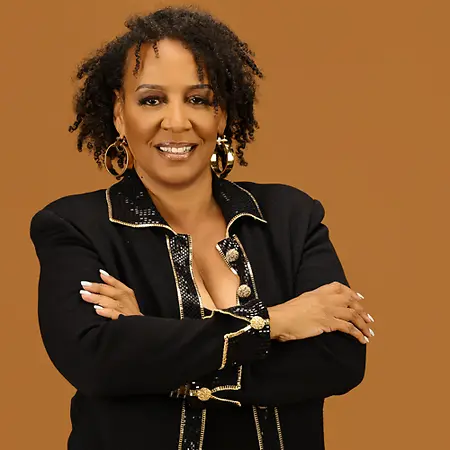
Dr. Cheryl Pruitt
Leadership Strategist | Author | Data-Driven Systems Builder, USA
Nashville, TN 37209
I learned that leadership isn't about carrying weight alone. Inviting mentors into difficult decisions deepened my authority and made me more strategic.
Dr. Cheryl Pruitt · In Her Own Words
Her Story
About Dr. Cheryl
Dr. Cheryl Pruitt is a nationally recognized superintendent, leadership strategist, and systems architect known for guiding organizations through high-stakes transformation with clarity, courage, and measurable results. Her work operates at the intersection of educational equity, crisis leadership, and governance strategy — where accountability is real, and outcomes matter.
With more than four decades of cross-sector experience spanning scientific research, healthcare governance, entrepreneurship, and public education, Dr. Pruitt brings analytical rigor to complex systems. Trained as a scientist at St. Jude Children’s Research Hospital, she developed a mindset rooted in precision, ethics, and urgency — a foundation that has shaped her leadership in classrooms, district offices, boardrooms, and national policy conversations.
As a superintendent, she led one of the most scrutinized and politically complex school system transformations in the country, generating measurable gains in graduation rates and literacy while restoring institutional stability and public trust. She has supported districts operating under federal oversight, advised boards navigating legal and political pressures, and helped leaders move from reactive crisis management to strategic, sustainable execution.
Her thought leadership extends beyond practice into scholarship. She is the author of the peer-reviewed international chapter , “Leadership Under Siege: What It Really Takes to Lead Through Crisis,” which examines the realities of public leadership under scrutiny and the disciplined decision-making required to sustain progress when systems are under pressure. She also co-authored Unshaken: A Self-Help Guide for Authentic, Resilient Leadership — A Reflective Journal, reinforcing her commitment to cultivating leaders who remain steady, ethical, and grounded in moments of uncertainty.
Today, Dr. Pruitt leads VoiceSpeaks for Equitable Educational Change and co-founded the National African American Literacy Institute, advancing AI-informed, equity-centered strategies that equip students and systems for the future. She also serves on the board of a major safety-net hospital, co-chairing the quality committee and chairing the facilities committee to strengthen services for Medicaid and Medicare communities.
A TEDx speaker and published author, Dr. Pruitt continues to advance a model of leadership rooted in authenticity, disciplined execution, and the conviction that transformation is possible when courage meets clarity.
Her Interview
Ten minutes with Dr. Cheryl
01What do you attribute your success to?
When I reflect on what shaped my success, I don’t think first about titles or outcomes. I think about seasons.
I think about being trained as a scientist, where precision mattered and every decision carried consequences. That discipline followed me into education.
I think about walking into districts where graduation rates hovered near 50 percent, where trust was fragile and hope felt thin. The work was not glamorous. It began with listening. It required steadiness when criticism was loud and the margin for error was narrow.
I think about leading under scrutiny — when decisions were questioned publicly and privately, and the weight of responsibility did not lift when the workday ended. Those seasons taught me that resilience is not about being untouched by pressure. It is about refusing to let pressure change your character.
Over time, I learned that authenticity is not optional in crisis. People can sense performance. What they need is integrity. They need to feel that you are grounded enough to lead them forward.
I also learned that giving endlessly, as many women do, is not the same as leading well. You cannot sustain impact if you are depleted. Wholeness is not indulgence; it is discipline. It is what keeps compassion intact and purpose clear.
The measurable gains, stronger graduation rates, literacy growth, restored stability — grew out of that steadiness.
If there is a thread through my journey, it is this: staying anchored in who I am when everything around me feels uncertain. Success, for me, has never been about avoiding storms. It has been about walking through them without losing clarity, compassion, or conviction.
02What’s the best career advice you’ve ever received?
The best career advice I’ve ever received came from my son. During a particularly demanding season, he told me, “Just keep putting one foot in front of the other.”
It sounds simple, but it stayed with me. Leadership can feel overwhelming when the stakes are high and the scrutiny is constant. That advice reminded me that progress doesn’t always require dramatic moves. Sometimes it requires steadiness, the willingness to take the next right step, even when the full path isn’t visible.
Over time, I’ve paired that with another lesson: don’t move so fast that you lose clarity. Pause. Reflect. Make sure my actions align with my values. Urgency is often real in leadership, but reaction is not the same as strategy.
Putting one foot in front of the other, with intention, has carried me through some of my most challenging and most meaningful seasons.
03What advice would you give to young women entering your industry?
I would tell young women entering this field to know who you are before the pressure tries to define you and to never try to navigate it alone.
There will be seasons of affirmation and seasons of intense scrutiny. There will be moments when your work is celebrated and moments when it is questioned. Those shifts are part of leadership, not signs that you are failing.
That is why having a mentor matters. You need someone who has walked through their own valleys and can remind you that difficult seasons are temporary. A strong mentor helps you see beyond the moment and protects you from making permanent decisions based on temporary pressure.
Leadership is not about avoiding the ups and downs. It is about staying anchored through them.
04What are the biggest challenges or opportunities in your field right now?
Right now, one of the biggest opportunities in our field is reimagining how we teach for real learning, not just compliance or seat time. Traditional systems were built for an industrial era, where standardization made sense. But today’s learners enter classrooms with diverse backgrounds, needs, and aspirations. The opportunity before us is to design systems that honor that diversity, meet students where they are, and cultivate not just knowledge but agency, curiosity, and critical thinking.
This requires more than tweaking what we already do. It requires creating new ways of teaching, assessing, and organizing learning systems that are flexible, data-informed, human-centered, and future-ready. That’s an opportunity for leadership at every level: from the classroom to the district office, from policy design to community partnerships.
At the same time, the field faces real challenges. We operate in an environment of high accountability and limited resources. Leaders and teachers are stretched thin. Public confidence in education is uneven, and political pressures can divert attention from deep learning to short-term performance. There is also the perpetual challenge of ensuring equity so that every child has access to opportunities, resources, and environments that enable them to thrive.
But within those challenges lies possibility. When we design systems that prioritize learning over compliance, elevate teacher expertise rather than marginalize it, and center equity as a foundational commitment rather than an afterthought, we unlock potential for students, educators, and communities.
The greatest opportunity, I believe, is this: to lead with purpose and design systems in which learning, in its richest, most human sense, is not just a goal but the very architecture of education.
05What values are most important to you in your work and personal life?
Integrity is the value that anchors both my work and my personal life. When you lead in visible roles, especially in education and public systems, your decisions are often made under pressure. I believe integrity means staying aligned with your principles even when it would be easier not to. It means choosing what is right over what is convenient.
Closely connected to that is resilience, not toughness for the sake of appearance, but steadiness rooted in purpose. I’ve learned that adversity is part of leadership. What matters is remaining grounded and refusing to let pressure distort your character.
Authenticity also guides me. I strive to be the same person in a boardroom as I am at home, clear about my values, accountable for my actions, and open to growth.
And finally, compassion. Every decision we make in education and governance affects real people, families, communities, and children. Remembering that keeps my leadership human.
For me, these values are not separate from success. They are the reason it has been possible at all.
Join Influential Women and start making an impact. Register now.