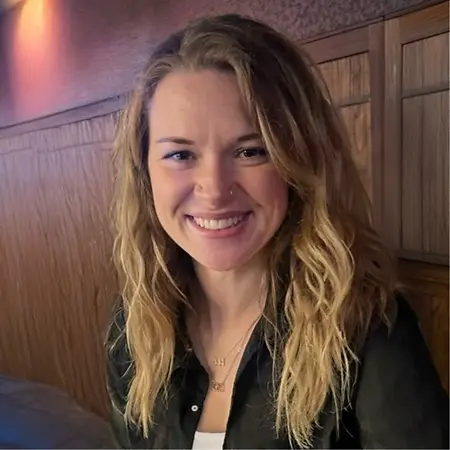
Her Story
About Cheyanne
Cheyanne Pedro is a trauma-informed behavioral health professional with experience across outpatient, community-based, nonprofit, and intensive treatment settings. Her work has centered on supporting individuals navigating mental illness, substance use, crisis, re-engagement, stabilization, and the structural barriers that can make healing more complex.
In her current role as a Behavioral Health Care Navigator Supervisor Cheyanne helps lead work focused on connecting individuals to mental health treatment, psychiatric care, community resources, and ongoing support. Across these settings, Cheyanne has learned how to sit with people in complicated moments, help them make sense of overwhelming systems, and support them in taking the next step toward care.
Cheyanne’s path into behavioral health is rooted in the belief that even the most difficult parts of life can be transformed into purpose. Her own experiences have shaped her compassion, advocacy, and the way she connects with people during vulnerable moments. What once felt heavy has become part of what allows her to recognize barriers with compassion, support people without judgment, and help them feel less alone as they navigate care. Rather than seeing hardship as something that only breaks people down, Cheyanne channels it into deeper empathy, strengthened purpose, and a more meaningful way to serve others.
Her work is grounded in compassion, cultural humility, recovery-oriented care, and person-centered support. She is especially passionate about supporting underserved communities, advocating for inclusive care models, and helping create safe, affirming spaces where people feel seen, respected, and supported.
Her Interview
Ten minutes with Cheyanne
01What do you attribute your success to?
I attribute my success to resilience, empathy, curiosity, and the people who have supported me along the way. A lot of my growth has come from learning how to turn difficult experiences into purpose instead of allowing them to harden me. Those experiences have shaped the way I care for others, the way I advocate, and the way I stay connected to the human side of this work.
I also believe my success comes from being willing to keep learning. I try to stay open, ask questions, and look for better ways to support both the individuals seeking care and the teams helping them navigate it. In behavioral health, people are not just referrals, symptoms, or numbers. They are individuals with histories, barriers, strengths, and lived experiences that shape their healing.
Staying grounded in that truth has helped me lead with compassion, problem-solve with intention, and continue building a career that feels meaningful. To me, success is not only about reaching a goal or earning a title. It is about using what I have learned, experienced, and overcome to make care feel more accessible, human, and hopeful for someone else.
02What’s the best career advice you’ve ever received?
The best career advice I have ever received is that I do not have to fix everything at once to make a meaningful difference. In behavioral health, it is easy to see all the gaps in the system and feel the weight of what people are up against. There are barriers that one person cannot solve in a single moment, but that does not mean the work is not valuable.
That advice has helped me stay grounded. It reminds me to focus on the next right step: listening well, offering support, helping someone understand their options, connecting them to care, or making a process feel a little less overwhelming. Sometimes the impact is not dramatic or immediate. Sometimes it is helping someone feel seen, respected, and less alone long enough to keep going.
As I have grown in this field, I have learned that meaningful change often happens through consistency, compassion, and small moments of advocacy. That perspective has shaped the way I support individuals, lead my team, and stay connected to the purpose behind the work.
03What advice would you give to young women entering your industry?
My advice to young women entering behavioral health would be to trust yourself, stay curious, and remember that you do not have to have everything figured out to be moving in the right direction. This field is meaningful, but it can also be emotionally heavy. It is important to seek support, ask questions, learn from the people around you, and stay connected to the values that brought you into the work.
I would also tell them that compassion is a strength, but boundaries are what make that compassion sustainable. You can care deeply without carrying everything alone. You can advocate for others while still advocating for yourself. Learning how to protect your energy, use supervision, and recognize your own limits is not selfish - it is part of becoming an ethical and effective professional.
Most importantly, I would remind young women not to shrink themselves to make other people comfortable. Your perspective matters. Your voice matters. Your story has value. The hard parts, uncertain parts, and imperfect parts of your path can become part of something meaningful when they are paired with growth, self awareness, and purpose. You do not have to be untouched by hardship to make an impact. Sometimes what you have lived through becomes part of how you help others feel seen, understood, and less alone.
04What are the biggest challenges or opportunities in your field right now?
One of the biggest challenges in behavioral health right now is access. Many people are ready for support, but still face long waitlists, insurance barriers, provider shortages, transportation issues, confusing systems, and limited resources. Asking for help is already difficult, and it can be discouraging when the next step is not clear or accessible.
Another challenge is that mental health does not exist in isolation. A person’s ability to heal can be shaped by housing, income, safety, identity, transportation, support systems, and past experiences with care. When those factors are overlooked, people can be left feeling like they are the problem, when often they are trying to survive within systems that are difficult to navigate.
At the same time, I believe there is a powerful opportunity to make behavioral health care more human, connected, and accessible. Care navigation plays an important role in that. It helps bridge the gap between people who need support and the providers, resources, and systems that can help them move forward.
I also see an opportunity to build more affirming and inclusive models of care - especially for people who have been underserved, misunderstood, or made to feel invisible. The future of behavioral health is not only about expanding services, but about making sure people can actually reach them, trust them, and feel respected when they do.
05What values are most important to you in your work and personal life?
The values most important to me are empathy, advocacy, authenticity, cultural humility, fairness, and growth. In both my work and personal life, I care deeply about people feeling seen, respected, and supported as they are.
Empathy is at the center of how I show up. I try to remember that every person carries experiences, barriers, strengths, and needs that may not be visible right away. Advocacy is also important to me because I naturally notice when people are being overlooked, dismissed, or left to navigate difficult systems on their own. I want to be someone who helps make those systems feel less intimidating and more human.
Authenticity and cultural humility matter because I believe people deserve care that honors their identity, lived experience, and self-determination. Fairness matters because access to support should not depend on how well someone can advocate for themselves during their hardest moments.
Growth is also a core value for me. I believe people can keep learning, healing, and becoming, even after difficult experiences. In my own life, growth has meant learning how to turn hardship into purpose and use what I have been through to serve others with more compassion, understanding, and intention.
To me, meaningful work is not just about what you accomplish. It is about how you use your experiences, education, and position to make things easier, safer, and more hopeful for someone else.
Join Influential Women and start making an impact. Register now.