Influential Woman · Public Health
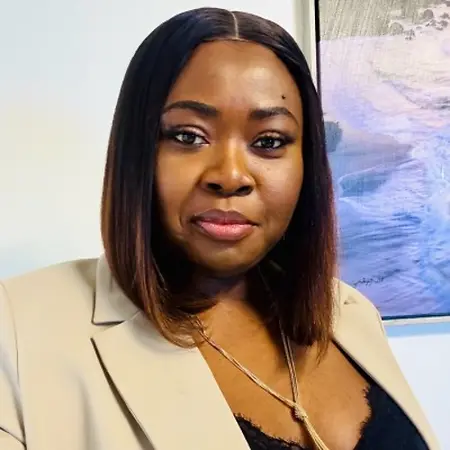
Chinasa U Imo
Convener/ Podcast Host, What About Rural Health?™
Chicago, IL 60653
Growth is not always about having the full map; sometimes it's about trusting that the movement itself will take you in the right direction.
Chinasa U Imo · In Her Own Words
Her Story
About Chinasa
My work in public health has been deeply shaped by personal experience and global health crises. As a young girl, I was a long-time caregiver for my mother, who had health challenges, and through taking her across hospitals, I witnessed firsthand the health system issues, service gaps, and access challenges in my community. I started doing community engagement work voluntarily while going to school. In 2014, while finishing my master's at the University of Lagos in Nigeria, the Ebola outbreak happened, and I got recruited as a risk communication and social mobilization person, covering psychosocial supports, risk communications content development, and engaging directly with communities on behavioral adjustments towards infectious disease prevention and protection. That experience launched my career in this space. Today, I wear three hats: I am the founder and Executive Steering Director of Innovation Hub for Inclusiveness, Empowerment, and Social Development SieDi-Hub, a nonprofit based in Nigeria that works at the grassroots level to empower women and young people around social justice, economic empowerment, access to healthcare, and digital inclusion and safety for younger generations. I also run a podcast called What's About Rural Health?, which I call a PR and communication platform for rural health - it is a knowledge and information sharing platform bringing visibility to rural health issues globally, looking at issue-specific strategies that improve access, funding, investment opportunities, research, use of data, and community engagement to improve rural health accessibility across the spectrum. Additionally, I am a doctoral candidate at the University of Chicago, where my dissertation research focuses on how health systems and governance processes inform health decisions that reach vulnerable populations. All three of these roles tie to the same singular goal: improving access to healthcare for underserved communities and vulnerable populations. Prior to my current work, I have held different positions in consulting and research consulting, and done state-level advising on health programming for different organizations. I started my career working in the public health emergency space with the Nigerian Center for Disease Control and then with the African Union itself on health emergency response in different countries.
Her Interview
Ten minutes with Chinasa
01What do you attribute your success to?
From my perspective, success should be rooted in alignment between purpose, impact, and integrity. It is not defined solely by titles, recognition, or achievements, but by the ability to consistently do work that creates meaningful change while staying true to my values. I attribute success to clarity of purpose, the discipline to keep showing up even when the path is uncertain, and the courage to build where systems are weak or nonexistent. Success also means navigating spaces that were not always designed for you, while still creating room for others to rise. It is reflected in the communities I serve, the opportunities I help create for others, and the systems I contribute to strengthening. Ultimately, success for me is the ability to combine competence with compassion, leadership with service, and vision with execution, while remaining accountable to the people and communities at the center of my work.
02What’s the best career advice you’ve ever received?
The best career advice I have received is to stay true to who I am, pursue work that brings me genuine fulfillment, and be intentional about the spaces I choose to grow in, spaces that elevate both me and others, rather than diminish my passion.
03What advice would you give to young women entering your industry?
I'm a very realistic person. I would tell people that working within the development space, specifically, it's not a fun game. You have to go beyond passion to ask yourself, what is it that I am really looking forward to achieve here, personally, as a human being, and collectively as a society? Because we all do have our personal interests to pursue - career advancement, jobs that have traveling opportunities, forums for sharing ideas. You really have to find that thing that is personally endearing to you, and then use that to relate to how that could collectively help in the space, because passion alone, it dries out, and it's a high burnout environment where sometimes you put so much effort, and the outcome could be very small, or sometimes even non-existing. So you have to ask yourself every day, is it worth it to wake up, buff up, and do it again? And for you to only do that consistently, you must find a personal angle to the story. So that would be my advice. Make sure that you know what you're getting yourself into, and stay to the course. At least, stay to your own course.
04What are the biggest challenges or opportunities in your field right now?
One of the biggest challenges in my field is the persistent disconnect between policy design and implementation, particularly in low-resource settings. Many health and social policies are technically sound but fail to account for institutional realities, local context, and the complexity of coordination across systems. This often results in fragmented service delivery, underutilized programs, and limited impact for the communities they are intended to serve. In addition, there remains a tendency to prioritize technical or biomedical solutions without fully integrating social, cultural, and behavioral dimensions of health. At the same time, this presents a significant opportunity. There is growing recognition of the need for more integrated, context-responsive approaches to health systems strengthening, particularly those that center on coordination, community engagement, and the social determinants of health. Advances in data systems, interdisciplinary research, and locally driven innovation also create space to rethink how health systems are designed and implemented.
For me, the opportunity lies in bridging these gaps by bringing together research, policy, and lived experience to inform more effective, equitable, and sustainable health interventions.
05What values are most important to you in your work and personal life?
My values are consistent, that's a true line in all that I do. As long as people, vulnerable populations, people who would not necessarily have the capacity to stand for themselves or speak in rooms they don't have access to, are able to receive adequate and quality healthcare services - that, to me, is the thing that makes me wake up every morning and put an effort to something. And when I see, even if it's a sliver of success or progress towards that direction, it also helps me sleep at night. I would rather use money to support a life somewhere. Like I said, I work in rural communities, and these people, sometimes $50, $100 make a difference. So I wouldn't invest that running a PR on myself. I would rather use that money to invest in the people who I am very, very sure it will transform their lives.
Join Influential Women and start making an impact. Register now.