Her Story
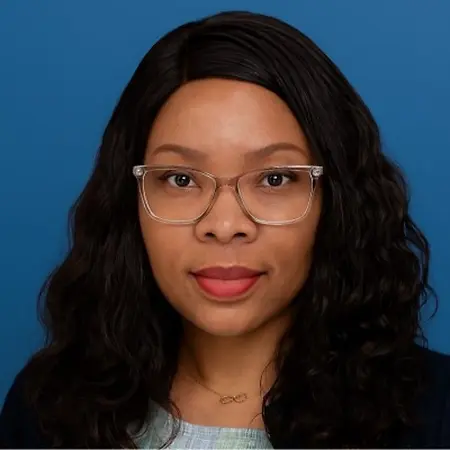
About Chinenye
My career in the energy industry has come full circle in the most interesting way. I started right after university when I was posted to Pan Ocean Corporation, an oil and gas company, for my Youth Service Corps. I worked as a relief secretary across 11 departments, which gave me incredible exposure to finance, accounts, HR, estates, legal, and more. That foundation was invaluable. After about three years, I transitioned to banking, then moved into HR consulting before becoming an operational HR lead and HR manager. Eventually, I found my way back to the energy industry, but this time it's different. The company I work with now has two arms: one that provides services to the traditional oil and gas sector, and another focused on green energy and renewable solutions like solar. We're doing extensive research on how companies can transition to clean energy, especially in West Africa where energy is scarce and expensive. One of the projects I'm most proud of involved researching how to repurpose end-of-life generators into sustainable solutions like irrigation systems. Beyond my core HR and strategy work, I champion gender equality and social inclusion across our projects because the energy industry has historically been biased toward men and higher-income earners. We're making conscious efforts to break that divide and ensure our work benefits less privileged communities too. I'm not a traditional HR person. I see myself as a strategic HR business partner who bridges people strategy with business outcomes.
Her Interview
Ten minutes with Chinenye
01What’s the best career advice you’ve ever received?
I've received three pieces of career advice that have shaped who I am. The first came from my dad when I was in university. He would say, 'Most people that are doing it, how many heads do they have?' It sounds strange, but what he meant was that successful people aren't hydro-headed, they have one head just like you. So if they can do it, so can you. It's about removing that mystery that someone is smarter or more capable. You might not know how yet, but that doesn't mean you can't. You just need time to study, groom, and learn, and the right circumstances. The second piece of advice came when I became an HR consultant: have the can-do mindset. When you're asked to do something, don't say 'I can't,' just say yes and figure it out. Most consultants don't come with all the answers. They do research, ask questions, go home with problems, and think about how to fix them. Even if you've never experienced that problem before, you can solve it. The third lesson I learned, though I'm not sure exactly where, is to have an ownership mindset. As a Christian, the Bible says whatever you do, do it as unto the Lord. So I don't work like someone is paying me. I work like I'm part owner of the place. As long as I stay with you, there has to be value. I bury myself in whatever industry I'm in, whether it's banking, IT, or biotech, and by the time I leave, people think I've been there for ages.
02What advice would you give to young women entering your industry?
I tell young women the same thing I tell everyone: do your best and go above and beyond. Don't just give what you're asked. Push the boundaries. If you're asked to do something, ask if you can add more, or say 'I did what you asked, and here's further research I found.' Go beyond what's expected. The second thing is strive for excellence. If you have to prove yourself, you have to stay back and study, read, listen, or get a mentor. Strive for excellence. Strive to be better than what you were. Don't stay on your previous success. Try to keep improving. And always put yourself in the work. There's something about you that should reflect in what you do. When someone sees your work, they should know 'this person did this.' Let your fragrance be felt. Make your mark and let people see your unique contribution.
03What are the biggest challenges or opportunities in your field right now?
The biggest challenge in the energy industry, particularly oil and gas, is that it's historically been biased toward men and higher-income earners. The industry is structured in a way that favors men because most engineering courses and degrees are dominated by men. It's more of a man's world. We're trying to address this through our gender equality and social inclusion work. We're being conscious and cautious about bringing women in and trying to create fair, level ground for them to play on. We're not there yet, but I know the number of women we have in our projects and company has increased. However, we can't just say 'because you're a woman, I'll give you a role that you have no capacity for.' We're making more informed choices toward creating real equity in the industry. The opportunity lies in the green energy transition, especially in West Africa where energy is scarce and not cheap. With the hike in the price of gas and oil, we're hoping for breakthroughs in renewable energy solutions. We're doing research on how people can repurpose end-of-life equipment into green solutions and how companies can transition to clean energy. This is where the real growth and impact will happen.
04What values are most important to you in your work and personal life?
For me, the most important value is originality. I feel that whatever you do, something in you has to show. There should be something of you in it. You have a voice, right? You have something to give. Your originality might not be the best, but when people see it, they should know 'this person did this.' The second value is excellence. I believe in going beyond the normal. Whatever I'm asked to do, I try to do beyond what I'm asked. If someone asks me to do something, I try to go a level higher. This is my assignment, but if I can go beyond it, I will. Finally, I believe I'm a problem solver. It's not just about whatever I'm assigned to do. If I work with you, beyond my scope of work, if I see other problems in the company, I try to reach out and say 'this is what I noticed. Do you need some help? Is there any way we can work together?' While working, I'm learning, I'm adding more value than whatever I'm employed to do. I believe in solving problems, being a resource to use, and striving to be the better version of yourself.
Join Influential Women and start making an impact. Register now.