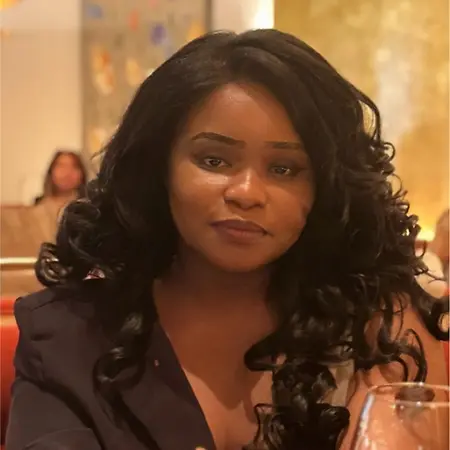
Her Story
About Chioma
Chioma Ikechukwu is a mental health professional based in Minneapolis, Minnesota. With 14 years in behavioral health fields, she currently works with children who have autism, providing applied behavior analysis services and psychoeducation to families. She holds a Bachelor's of Arts in Psychology from Metropolitan State University, which she completed after returning to school in 2020 following time at the University of Lagos in Nigeria, and is finishing her Master's in Clinical Mental Health Counseling. Chioma also earned a certification in clinical research and is a member of the American Counseling Association. She volunteered with the Amherst Wilder Foundation in 2022. Chioma attributes her success to her family, particularly her mother, and is committed to breaking negative generational cycles. She values honesty and cultural sensitivity in her work, noting the importance of understanding how cultural experiences affect clients' lives and behaviors, especially within the African community where mental health stigma and lack of psychoeducation remain challenges.
Her Interview
Ten minutes with Chioma
01What do you attribute your success to?
My mom and family are the driving forces. My mom never gave up on me even when she didn't understand my depression and anxiety. Being the firstborn, I want to break negative generational cycles so my younger sibling can see it's possible to succeed.
02What’s the best career advice you’ve ever received?
When you pick a field, work on one career path and consistently read and become excellent at it. Expose yourself to every form of knowledge and become excellent.
03What advice would you give to young women entering your industry?
Keep at it. Keep going. Believe in yourself. It takes self-belief to achieve your goals. Regardless of what happens, whatever demons or hurdles you face, believe that you can do it. Take a break if you need to rejuvenate, but keep going.
04What are the biggest challenges or opportunities in your field right now?
The lack of cultural sensitivity and understanding how cultural experiences affect people's lives and behaviors is a giant challenge. In the African community, lack of psychoeducation on mental health and the stigma are problems. Parents often don't understand or are in denial about services like ABA.
05What values are most important to you in your work and personal life?
Honesty and cultural sensitivity. Understanding the person's culture and how it affects their experiences. As a therapist, we are constantly taught to be culturally sensitive to our clients.
Join Influential Women and start making an impact. Register now.