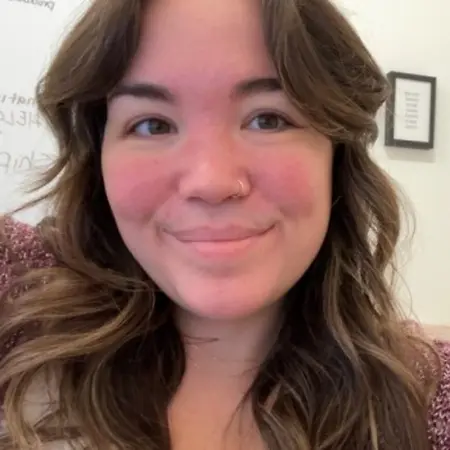
Her Story
About Chloe
I started my career in higher education as a federal work-study student in a financial aid office, and I immediately fell in love with the work because every day was different and there was always something new to tackle. I was a Women's Studies major at Portland State University, and while I was passionate about that field, I knew I wanted to pursue a career in higher education, so I went on to earn my Master's in Higher Education Administration. When I moved back home after graduate school, a financial aid position opened up at Western Oregon University, and I was hired over professionals with 10, 15, even 20 years of experience, simply because I was the only candidate with actual financial aid experience. After about 3 years in the field, I moved up to an Assistant Director role, which I've now held for over 3 years. I've had the opportunity to conduct statewide trainings with people who have been working longer than I've been alive, developing training curriculum and building strong professional networks. In my current role at PSU, I oversee federal work-study, scholarships, and loans, with a focus on policy and procedure development and compliance. I seem to find positions where things need to be fixed, and I take pride in solving complex problems. For example, when I first came to PSU, everyone hated Scholarship Universe and thought it was a crummy system, but I came in, fixed it, and now people are asking if they can add their programs to it. I also successfully implemented mass packaging with my colleague Abby, which allowed us to package hundreds of students with an 87% success rate the first time, after our office had been a year behind. I'm currently working on creating new policies and procedures around how we award and disperse federal direct loans in response to recent legislative changes. I've been really fortunate to have amazing mentors like Robert Hoffman, my first supervisor, who was so gracious with every question I had and encouraged me to take up space and take risks, and my colleague Abby, who taught me that sometimes you just have to do things people don't like to get the job done.
Her Interview
Ten minutes with Chloe
01What’s the best career advice you’ve ever received?
The best career advice I've received came from my mentors who really shaped how I approach my work. My first supervisor, Robert Hoffman, was incredibly gracious and would take the time to personally sit down with me and show me things, even if they were out of my job scope, because he could tell I just wanted to do more and learn more. He's a feminist and would tell me, 'Yeah, Chloe, take up space, like, take the risk, don't sit around and wait for opportunities.' That advice to not wait for opportunities but to actively pursue them has stuck with me. Then my colleague Abby, who I think of as my big sister, gave me another piece of advice that really helped me be bolder in my work. She told me, 'Chloe, sometimes you just have to do things people don't like, just to get the job done, and later they'll just kind of forget and it works in your favor.' That really helped me be more confident in making decisions that I know are right, even if they're not popular at first.
02What advice would you give to young women entering your industry?
Stop second-guessing yourself. A lot of people don't know what they're doing and are really good at faking it, so don't second-guess yourself. And also, it's okay to ask questions. There's so many places I've worked where people were dumbfounded that I just asked questions, and it's like, well, yeah, I need an answer. So take up the space. I know that sounds so boiled down, but especially in higher ed, it's okay to not know everything, because that means you just have so much more to learn, and that's what higher ed is all about. The more I know, the less I actually know. So ask questions, be humble in your experience, like, wow, I don't know everything, and that's okay, I'm not supposed to. But the stuff I do know, I'm like, the expert at, so own that. That has gotten me very, very far in my career.
03What are the biggest challenges or opportunities in your field right now?
The political climate is definitely one of the biggest challenges right now. We're dealing with changes from the One Big Beautiful Bill Act, which means I'm trying to create new policies and procedures around how we award and disperse federal direct loans. State funding is another major challenge. When I was in Washington state, Washington has a plethora of money for higher ed, in my opinion, but Oregon is pretty stingy. Oregon is like 48th or 49th in funding for education in general. I think it's just the state and what resources they have, and that makes it really difficult for funding students. It makes it difficult for enticing students to even stay in state, and it's also difficult to get people hired because we don't have the money and we're working on like a skeleton crew. So yeah, I think the budget and the political climate are the two most difficult challenges.
Join Influential Women and start making an impact. Register now.