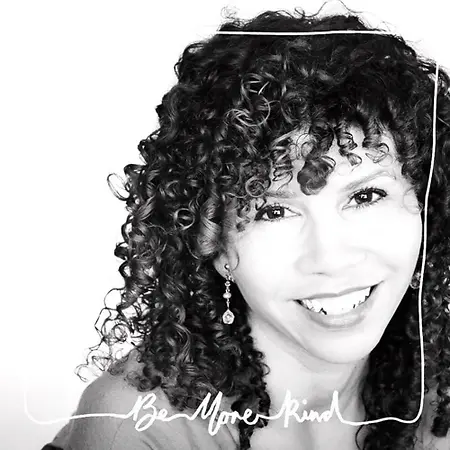
Influential Woman · Performing Arts / Dance
Christine Colquitt Thacker
Executive Assistant and Coordinator for the Executive Artistic Dir., Gregory Hancock Dance Theatre
Carmel, IN 46032
Her Story
About Christine
Christine Colquitt Thacker has spent more than three decades building a career that spans nearly every side of the dance world — performer, educator, researcher, and executive. Her path began early, training as a teenager with a ballet company while still in public school, before she earned her undergraduate degree in dance pedagogy from Butler University. From there, she stepped into the professional stage, eventually rising to principal dancer and assistant director with Gregory Hancock Dance Theatre, a role she held for nearly two decades before retiring from performing and being honored with the title of Dancer Emeritus.
Rather than stepping away from dance, Thacker redirected her energy into higher education, joining Anderson University where she spent twelve years teaching and eventually co-chairing the Department of Dance — all while completing her Master of Fine Arts in dance teaching artistry and research at Wayne State University, with a focus on the somatics of non-sighted dance. That research culminated in her development of the Sightless Somatic Ballet Study, a technique born from fifteen years of hands-on practice and five years of formal study, which went on to win first place in an international research competition. Designed to deepen dancers' connection to their own bodies, the method has also proven valuable in identifying early stress injuries, supporting dancers with different learning processes such as dyslexia, and addressing the body dysmorphia so common in the field.
Today, Thacker has returned to Gregory Hancock Dance Theatre, now serving in an executive and administrative capacity as she continues to champion the arts from behind the scenes. As a multiracial woman who has navigated predominantly white spaces throughout her career, she remains a strong advocate for evolution and accessibility within the industry, having launched initiatives like the Diversity Dance Festival and serving on multiple boards and Racial Equity Task Forces. Grounded by a deep commitment to perseverance, professionalism, and humanity, she continues to mentor the next generation of dancers, drawing on a rare combination of stage experience and academic expertise that few in her field possess.
Her Interview
Ten minutes with Christine
01What do you attribute your success to?
I attribute my success to the stable, supportive family I was fortunate to grow up with, along with the village of mentors and colleagues who guided me along the way. Success in this industry isn't something you achieve alone — you need people around you who believe in you and help carry you forward.
02What advice would you give to young women entering your industry?
My advice is simple: do it. This career asks everything of you, so you have to be all in — either you're doing this or you're not. But I can say with certainty that it is so worthwhile.
03What are the biggest challenges or opportunities in your field right now?
I see evolution as both the challenge and the opportunity in our field right now — we have to educate, evolve, and inspire. As a multiracial woman who has spent much of my career as a brown ballerina in predominantly white spaces, I feel strongly that pushing the industry toward greater accessibility and inclusion is some of the most important work we can do.
04What values are most important to you in your work and personal life?
Perseverance, professionalism, and humanity are the values I hold most important. Talent, technique, and artistry might get you in the door, but it's professionalism that keeps you there.
Join Influential Women and start making an impact. Register now.