A comprehensive examination of why criminal behavior and mental illness are distinct concepts, exploring criminal thinking patterns, evidence-based treatment approaches, and the importance of accountability in forensic and clinical settings.

Verified Member
Influential Woman · Mental Health and Behavioral Health
Christine Matthews, LCSW MBA CLC BSP
Founder and CEO, Never Journey Alone, LLC
Colmar, PA 18915
9Articles published
2Awards received
“
Don't let fear silence your vision. Every meaningful endeavor has moments of uncertainty. Growth requires stepping into spaces where you aren't fully confident yet.
Christine Matthews, LCSW MBA CLC BSP · In Her Own Words
Her Story
About Christine
Christine Matthews, LCSW, MBA, is the founder and CEO of Never Journey Alone, LLC, a mental health outpatient therapy group practice she established in 2017. With over 20 years of experience in the mental health field, Christine has built a practice focused on trauma, anxiety, and depression, emphasizing the impact of childhood trauma on adult life and relationships. Under her leadership, Never Journey Alone has grown into a multi-state group practice with approximately nine clinicians, providing high-quality, ethically grounded care.
Christine’s professional philosophy centers on supporting both clients and clinicians. She is passionate about trauma-focused therapy and also provides clinical supervision and mentorship for pre-licensed and licensed mental health professionals, helping them develop private practices that are sustainable, ethical, and aligned with their values. She recently launched NJA Coaching & Consulting and the NJA Affiliate Network to expand her impact, guiding clinicians through leadership development, practice management, and professional growth.
A lifelong learner and advocate for ethical, client-centered care, Christine holds a Master of Social Work from the University of Pittsburgh and an MBA from Waynesburg University. She has served in leadership roles with the National Association of Social Workers and community organizations such as We Feed the Homeless Philly. Christine leads with transparency, accountability, and a belief that great clinicians are built—not born—through support, coaching, and intentional professional development.
Her Interview
Ten minutes with Christine
01What do you attribute your success to?
I would say, quite honestly, that much of my journey and the success I’ve experienced is rooted in how I was raised. Growing up, I watched my sister struggle with addiction. At the time, I was very young and didn’t fully understand what was happening, but even then something in me wanted to understand why.
We were raised by the same parents and came from the same home, yet our lives moved in very different directions. I found myself asking questions early on about what shapes a person’s path—what leads one person toward struggle while another moves in a different direction.
Those questions stayed with me. Over time, they became the foundation of my curiosity and compassion for people’s stories. Looking back, I can see that those early experiences were really the beginning of my calling. They played a significant role in why I chose to pursue social work and why I remain so committed to the work I do today—helping people understand their experiences, find healing, and recognize that their story does not have to define their future.
02What’s the best career advice you’ve ever received?
One of the most valuable pieces of business advice I have ever received was this: not every person or every situation requires an immediate response.
Early in my career, I felt the pressure many leaders feel—the belief that a good leader must respond quickly, fix things immediately, and have an answer on the spot. Over time, I learned that leadership and sound business decisions don’t come from reacting quickly; they come from responding thoughtfully.
In business, especially when you are building something meaningful, you will encounter many personalities, opinions, and unexpected situations. Not all of them deserve your immediate attention, and certainly not all of them deserve your emotional energy. Some situations require you to pause, assess the bigger picture, gather the right information, and respond with intention rather than impulse.
I have found that taking that moment to step back protects both your clarity and your leadership. It allows you to ask better questions:
Is this something that truly requires my response?
Is this the right time to address it?
What outcome am I trying to achieve?
When you operate this way, you move from a reactive mindset to a strategic leadership mindset. Your responses become more measured, your decisions more aligned with your values, and your business more stable because it is being led with intention rather than urgency.
Sometimes the most powerful response in business is not rushing to respond at all, but giving yourself the space to think clearly and lead wisely. That simple shift has saved me time, protected my energy, and allowed me to make decisions that truly support long-term growth.
03What advice would you give to young women entering your industry?
If I could offer guidance to the younger generation of mental health professionals—especially young women entering this field—it would be this: know who you are, recognize your value, and confidently claim your seat at the table once you’ve done the work.
This profession requires more than passion. It requires preparation, discipline, and a commitment to lifelong learning. Do the work. Invest in your education, strengthen your clinical foundation, and remain curious about the people you serve. The credibility you build through competence will always speak louder than any title.
At the same time, understand that your voice matters. Too often, talented professionals hesitate to speak up, advocate for their ideas, or step into leadership roles because they feel they need more time or more permission. Let me be clear—once you have done the work and built your foundation, you have every right to sit at the table where decisions are being made. Do not shrink yourself to make others comfortable.
Also remember that this field can be emotionally demanding. Protect your well-being the same way you encourage your clients to protect theirs. Set boundaries. Develop supportive professional relationships. Seek mentorship and also be willing to mentor those who come behind you. Our field grows stronger when we support one another rather than compete with one another.
Finally, keep the mission in focus. Mental health work is about people’s lives, their healing, and their ability to move forward. If you stay grounded in that purpose, continue to sharpen your skills, and lead with both compassion and integrity, you will not only build a meaningful career—you will help shape the future of this profession for the generations that follow.
04What are the biggest challenges or opportunities in your field right now?
One of the most significant challenges in mental health today is access to care, particularly when it comes to services that are covered and affordable through insurance. Many individuals who genuinely need support find themselves unable to access it due to financial barriers, limited provider networks, or long waitlists. When care is difficult to obtain or financially out of reach, people are often left to navigate serious emotional and psychological stress without the professional support that could help them move forward.
Another major challenge is the continued stigma surrounding mental health. There are still many people who believe that emotional struggles are simply something individuals should “get over” or push through on their own. However, it is rarely that simple. Life brings challenges—stress, loss, trauma, and transitions—that can deeply affect multiple areas of our lives, including our families, our work, and our interpersonal relationships. Ignoring those struggles does not make them disappear; it often allows them to grow.
Stigma can also be influenced by cultural beliefs and expectations. As an African American woman, I recognize that within many communities of color, mental health care has not always been openly embraced. In some cases, the message has been that we should simply pray about our struggles and move on. Faith is certainly powerful and meaningful, and prayer can be an important source of strength. At the same time, it is important to acknowledge that seeking professional mental health support is not a contradiction to faith—it is a complement to it.
The reality is that both can coexist. We can lean on our spiritual beliefs while also seeking the guidance and support of trained mental health professionals. When we begin to normalize that balance, we create healthier communities where people feel empowered to pursue the care and healing they deserve.
05What values are most important to you in your work and personal life?
The values that guide both my professional work and my personal life are rooted in ethical practice, accessibility of care, reducing stigma around mental health, and maintaining personal integrity and self-awareness. These are not just concepts I speak about—they are principles that shape how I show up every day as a clinician, leader, and human being.
Ethical practice is the foundation of meaningful mental health work. In a field where people trust us with some of the most vulnerable parts of their lives, our responsibility is to operate with transparency, sound clinical judgment, and accountability. Ethical practice means making decisions that protect the wellbeing of those we serve, even when those decisions are not the easiest or most convenient. It requires ongoing education, consultation, and a willingness to remain grounded in professional standards rather than personal ego.
Accessibility of care is another value that sits very close to my heart. Mental health support should not be something that only a few people can access. Too many individuals and families still face barriers—financial barriers, cultural barriers, geographic barriers, and even informational barriers. I believe strongly that part of our role in this field is to continue building pathways that make care more reachable, more understandable, and more welcoming to the communities that need it most.
Equally important is the work of reducing stigma. For far too long, conversations about mental health have been surrounded by shame, silence, and misunderstanding. When people feel judged for struggling, they are far less likely to seek the support they deserve. I believe that part of our responsibility as mental health professionals is to normalize conversations about emotional wellbeing, encourage people to seek help without fear, and remind individuals that needing support is not a weakness—it is a human experience.
Lastly, I believe deeply in the importance of personal integrity and self-awareness. As clinicians and leaders, we cannot guide others through healing if we are unwilling to examine ourselves. Self-awareness allows us to recognize our own biases, emotional triggers, and limitations so that we can show up more authentically and responsibly in our work. Integrity means aligning our actions with our values, even when no one is watching.
When these values are practiced consistently—ethics, accessibility, stigma reduction, and self-awareness—they create a framework that supports not only effective clinical care but also trust, dignity, and long-term impact for the individuals and communities we serve.
Her Content Hub
Articles by Christine
Criminal Behavior and Mental Illness: Why Understanding the Difference Matters
Understanding the Critical Difference Between Mental Illness and Criminal Behavior

As a licensed mental health professional, I have often observed how quickly society labels difficult, harmful, or unlawful behavior as "mental illness." While this assumption may seem harmless, it can create significant misunderstandings, increase stigma toward individuals living with mental health conditions, and distract from the real factors contributing to criminal behavior.
Mental illness and criminal behavior are not synonymous. Although there are situations in which an individual may experience both mental health challenges and involvement with the criminal justice system, one does not automatically cause the other.
Understanding this distinction is critical for clinicians, policymakers, educators, law enforcement professionals, and the public.
The Myth: Criminal Behavior Equals Mental Illness
One of the most persistent misconceptions is that individuals who commit crimes must be mentally ill. Research consistently demonstrates that the vast majority of individuals living with mental illness are not violent and are more likely to be victims of crime than perpetrators (Stuart, 2003).
Mental illnesses such as depression, anxiety disorders, bipolar disorder, schizophrenia, post-traumatic stress disorder (PTSD), and obsessive-compulsive disorder affect a person's thoughts, emotions, mood, perception, and ability to function. These conditions are health disorders that often require professional treatment, support, and symptom management.
Criminal behavior, on the other hand, involves actions that violate laws, social norms, and the rights of others. Criminal conduct may stem from numerous factors including learned behaviors, antisocial attitudes, substance use, environmental influences, personality traits, poor impulse control, criminal thinking patterns, or a combination of these factors.
The presence of mental illness alone does not explain criminal behavior, nor does criminal behavior automatically indicate mental illness.
What Is Criminal Thinking?
In forensic psychology, professionals often discuss "criminal thinking" rather than a "criminal mind."
Criminal thinking refers to cognitive distortions, attitudes, beliefs, and rationalizations that support unlawful behavior. These thinking patterns allow individuals to justify harmful actions while minimizing responsibility.
Examples include:
- Blaming others for personal choices
- Entitlement beliefs
- Lack of empathy for victims
- Minimizing the impact of harmful actions
- Manipulation for personal gain
- Rationalizing illegal behavior
- Viewing rules as obstacles rather than boundaries
Research conducted by Walters (1990, 2006) suggests that criminal thinking patterns are among the strongest predictors of continued offending behavior.
Unlike many mental health disorders, criminal thinking is often associated with decision-making processes, learned behaviors, and cognitive distortions that reinforce criminal conduct.
Mental Illness: A Different Clinical Reality
Individuals experiencing mental illness are often struggling with symptoms that can significantly impair their daily functioning.
Depending on the diagnosis, symptoms may include:
- Persistent sadness or hopelessness
- Excessive anxiety or fear
- Difficulty concentrating
- Sleep disturbances
- Emotional dysregulation
- Intrusive thoughts
- Hallucinations or delusions
- Feelings of shame, guilt, or worthlessness
These symptoms are generally distressing to the individual experiencing them.
In contrast, criminal behavior is frequently associated with actions that harm others, violate laws, or seek personal gain despite negative consequences for victims or society.
This distinction does not eliminate the possibility that mental illness may contribute to impaired judgment in certain circumstances. However, from a clinical and forensic standpoint, treatment planning requires careful assessment of whether behavior is primarily driven by psychiatric symptoms, criminal thinking patterns, substance use, personality factors, or a combination of influences.
The Role of Accountability
An important aspect of both clinical treatment and criminal justice intervention is accountability.
Accountability means recognizing personal responsibility for one's choices and actions while also addressing underlying factors that contribute to harmful behavior.
Treatment should never be viewed as an alternative to accountability. Rather, effective intervention combines accountability with opportunities for rehabilitation and behavior change.
Research consistently shows that interventions focused solely on punishment are often less effective than approaches that address criminogenic risk factors and teach prosocial skills (Andrews & Bonta, 2010).
Evidence Based Treatment Approaches for Criminal Thinking Patterns
Contrary to popular belief, treatment for individuals involved in the criminal justice system is not focused on "curing criminality." Instead, interventions target specific risk factors associated with reoffending.
Cognitive Behavioral Therapy (CBT)
CBT is one of the most widely researched interventions used in correctional and forensic settings.
Treatment focuses on:
- Challenging distorted thinking
- Improving decision making
- Increasing accountability
- Developing empathy
- Building problem solving skills
Studies have consistently demonstrated reductions in recidivism among participants who successfully complete CBT-based interventions.
Moral Resonation Therapy (MRT)
MRT is designed to improve moral reasoning and decision making.
The program helps individuals:
- Develop personal responsibility
- Increase ethical reasoning
- Build healthier value systems
- Strengthen prosocial behavior
Research has linked MRT participation to reduced rates of reoffending.
Thinking for a Change (T4C)
Developed by the National Institute of Corrections, T4C combines cognitive restructuring, social skills training, and problem-solving techniques.
The program is widely utilized within correctional systems throughout the United States.
Substance Use Treatment
A substantial percentage of criminal offenses involve substance misuse.
Evidence-based treatment may include:
- Residential treatment
- Intensive outpatient treatment
- Medication-assisted treatment when appropriate
- Recovery support services
- Relapse prevention planning
Addressing substance use disorders can significantly reduce criminal justice involvement.
Trauma Informed Care
Research indicates that trauma histories are highly prevalent among justice-involved populations.
Trauma informed treatment helps individuals:
- Understand trauma responses
- Improve emotional regulation
- Develop coping strategies
- Reduce reactive behaviors
Importantly, trauma informed care acknowledges past experiences without excusing criminal conduct.
Specialized Treatment for Personality Disorders
When clinically appropriate, treatment may involve:
- Cognitive Behavioral Therapy
- Dialectical Behavior Therapy (DBT)
- Schema Therapy
- Long-term psychotherapy
These approaches can help individuals improve interpersonal functioning, emotional regulation, and behavioral control.
Why This Distinction Matters
When society labels every harmful act as mental illness, two significant problems emerge.
First, individuals living with legitimate mental health conditions experience increased stigma and discrimination.
Second, opportunities to address criminal thinking patterns and promote accountability become diluted.
Effective public policy, mental health treatment, and criminal justice reform require a balanced understanding of both concepts.
Mental illness deserves compassion, treatment, and support.
Criminal behavior requires accountability, intervention, and rehabilitation.
Sometimes both are present simultaneously, and both must be addressed.
Moving Toward a More Informed Conversation
As mental health professionals, we have a responsibility to educate the public about the differences between mental illness and criminal behavior.
Reducing stigma does not mean eliminating accountability.
Supporting rehabilitation does not mean excusing harmful actions.
The most effective approach combines evidence-based treatment, personal responsibility, public safety, and opportunities for meaningful change.
When we understand the distinction, we can better serve individuals, families, communities, and the systems designed to support them.
About the Author
Christine Matthews, LCSW, MBA, CLC, CCTP, BSP, is the Founder and Clinical Director of Never Journey Alone, LLC, a multi-state outpatient mental health practice providing trauma-informed care to individuals, families, and communities.
With more than 20 years of experience in mental health, managed care, corrections, and outpatient treatment settings, Christine is passionate about mental health education, trauma recovery, leadership development, and reducing stigma through evidence-based practice.
She is also the Founder of NJA Business Group, where she helps mental health professionals build sustainable private practices through strategic leadership and business development.
Learn more at:
References
Andrews, D. A., & Bonta, J. (2010). The Psychology of Criminal Conduct (5th ed.). Routledge.
Latessa, E. J., Cullen, F. T., & Gendreau, P. (2002). Beyond Correctional Quackery: Professionalism and the Possibility of Effective Treatment. Federal Probation, 66(2), 43-49.
Lipsey, M. W., Landenberger, N. A., & Wilson, S. J. (2007). Effects of Cognitive-Behavioral Programs for Criminal Offenders. Campbell Systematic Reviews, 3(1), 1-27.
Morgan, R. D., Kroner, D. G., Mills, J. F., Serna, C., & McDonald, B. (2013). Criminal Thinking and Offender Rehabilitation. Academic Press.
Stuart, H. (2003). Violence and Mental Illness: An Overview. World Psychiatry, 2(2), 121-124.
Walters, G. D. (1990). The Criminal Lifestyle: Patterns of Serious Criminal Conduct. Sage Publications.
Walters, G. D. (2006). Appraising, Researching, and Conceptualizing Criminal Thinking: A Personal View. Criminal Justice and Behavior, 33(5), 576-589.
Wilson, D. B., Bouffard, L. A., & MacKenzie, D. L. (2005). A Quantitative Review of Structured, Group-Oriented, Cognitive-Behavioral Programs for Offenders. Criminal Justice and Behavior, 32(2), 172-204.
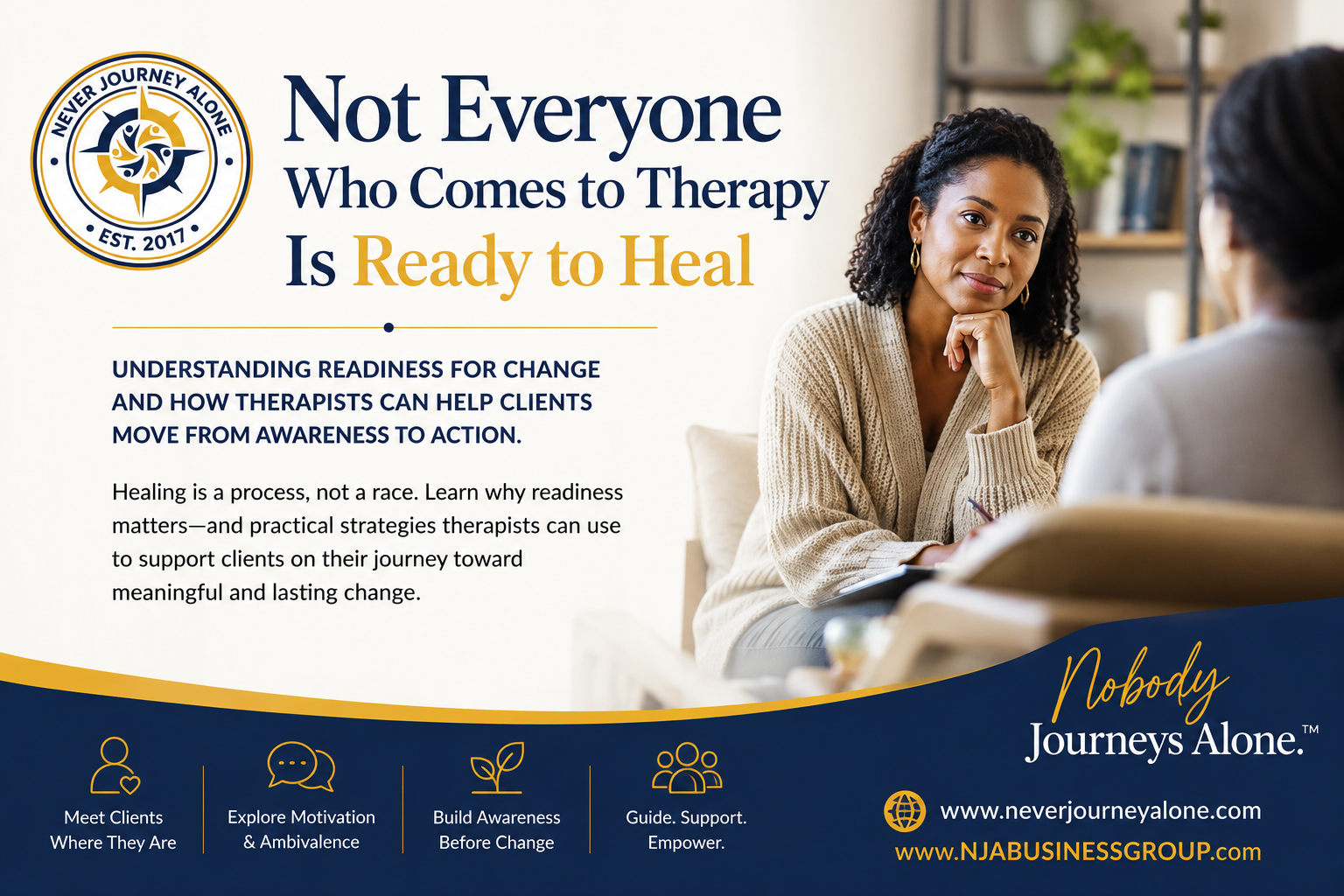
Explore why not all therapy clients are ready to heal and discover evidence-based strategies therapists can use to support clients toward readiness, reducing burnout while building sustainable change.
Not Everyone Who Comes to Therapy Is Ready to Heal
Understanding Why Not All Clients Are Ready to Heal, and How Therapists Can Help Them Get There
By Christine Matthews, LCSW, MBA
As mental health professionals, we often enter the therapeutic relationship with hope. We see possibilities. We recognize strengths our clients may not yet see in themselves. We envision a path forward.
However, one of the most important lessons therapists learn over time is this:
Not everyone who comes to therapy is ready to heal.
That statement is not a criticism of clients, nor is it a judgment. Rather, it is an acknowledgment of the complexity of the human experience.
Many individuals seek therapy because they are experiencing emotional pain, relationship difficulties, anxiety, depression, trauma symptoms, or major life transitions. While they may genuinely want relief from their suffering, wanting relief and being ready for healing are not always the same thing.
Understanding this distinction can help therapists avoid frustration, reduce burnout, and better support clients through the stages of change.
The Difference Between Seeking Relief and Seeking Healing
Relief is often immediate. People want the anxiety to stop. They want the relationship conflict to end. They want the painful memories to disappear.
Healing, however, requires something deeper.
Healing often involves:
- Taking personal responsibility
- Examining long-standing patterns
- Developing self-awareness
- Learning new coping skills
- Practicing behavioral change
- Sitting with uncomfortable emotions
- Challenging beliefs that may have existed for years
Healing asks clients to move beyond symptom management and into transformation.
That can be frightening.
For some individuals, emotional pain has become familiar. Dysfunction may be uncomfortable, but it is predictable. Healing introduces uncertainty, vulnerability, and change.
And change, even positive change, can feel threatening.
Why Some Clients Are Not Yet Ready
There are many reasons a person may enter therapy before they are ready for the deeper work of healing.
1. External Motivation
Some clients enter therapy because someone else wants them there.
Examples include:
- Court mandates
- Partner ultimatums
- Employer recommendations
- Family pressure
While therapy can still be beneficial, externally motivated clients may initially focus on compliance rather than personal growth.
2. Limited Insight
Some individuals have not yet developed awareness of their role in recurring patterns.
They may recognize the problem but struggle to see how their behaviors, beliefs, or choices contribute to it.
Without insight, sustainable change becomes difficult.
3. Fear of Change
Healing often requires letting go of identities, coping mechanisms, relationships, and narratives that have existed for years.
Many clients fear questions such as:
- Who will I be without my trauma story?
- What if I fail?
- What if people expect more from me?
- What if healing changes my relationships?
These fears are often valid and deserve exploration.
4. Secondary Gains
Sometimes, a problem unintentionally provides benefits.
For example:
- Avoiding responsibilities
- Receiving attention or care
- Maintaining familiar relationship dynamics
- Avoiding difficult decisions
These gains are often unconscious but can create resistance to change.
5. Trauma-Related Protection
For trauma survivors, avoidance is often a survival strategy.
Many clients have spent years developing protective mechanisms to avoid emotional pain.
What appears to be resistance may actually be self-protection.
Understanding this distinction is critical for trauma-informed care.
Signs a Client May Not Be Ready for the Healing Phase
Therapists may notice patterns such as:
- Consistent lack of follow-through between sessions
- Repeated crises with minimal behavioral change
- Externalizing responsibility for all problems
- Frequent cancellations or inconsistent attendance
- Intellectualizing emotions without fully experiencing them
- Seeking validation without a willingness to explore alternatives
- Strong resistance whenever accountability is introduced
These behaviors do not mean therapy is failing.
They simply indicate that the client may still be in an earlier stage of readiness.
How Therapists Can Support Clients Toward Readiness
The goal is not to force healing.
The goal is to help clients become ready for healing.
1. Meet Clients Where They Are
One of the quickest ways to damage rapport is to move faster than the client is prepared to move.
Therapists must respect each person's pace.
Readiness cannot be imposed.
It must be cultivated.
2. Focus on Motivation
Explore both the benefits and costs of change.
Questions such as:
- What would improve if this problem changed?
- What would become more difficult?
- What concerns you about making changes?
can help clients uncover ambivalence.
Motivational Interviewing techniques can be particularly effective during this phase.
3. Normalize Resistance
Resistance is often part of the therapeutic process.
Instead of viewing resistance as opposition, view it as information.
Ask yourself:
"What is this behavior protecting?"
This shift can transform frustration into curiosity.
4. Build Self-Awareness Before Accountability
Clients cannot take responsibility for patterns they do not yet recognize.
Help clients identify:
- Emotional triggers
- Thought patterns
- Behavioral responses
- Relationship dynamics
Awareness often precedes change.
5. Celebrate Small Wins
Readiness develops through confidence.
Acknowledging small victories helps clients recognize their capacity for growth.
Progress may initially look like:
- Increased insight
- Improved emotional awareness
- Greater honesty in sessions
- More consistent attendance
- A willingness to consider alternative perspectives
These milestones matter.
6. Teach the Difference Between Talking and Doing
Many clients believe attendance alone creates change.
Therapists can gently educate clients that therapy is not simply about discussing problems.
Healing requires application.
The work between sessions often determines the progress made during sessions.
7. Maintain Hope Without Taking Ownership of Outcomes
Therapists must remember that healing belongs to the client.
We can guide.
We can educate.
We can challenge.
We can support.
But we cannot heal for someone else.
When therapists take responsibility for a client's readiness, frustration and burnout often follow.
Final Thoughts
Attending therapy does not automatically create change.
Healing begins when individuals become willing to engage in the difficult, courageous work that meaningful change requires.
As therapists, our responsibility is not to force readiness but to help create an environment where readiness can emerge.
Some clients arrive prepared to dive deeply into the work.
Others need time to build trust, insight, motivation, and emotional safety.
Both journeys deserve respect.
Because sometimes the most important progress happening in therapy is not the healing itself.
It is helping someone become ready for it.
About the Author
Christine Matthews, LCSW, MBA, is the Founder and Clinical Director of Never Journey Alone, LLC, an outpatient mental health practice providing compassionate, evidence-based mental health services. With more than 20 years of experience in behavioral health, leadership, and organizational development, she specializes in trauma recovery, mental wellness, professional development, and helping individuals move from survival to sustainable healing.
Christine is also the Founder of NJA Business Group, where she provides coaching, consulting, and business development support to mental health professionals seeking to build sustainable and impactful private practices.
Never Journey Alone, LLC
NJA Business Group
"Nobody Journeys Alone™"
A licensed trauma therapist explains why trauma recovery requires clinical expertise, not coaching, and why survivors deserve evidence-based mental health treatment for safe, effective healing.
Why I Do Not Support “Trauma Coaching” as a Licensed Trauma Therapist
Why Licensed Trauma Therapists, Not Coaches, Should Guide Your Healing Journey
By Christine Matthews, LCSW, MBA, CCTP
Founder & Clinical Director of Never Journey Alone, LLC
Trauma has become one of the most discussed topics on social media, in leadership spaces, and within personal development communities. While I appreciate that conversations around emotional wellness are becoming more normalized, I also believe we have entered dangerous territory when trauma recovery is marketed as something that can be safely managed by individuals without clinical mental health training, licensure, or ethical accountability.
As a licensed mental health therapist who specializes in trauma recovery, I do not support trauma "coaching."
That statement is not rooted in ego, competition, or gatekeeping. It is rooted in clinical responsibility, ethics, client safety, and the reality of what trauma actually does to the human brain and body.
Trauma Is Not Just "a Hard Experience"
Trauma is not simply feeling stressed, overwhelmed, or emotionally hurt.
Trauma is the psychological, emotional, neurological, and physiological response to an event—or a series of events—that overwhelms an individual's ability to cope safely and effectively.
Trauma may result from:
- Childhood abuse or neglect
- Domestic violence
- Sexual assault
- Medical trauma
- Community violence
- Racism and systemic oppression
- Grief and sudden loss
- Military combat
- Chronic emotional invalidation
- Religious trauma
- Traumatic accidents or disasters
According to the Substance Abuse and Mental Health Services Administration (SAMHSA), trauma can significantly impact emotional functioning, cognitive processing, physical health, relationships, and a person's sense of safety in the world.
Research from the Centers for Disease Control and Prevention (CDC) and the landmark ACEs (Adverse Childhood Experiences) Study found that nearly 64% of adults reported experiencing at least one adverse childhood experience, while approximately 17% reported experiencing four or more. Higher ACE scores are strongly associated with increased risks of depression, anxiety, substance use disorders, chronic illness, suicidality, and relational dysfunction.
Trauma changes the nervous system.
It affects:
- Emotional regulation
- Threat perception
- Memory processing
- Attachment patterns
- Stress hormone activation
- Sleep
- Identity formation
- Interpersonal trust
- Physical health outcomes
This is not surface-level "mindset work."
This is deep clinical work.
Trauma Recovery Requires More Than Encouragement
One of the most misunderstood aspects of trauma recovery is the actual processing phase.
Trauma therapy is not simply "talking about what happened."
Effective trauma treatment often includes:
- Stabilization and the development of emotional safety
- Nervous system regulation
- Psychoeducation
- Trigger identification
- Cognitive restructuring
- Somatic awareness
- Boundary development
- Attachment repair
- Grief work
- Evidence-based interventions, such as:
- EMDR
- Trauma-Focused Cognitive Behavioral Therapy (TF-CBT)
- Somatic therapies
- Internal Family Systems (IFS)-informed work
- DBT-informed emotional regulation strategies
A trauma-trained therapist understands how to pace treatment carefully to avoid emotional flooding, dissociation, re-traumatization, or destabilization.
That matters.
Because trauma recovery is not linear.
When trauma is activated, people may experience:
- Panic attacks
- Dissociation
- Emotional dysregulation
- Self-harm urges
- Suicidal ideation
- Flashbacks
- Nightmares
- Hypervigilance
- Shutdown responses
- Intense shame responses
- Substance use relapse
- Attachment crises
A licensed clinician is trained to assess risk, intervene clinically, document appropriately, maintain confidentiality, recognize contraindications, and respond ethically when a client becomes psychologically unsafe.
That is not the same as motivation.
That is clinical care.
The Concern With Trauma Coaching
The coaching industry is largely unregulated.
That means virtually anyone can market themselves online as a "trauma coach" without:
- Graduate-level clinical education
- Supervised clinical hours
- State licensure
- Clinical accountability
- Ethics board oversight
- Crisis intervention training
- Suicide assessment training
- Diagnostic education
- Legal responsibility to protect vulnerable individuals
That should concern people.
Particularly because trauma survivors are often emotionally vulnerable and searching for relief, validation, answers, and healing.
Without proper clinical training, well-intentioned individuals can unintentionally:
- Trigger severe emotional responses
- Encourage premature trauma disclosure
- Miss signs of suicidality or dissociation
- Confuse spiritual bypassing with healing
- Promote dependency dynamics
- Overstep their scope of competence
- Misinterpret trauma symptoms
- Fail to recognize serious mental health disorders
- Cause re-traumatization
And unlike licensed therapists, many coaches are not legally or ethically accountable to licensing boards if harm occurs.
That distinction matters.
Coaching and Therapy Are Not the Same
To be clear, I am not anti-coaching.
Coaching can be incredibly valuable in the right setting.
Coaching may help with:
- Goal achievement
- Accountability
- Leadership development
- Business growth
- Confidence building
- Performance enhancement
- Mindset shifts
- Time management
- Strategy implementation
I personally believe coaching has a meaningful role in both professional and personal development.
However, coaching should not replace clinical trauma treatment.
Therapy
Therapy focuses on:
- Mental health symptoms
- Emotional processing
- Trauma recovery
- Behavioral health
- Clinical assessment
- Psychological stabilization
- Diagnosis and treatment planning
- Evidence-based interventions
Therapists are clinically trained, licensed, ethically regulated, and legally accountable.
Coaching
Coaching focuses on:
- Future goals
- Personal development
- Performance
- Accountability
- Strategy
- Motivation
- Action planning
Coaches are not mental health providers unless they also hold active clinical licenses and operate within their professional scope of practice.
These distinctions exist for a reason.
Trauma Healing Deserves Safe Clinical Care
Trauma survivors deserve more than trendy language, viral content, or emotionally intense breakthrough sessions without proper containment and clinical support.
Healing requires safety.
It requires ethical care.
It requires someone who understands the complexity of the nervous system, attachment wounds, trauma triggers, emotional dysregulation, and evidence-based recovery practices.
As a trauma therapist, I have seen firsthand what happens when unresolved trauma is mishandled, minimized, rushed, or opened without proper support structures in place.
I have also witnessed the incredible transformation that occurs when trauma survivors are treated with clinical competence, compassion, patience, and safety.
If you are planning to begin your trauma healing journey, I strongly encourage you to do so with a trauma-trained, licensed mental health therapist.
Your healing is too important to place in the hands of someone who is not clinically equipped to protect it.
If you are seeking trauma-informed mental health support, visit Never Journey Alone.
For mental health professionals seeking education, consulting, and sustainable practice development, visit NJA Business Group.
About the Author
Christine Matthews, LCSW, MBA, CLC, CCTP, BSP, is the Founder and Clinical Director of Never Journey Alone, LLC, a multi-state outpatient mental health group practice dedicated to supporting individuals through healing, emotional wellness, and personal growth.
With more than 20 years of experience across mental health, managed care, corrections, leadership, and private practice development, Christine specializes in trauma recovery, emotional wellness, leadership resilience, and sustainable clinical practice development.
She is also the Founder of NJA Business Group, where she coaches and consults with mental health professionals through her proprietary CLEAR Method™ framework, designed to help clinicians build structured, sustainable private practices with integrity and purpose.
Christine is recognized for her compassionate yet direct approach to healing, leadership, and business development, with a core mission rooted in the belief that "Nobody Journeys Alone."
Join Influential Women and start making an impact. Register now.