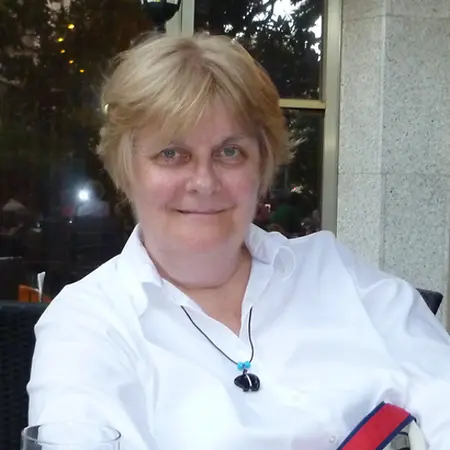
Influential Woman · Education
Christine Milcarek
Emerita Professor of Immunology, University of Pittsburgh
Pittsburgh, PA 15217
Her Story
About Christine
Christine Milcarek, Ph.D., Emeritus Professor of Immunology, University of Pittsburgh has had a distinguished career spanning 50 years in research and teaching. She earned her bachelor’s degree in Chemistry from Duquesne University, completed her Ph.D. in Microbiology at The Johns Hopkins University School of Medicine, and conducted post-doctoral research at the Massachusetts Institute of Technology. She joined the University of Pittsburgh, where she taught medical students for five decades, established a program to support young women in science, and served as Professor of Immunology at the University of Pittsburgh Cancer Institute. She retired in 2019 and has been an Emeritus Professor for the past seven years. Throughout her career, Dr. Milcarek was recognized for excellence in teaching and mentorship, receiving the Distinguished Teaching Award and Mentor Award from the School of Medicine. She is an active member of the American Association of Immunologists and has credited Dr. Olivera Finn as a mentor who shaped her scientific and educational approach. Her research and academic leadership have had a lasting impact on both her students and the broader scientific community. Beyond academia, Dr. Milcarek is deeply engaged in her community. She attends the First Unitarian Church of Pittsburgh, where she served on the Board of Trustees and procured a grant to enhance safety. She is also the 14th Ward District Committee Person for the Democratic Party, demonstrating her commitment to civic service alongside her scientific career.
Her Interview
Ten minutes with Christine
01What do you attribute your success to?
I attribute my success to my family, especially my mother who was my role model and worked throughout most of my childhood. My family valued education and hard work, which shaped who I became. I also have to credit my husband, who has been very supportive throughout my career. I've been very successful at picking the right husband, and his support has been instrumental in everything I've accomplished. So when I boil it down, it really comes down to family both the family I grew up with and the family I chose.
02What’s the best career advice you’ve ever received?
The best career advice I ever received was learning that when you go to graduate school in the sciences, they actually pay you and you get a stipend, as opposed to the humanities where you have to pay tuition and pay your own way. That was a revelation to me, and it allowed me to go to graduate school even though the stipend at the time was fairly small. I was able to live on that stipend and not have to pay tuition. I tell all young women about this because it's something important to think about. If you get a degree in the sciences as opposed to something like history, they'll pay for your grad school. That's probably why I didn't go into medicine, because I would have had to pay my own way.
03What advice would you give to young women entering your industry?
I would encourage young women to seek careers in the hard sciences and not be afraid of it. I think there's been a lot of emphasis recently on what women have done, like with the movie Hidden Figures and media events like that, but I just want to encourage young women to get into science and not be afraid of it. We need your voices.
04What are the biggest challenges or opportunities in your field right now?
I still think that it's difficult for men to accept women in the field. I don't think that I was asked to speak at meetings as often as some of my colleagues, and I don't think that I got postdoctoral trainees to come work for me as frequently as some of my colleagues. Even going back to high school in the 60s, I realized at recent reunions that boys were given opportunities to apply for scholarships and attend extra special courses that I wasn't necessarily given. I found out that one of them was encouraged to apply for a scholarship that I could well have qualified for, but I wasn't informed about. It just feels a little hurtful that I wasn't told about certain things, though I can't say I didn't do well overall.
05What values are most important to you in your work and personal life?
The values most important to me are helping other people and being truthful and honest. That's really what I try to live by in both my work and personal life.
Join Influential Women and start making an impact. Register now.