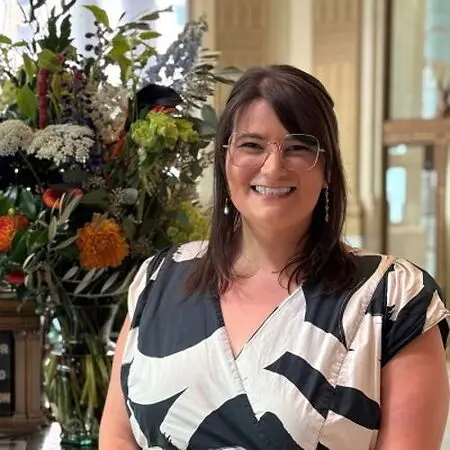
Her Story
About Claire
Claire Lowe is a dedicated Policy and Communications Strategist with a focus on creating equitable, people-oriented urban environments. Currently serving as Senior Associate for Public Sector & Community Engagement at the Urban Land Institute (ULI) San Francisco, Claire leads initiatives that advance inclusive urban planning, including the Women’s Leadership Initiative (WLI), Public-Private Partnership (P3) Local Product Councils, Technical Assistance Panels (TAPs), and UrbanPlan programs for students and communities. Her work centers on bridging the gap between policy and lived experience, ensuring that infrastructure and development decisions amplify community voices and strengthen urban livability. With a strong background spanning federal and local government, nonprofits, and grassroots organizing, Claire brings a unique perspective to urban policy and communications. She has contributed to public diplomacy projects with the U.S. Department of State, including serving on the Afghanistan Task Force during Operation Allies Welcome and assisting with repatriation efforts during the COVID-19 pandemic. Additionally, she has cultivated expertise in crisis communications, public affairs, and community engagement, translating complex policies into actionable insights for those most impacted by urban development and social policy. Claire holds a Master of Arts in Urban and Public Affairs from the University of San Francisco, graduating Summa Cum Laude, and a Bachelor of Arts in Public Relations, Advertising, and International Relations from Grand Valley State University. Beyond her professional work, Claire volunteers with organizations supporting civil rights, refugee education, and community arts, demonstrating her commitment to social equity and civic engagement.
Her Interview
Ten minutes with Claire
01What do you attribute your success to?
I attribute my success to my determination and passion for creating thriving communities. For communities to thrive, needs have to be met; housing for all, equitable transit, and urban environments that foster connection, sustainability, and a sense of belonging. I try to bring this philosphy into my personal life as well and my community has given me the opportunity to achieve a level of success.
02What’s the best career advice you’ve ever received?
The best career advice I’ve recieved is to fake it till you make it. Confidence and acting like you belong in the important discussions is half the battle. Women often feel imposter syndrome especially in male dominated industries, so it's important to make yourself heard and know that you are qualified to be right where you are.
03What advice would you give to young women entering your industry?
I encourage young women to take advantage of professional development opportunities early on and make meaningful networking connections. Unfortunately networking is always going to be important in any industry, so you need to create professional connections often and make sure you don't burn bridges.
04What are the biggest challenges or opportunities in your field right now?
The biggest challenge that many cities are facing right now are directly related to money and post-COVID recovery. On the flip side, there is a momentum of activism and an urgency for change. I am optimistic that people and communities are coming together in the face of uncertainty.
05What values are most important to you in your work and personal life?
I value respect, empathy, and kindness in my professional and personal life. Being a colleague that can be counted on is very important to me and I want to be someone that people feel comfortable coming to me as an empathetic friend.
Join Influential Women and start making an impact. Register now.