Her Story
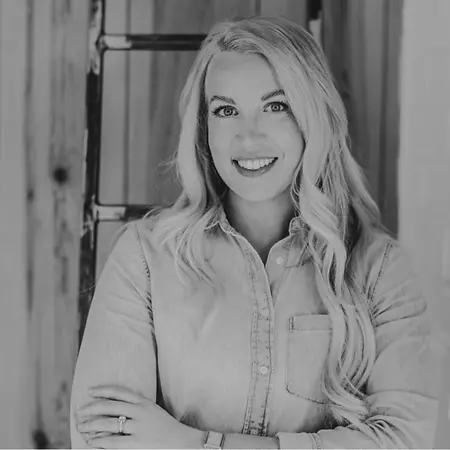
About Claire
My background is in engineering — B.S. with a chemical engineering emphasis, M.Eng., and an MBA in Leadership and Change. Over the past decade, I've worked across engineering, STEM education, workforce development, and consulting before landing in the world of advanced wood manufacturing.
I'm currently Chief of Staff and Director of Sustainability at Arbor Wood Co. (AWCO), the only U.S.-based manufacturer of International ThermoWood Association (ITWA)-certified ThermoWood. In practice, my role spans a lot of ground: working directly with the CEO, board of directors, and executive team on strategy, owning cross-functional execution, leading people operations, and driving the company's sustainability and certification programs. It's a generalist role in the best sense — I own the infrastructure that holds the business together and step into wherever the highest-leverage work is happening.
My path to my current role was anything but linear, but the range of my experiences turns out to be the point.
My engineering training made me a systems thinker. I look at an organization the way an engineer looks at a process: where are the gaps, what's misaligned, what structure would actually produce the outcome we want. But the work that energizes me most is the people side. Building teams, connecting individuals to purpose, helping someone see what they're capable of. The two things reinforce each other more than you'd expect.
I'm drawn to early-stage, high-stakes environments where the work is still being figured out. Building something from scratch, in a niche industry, with a really passionate team, that's where I do my best work.
Her Interview
Ten minutes with Claire
01What do you attribute your success to?
Two things, honestly: an insatiable drive to learn and a genuine desire to add value. Those aren't separate. The learning is in service of the value. I want to understand something well enough to actually help, not just have an opinion about it. That combination makes me willing to dive into almost anything, which is probably why my career looks the way it does. I don't chase titles or industries. I chase problems worth solving and people worth building with. My goal is always to leave things better than I found them.
02What’s the best career advice you’ve ever received?
About ten years ago I was working through a career decision out loud and my husband stopped me mid-sentence. "Do not make yourself small." That was it. No matter what I decided or how it turned out, that was the one thing he didn't want for me.
I've carried that with me ever since. It comes back whenever I'm scared to take a risk or catch myself playing smaller than I'm capable of.
03What advice would you give to young women entering your industry?
The things that make you different in a male-dominated field are not liabilities. Your perspective, your approach, the way you read a room or build relationships - those aren't soft skills, they're advantages. They're exactly why you belong in the room. Own that.
And network. I know everyone says it, but I mean it differently: don't wait until you need something. Don't wait until you feel established enough or credentialed enough or ready. Reach out now. Start conversations. Show up for other people without an agenda. You never know where a relationship goes or how much you can help someone just by being willing to connect. The best opportunities in my career didn't come from job boards. They came from people I started a relationship with not knowing where it would take me but being willing to be a resource for others. It works both ways, always. And it's never too early to start.
04What are the biggest challenges or opportunities in your field right now?
The businesses that win are the ones that stay closest to their customers. Not just understanding what they need today, but anticipating how those needs will shift and continuously positioning themselves as the only logical answer. That requires discipline and honesty about what you're actually solving for.
The internal challenge is just as real. Leaders have to help their people draw a direct line between what they do every day and why the company exists. Not in a poster-on-the-wall way. In a way that actually resonates personally. Purpose that feels assigned doesn't stick. Purpose that feels personal does. Getting that right is harder than most people think, and it's the difference between a team that shows up and a team that's all in.
05What values are most important to you in your work and personal life?
Authenticity, above everything. I spent a lot of years trying to fit into other people's boxes and it's exhausting in a way that compounds over time. At some point I stopped. Now the question I come back to in hard decisions is whether I'm abandoning myself. If the answer is yes, that's a signal worth paying attention to.
The other one is radical acceptance. Not resignation, but the ability to look at a situation clearly, without judgment, and deal with what's actually there instead of what I wished were there. That's what allows you to pivot fast. You can't solve a problem you're still arguing with.
Together they make me a better leader. I show up as myself, and I meet reality as it is. Everything else gets easier from there.
Join Influential Women and start making an impact. Register now.