Her Story
About Claudia
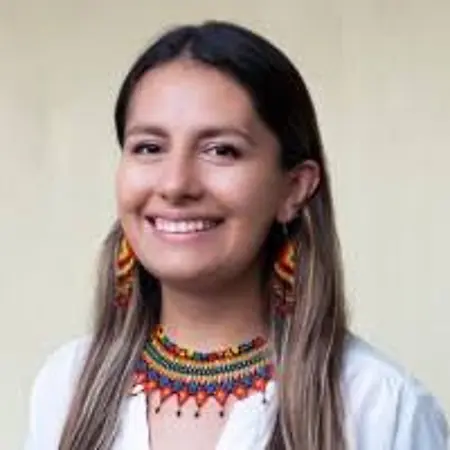
Claudia Juliana Garnica Díaz, Ph.D., is a Colombian plant ecophysiologist and first-generation scholar specializing in forest ecology, plant functional traits, and ecosystem resilience. She began her journey in education and plant ecology in 2009 as an undergraduate in Colombia. She earned her bachelor’s degree in Forestry Engineering from Universidad Distrital Francisco José de Caldas in Bogotá in 2014, followed by a master’s degree in Biology from the University of Puerto Rico-Mayagüez Campus, completed in May 2020 during the COVID-19 pandemic. She recently completed her Ph.D. in Botany at the University of Florida in December 2025. She currently serves as a Project Assistant at the University of Florida supporting an Amazon conservation initiative and is scheduled to begin a postdoctoral position at Louisiana State University in June 2026. Her research focuses on plant ecophysiology, with an emphasis on how leaf anatomy, physiology, and functional traits influence tree performance and forest ecosystem resilience under environmental stress. She works across tropical and temperate forest systems in the continental United States, Colombia, and Puerto Rico, studying how plants respond to drought, nutrient limitation, and extreme disturbance events such as hurricanes. By linking leaf-level processes to broader ecosystem dynamics, her work informs conservation and restoration strategies in vulnerable forest landscapes and contributes to a deeper understanding of how ecological systems adapt to global change. Beyond her research, Claudia is deeply committed to equity, inclusion, and culturally responsive approaches to science. After relocating to the United States, she experienced firsthand the challenges of navigating academia as a non-native English speaker and a minority scientist, which shaped her dedication to supporting underrepresented and underserved communities in STEM. She is particularly focused on culturally appropriate mentoring and actively challenges extractive “helicopter science” practices that overlook local knowledge and collaboration. Proud to be a first-generation academic in plant ecology, she has mentored approximately 8 undergraduate students during her Ph.D., including several who completed honors theses under her guidance. Her mentorship philosophy centers on understanding students as whole individuals, especially those from community colleges, and supporting them in overcoming barriers to achieve their academic and professional goals.
Her Interview
Ten minutes with Claudia
01What do you attribute your success to?
I feel that my success has been supported by my desire to help others follow their dreams. Since I was an undergrad, and continuing through my master’s and PhD, whenever I’ve had the opportunity to support another student, whether in research or practical experiences, I’ve tried to be there for them. During my PhD, I mentored around eight undergraduate students, and several of them completed honors theses with me. I really enjoy helping them, especially because I see the challenges many students face when coming from community college backgrounds. I like to get to know them as individuals, understanding what they’re struggling with, how I can support them, and what skills I can help them develop. I think that by focusing on helping the next generation, I’ve also been able to grow and make progress in my own work.
02What’s the best career advice you’ve ever received?
I think the best career advice I’ve received is to stay humble. As an international student from Colombia, I’ve learned that there’s always more to learn. from different people, perspectives, and contexts. That mindset has shaped how I approach my work and collaborations. I try to listen, stay open, and be thoughtful about how I engage with others. I think that’s helped me grow and build more meaningful connections along the way.
03What advice would you give to young women entering your industry?
I would say there are three words that have led my success while I have become an academic, basically: persist, resist, and insist. This is especially important when you're coming as a first generation. You need to be very persistent, and you will probably not understand many of the things that are happening, or your family will not understand what you're doing and why. But if you are persistent, you will follow your dreams. Just stand for yourself that's very important. Always be respectful, but don't let others tell you that you cannot do something, because you can do anything that you want to do.
04What are the biggest challenges or opportunities in your field right now?
I think one of the biggest challenges in my field is making research and conservation more equitable and inclusive. There are still a lot of power imbalances, especially in international collaborations, that affect who gets to ask questions, make decisions, and benefit from the work. At the same time, I see that as a big opportunity. There is growing awareness around these issues, and more people are trying to build collaborations that are more respectful, reciprocal, and inclusive of local knowledge and communities. I think moving in that direction will not only make the work more fair, but also stronger and more meaningful.
05What values are most important to you in your work and personal life?
I think the values that matter most to me are integrity, reciprocity, and care. In both my work and personal life, I try to be thoughtful about how my actions affect the people around me. I also value respect and shared responsibility, making sure people are included, heard, and recognized, and that my work isn’t extractive. Overall, I try to approach everything with humility and intention.
Join Influential Women and start making an impact. Register now.