Influential Woman · Graphic Design & Enterprise Operations
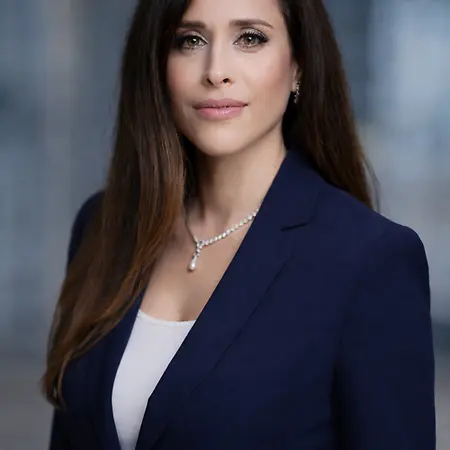
Claudia Lorena
Senior Visual Designer, Dreamcatcher Designers, LLC.
Redmond, WA 98052
Her Story
About Claudia
Claudia Lorena is a bilingual (English/Spanish) visual design and operations professional based in the Greater Seattle Area. She is the founder of Dreamcatcher Designers, where she has led freelance and contract design work since 2009, building brand identities, digital assets, packaging, and print systems for consumer brands, entertainment companies, and nonprofit organizations. Known for her clarity-driven approach, Claudia creates cohesive visual systems that balance strong creative direction with design fundamentals such as hierarchy, usability, and consistency.
Originally trained in graphic design at Toulouse Lautrec Design Institute in Peru, Claudia immigrated to the United States and faced the challenge of transferring credentials while navigating the immigration process. Rather than waiting for opportunity, she built her own—launching her design practice to establish a U.S. portfolio and client base from the ground up. Her entrepreneurial drive, inspired by her mother’s advice to always “do something,” helped her grow from small projects to larger clients while maintaining a strong creative voice rooted in digital illustration, branding, and print design.
Alongside her creative career, Claudia built a long-standing corporate track record at AT&T, where she progressed from Contract Specialist to Contract Management Specialist. In this enterprise environment, she became known for speed, precision, and cross-functional coordination—reducing contract turnaround times to same-day processing and consistently delivering high-accuracy results under deadline. Today, she bridges both worlds: combining enterprise-level operational discipline with a thoughtful, systems-based design practice, and continuing to support entrepreneurs—especially women—by helping bring their brands and visions to life.
Her Interview
Ten minutes with Claudia
01What do you attribute your success to?
I attribute my success to drive and the fact that when you're in a new country, you need to make yourself known. My mom has been an entrepreneur for the majority of her life, and her words are always in my mind - you cannot just be sitting there hoping for things to fall in your lap, you need to do something. When you're new in this country and you're an adult, you have to start from zero. You don't have friends from school or the neighborhood like people who grow up here do. I didn't have friends from nobody, so I had to start from the ground. It took a lot of me to reinvent myself, to put myself out there, and actually make the effort to meet people. I would go up to people and say, hey, I'm a graphic designer, if you need help. I also met other women here that inspire me - other entrepreneurs, people that have immigrated here, or people that came from nothing and built their own businesses. That gave me the inspiration of like, I need to do something for myself too, not just be an employee somewhere. I think you have to be confident but not arrogant, and that's a hard point to be at. When you stop thinking that you need to improve, that's where you can fall into a stagnant place in your career. It's always good to have other input from friends or other people because that keeps you shifting angles. I design for people, not for designers, so when a person tells you an honest opinion, that's a very good thing for me. Being client-centric and building relationships with clients is important because they know me, they know what they like and don't like, so they like working with me. That's something you can't build with someone speaking in a different country or time zone, or with an AI.
02What’s the best career advice you’ve ever received?
The best career advice I've received is to be confident but not arrogant. That's a hard point to be at, but it's so important. When you become arrogant, you stop listening and you stop thinking that you need to improve, and that's where you can fall into a stagnant place in your career. It's always good to have other input and ask friends or other people what they think about your work because that keeps you shifting angles and seeing things you never thought about. And those people don't necessarily have to be designers because you design for people to buy the product, not for other designers. When a person tells you an honest opinion, that's a very good thing. You have to accept other points of view and stay open to feedback.
03What advice would you give to young women entering your industry?
I would tell young women to believe in themselves and to look at the competition, but also have an edge to yourself. Figure out what makes you different, what do you like to do, and look for your own niche. Don't try to be someone else - just look for the niche that needs someone like you, because there's so many niches out there. What's happening right now is that there are so many different people and so many different niches being personalized. Not everyone is trying to fit in a mold anymore - everyone is like, I am who I am, and that's it. If you find your niche and cultivate and support it, you'll create more of a feeling that you're actually improving something, like doing something meaningful. If you find your niche and people that appreciate the work you do, and you appreciate who they are, then it's way more fulfilling, and you're also going to make money. As a professional, it's a better feeling than just saying, oh, I'm making money working for a company I don't even care for or like. You need to lean into technology because the industry is ever-evolving, especially with AI. You have to constantly be studying your market and looking for what skills you need to focus on right now that will give you an edge on everyone else.
04What are the biggest challenges or opportunities in your field right now?
The biggest challenge and opportunity right now is AI. The work market and professions are getting rewritten because AI is coming into play. It can be a good assistant - I use AI for a lot of things now because I need to know that tool. When AI started coming up and you could create beautiful art in seconds, it was hard for me and I felt threatened. But at the same time, I realized I need to know if I can use it as a tool for me and what that means for me as a designer and as an artist. I've always thought that it's better to find out and learn about it instead of blocking yourself. The first stage is natural - you have fear, you feel threatened - but then the next stage is, okay, let's see what this is about, what really is happening. A lot of jobs are being redefined and restructured because of AI and because of remote work. There's a lot of competition now. Ever since COVID, the market changed, and now there's a lot more competition for remote jobs. You're competing with the whole United States, the whole world for that matter. People are getting laid off because they're being replaced by people in a different country where the budget is different. So all of that is part of your competition now, and you have to look for what skills you need to focus on that will give you an edge. You cannot sit there and think, okay, I know how to do Photoshop, I know Illustrator, I'm good. It's not that anymore. But if you know what you're doing with AI, you can make your work faster. There's still a limit to what AI can do - I still have to go into Photoshop to fix certain things, the quality of pictures. There's no high-quality AI photos yet for print. It's all good for web and phones, but when you talk about print, it's a different market. I have a lot of experience in print and paper and resolution design, so that gives me another edge. I also focus on my clients and building relationships with them. They know me, they know that I know what they like and don't like, so they like working with me. That's something you can't build with someone speaking in a different country or time zone, or an AI. A lot of people are now valuing that and asking, am I talking to a bot or am I talking to a person? There's a lot more awareness now.
05What values are most important to you in your work and personal life?
Integrity is a big value for me. I always want to stay true to who I am and not have regrets. Regret is a terrible feeling, so I think about a lot of things and how they will make me feel in the future, down the road. I ask myself, is this something that I will regret? Every decision with my family too - would I regret leaving my kids all day to go somewhere and work? Would I be happy if I stayed at home and gave up corporate income? What would be something that I feel like would be the right decision? I think about whether I'll feel happy with my decision. That goes with my integrity - I'm not going to do something that goes against my values and my family. I want to feel that I was true to myself, my values, and my family, and not regret that. Time with my family is also very important to me, and I have to balance that with my professional life.
Join Influential Women and start making an impact. Register now.