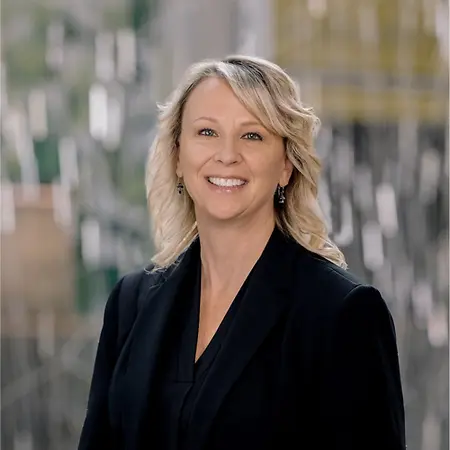
Her Story
About Claudine
Claudine Bennett is a communications and external relations professional with a deep passion for strategic communication, marketing, and crisis communication. Her career began with an early love of journalism, serving as a reporter for her high school newspaper before continuing her work in student media at her local community college and later at Wright State University. During her academic journey at Wright State University, she expanded her studies into marketing, communications strategy, and crisis communication, exploring topics ranging from historical crisis leadership in the Nixon administration to the nuances of verbal and non-verbal communication. These experiences solidified her commitment to the field and shaped the foundation of her communications philosophy.
While still in college, Claudine proactively began building her professional portfolio by seeking hands-on experience. Working part-time at a bridal shop, she reached out to the county recycling department and offered to volunteer six hours a day during her college break to develop flyers and news releases. This initiative led to an internship opportunity and sparked a lasting interest in parks and public service, ultimately launching her first full-time career role. She went on to spend 24 years with Kettering Parks, Recreation, and Cultural Arts Department, where she promoted the value of parks and recreation to residents, emphasizing their importance to community health, accessibility, quality of life, and local economic development.
In 2020, Claudine transitioned to a new leadership chapter as External Relations Manager at Dayton Metro Library. In this role, she oversees an internal communications and marketing team of five, functioning as an in-house external relations and advertising unit for a library system serving approximately 147,000 residents across 17 branches. Her responsibilities include managing social media, signage, news releases, media appearances, and all outward-facing communications and partnerships. As the organization’s needs have evolved, her role has also expanded to include supporting development efforts and donor relations, particularly as public funding environments become increasingly complex.
Her Interview
Ten minutes with Claudine
01What do you attribute your success to?
I attribute my success to resilience and hard work, values I learned from my father. In the 1980s, my dad had my sister and me, my mom, a full-time job, and a house to take care of, and he went back to college for his undergraduate degree. I have such vivid memories of my dad coming to my sporting events right after work in his suit with his briefcase, staying for 30 minutes, and then leaving and going to class. When he got home, he would be sitting at the dining room table doing schoolwork. I think I internalized that - if you really want something, just go for it and put your head down and work towards it. He was a very hard worker, and he went on to achieve his master's degree doing the same thing. I think I'm persistent and very resilient. I also believe in creating my own opportunities rather than waiting for them to appear. Early in my career, I created my own internship by reaching out to the county's recycling department and offering to work for free to build my portfolio. I've always approached challenges with a 'why not me?' mindset, which has helped me pursue opportunities that might initially feel out of reach. My success also comes from my passion for communication that developed early and continued to grow, my ability to build meaningful relationships, and my commitment to advocacy for those who may not feel empowered to speak for themselves.
02What’s the best career advice you’ve ever received?
The best career advice I ever received came from a mentor who asked me a simple question when I was doubting myself: 'Why not you?' Why not you for this role? Why not you for this position? Why not you to go for your master's? It was just like a reminder that I am capable and smart and experienced enough to pursue any of those opportunities that might initially feel out of reach. That's just kind of how I've started to approach everything when I have that imposter syndrome - I always go back to that question. I recently finished my first children's book about children with disabilities, and I carried the idea around for a long time thinking, what do I know? And then I realized, I do know, it's a lived experience. Why not me? I think it also goes back to creating my own internship - I've just forced myself through my career to take initiative and believe in my capabilities.
03What advice would you give to young women entering your industry?
I would say that there are opportunities for growth everywhere. You have to recognize them, whether it's joining a collaborative team that's working on a special project or becoming a member of a professional development organization. But it's up to you to find the opportunities and pursue them. They're not going to be handed to you. I think one of the biggest lessons I learned is that coming out of college, your career is your responsibility. People aren't going to necessarily come to you and say, hey, I think this thing's going to be a really great fit for you, especially early in your career since you're not established. So I encourage young women to seek them out and take that first step. Once you start to do that and you are seeing results, more opportunities will start to come to you that you haven't had to seek out, but you have to establish that initially. Developing that initiative, or as my dad would say, that gumption, sets you apart, but it will open doors for you, and I think that's really important.
04What are the biggest challenges or opportunities in your field right now?
I would say the biggest challenges we face right now is that communication channels are evolving and changing so rapidly. There's a new app, there's a new way to communicate, and so recognizing those new communication channels, staying on top of them, and then recognizing, does that fit my audience? It's easy to get caught up or swept up in the excitement of something, but that may not be reaching your audience, and that would be spinning your wheels and not using your resources wisely. Also in communications, the speed of misinformation right now is incredible. One person can post one thing on Facebook that is not truthful, but it is taken as truth. In communications, it's our responsibility to respond accurately and in real time, and that can be a very challenging environment. Even the real information changes quickly too - decisions are made in a moment, and then 5 minutes later, that moment, they change again. So staying in touch with leadership and being at the table and in the loop is critical for communications. The other thing I would say related specifically to libraries is that funding is increasingly in jeopardy, whether that's from the state or the federal government, or taxes. Something that's changed in my job within the 6 years that I've been with the library is that I am now very involved in supporting development efforts with my communication skills, reaching donors and supporting development in the materials and the language they use. That's not something that was a part of my role when I first started at the library, and it's going to become even more prominent as we seek alternate funding to be able to provide the access and the services for the residents of this county.
05What values are most important to you in your work and personal life?
The first thing I would say is advocating for those who may not feel empowered to speak for themselves. Oftentimes, people who are not able to speak up, if they do try to speak up, they are marginalized because their voices are not the loudest. I see that at the library - we run campaigns about the services we provide for people with disabilities, whether it's high-low books (high interest but low reading skill) for adults like my daughter Grace who is 26 and has an interest in stories about horses but doesn't want to go into the children and teens area because that's demoralizing. We have adult books written for people with high interest but low reading skill, specific keyboards, and very specific programming for people with disabilities. We build campaigns every March during Developmental Disabilities Month to promote those things, and I think that's just one example about advocating for people and getting the word out there. I am a very strong advocate for my daughter and I often look at people with disabilities and wonder, I hope you have somebody in your corner. I hope you have a Claudine in your corner. By communicating the opportunities and services, that's my way to advocate for people. I would also say a second value is that we all really carry these heavy burdens that are unspoken, in addition to the ones that are seen or spoken. The world just moves so fast, sometimes when somebody slows down and says your name and asks how are you, taking like a 3-minute break to have an intentional conversation and looking somebody in the face, I think it's such a gift because we just don't get that a lot anymore. We're just bouncing from task to task and place to place. During the day, I try to do that with people. I'm not holier than thou, I just really have to slow myself down and be like, okay, this is what I'm doing right now. I'm connecting with her or him. I know I've felt the value of that - wow, that was really nice, that was a nice interaction.
Join Influential Women and start making an impact. Register now.