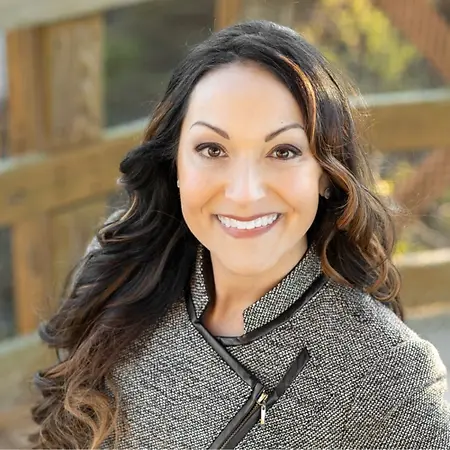
Coleen Ryan Wallace
Coleen Ryan-Wallace is an experienced criminal justice professional who serves as a Senior United States Probation Officer with the United States District Courts in the United States District Court for the Middle District of Florida. In this role, she works closely with the federal judiciary to supervise individuals on probation and supervised release, helping them transition successfully from prison back into society. Her responsibilities include conducting investigations, responding to court needs, preparing reports, and connecting individuals with resources such as substance abuse treatment, mental health services, educational programs, and transitional support. Ryan-Wallace approaches supervision with both accountability and empathy, viewing her role not only as law enforcement but also as a catalyst for meaningful change. Ryan-Wallace began her career in law enforcement in 2006 with the Lafayette Parish Sheriff's Office shortly after earning her Master of Arts in Criminal Justice and Corrections from University of Louisiana Monroe. During her six to seven years with the sheriff’s office, she rose to the position of training sergeant, where she played a key role in officer development and instruction. She also earned a Bachelor of Arts in Political Science and Government from University of Louisiana at Lafayette and was a member of the Lambda Alpha Epsilon. Alongside her law enforcement career, she shared her expertise as an adjunct instructor at Southwest Louisiana Community College and Louisiana State University Eunice, where she helped develop programs that enabled working law enforcement officers to pursue higher education while managing demanding shift schedules. Throughout her career, Ryan-Wallace has been deeply committed to safety, training, and mentorship. She has served as a defensive tactics instructor for nearly two decades, teaching both law enforcement officers and civilians in self-defense courses. In her current role, she continues to train officers, serves as co-chair of the safety committee, and participates in district working groups while advocating for officer safety and professional development. She is also involved with the Federal Probation and Pretrial Officers Association, supporting collaboration and advancement within the profession. Guided by her Catholic faith and supported by her family—including her husband and son—Ryan-Wallace remains passionate about serving her community and advocating for vulnerable populations, including animals, children, and the elderly, while helping individuals in the justice system rebuild their lives with dignity and opportunity.
• SHARP (Sexual Harassment and Rape Prevention) Instructor
• Civilian Self-Defense Instructor
• ORT (Defensive Tactics) Instructor
• PPCT Defensive Tactics and Control Force Instructor (Patrol and Corrections Certified)
• CMVC (Criminogenic Needs and Violence Curriculum) National Trainer
• MRT (Moral Reconation Therapy) Trained
• PCRA (Post Conviction Risk Assessment)Trainer
• University of Louisiana Monroe - MA, Criminal Justice and Corrections
• University of Louisiana at Lafayette - BA, Political Science and Government
• Published Research Article: A Paradoxical Analysis of Social Learning Theory As Applied to the Potential Reform of Terrorist Offenders
• Lambda Alpha Epsilon National Criminal Justice Honor Society Member
• FPPOA (Federal Probation and Parole Officers Association)
• Lambda Alpha Epsilon National Criminal Justice Honor Society
• Animal Welfare and Rescue (Abused/Neglected Animals)
• Child Advocacy and Protection
• Elder Care Advocacy
• Human Trafficking Prevention
• Church Community Service and Fundraising
• Mission Support for Children in Guatemala and Puerto Rico
What do you attribute your success to?
I attribute my success to several key influences and experiences that have shaped who I am both personally and professionally. First and foremost, my mother Ramona Ryan, retired Deputy Chief U.S. Probation Officer for the Western District of Louisiana, and my uncle John Mullican Jr., retired FBI agent and S.W.A.T. Team Leader for the Dallas and Fort Worth Divisions. They have been strong supporters throughout my career offering sound guidance and strength as I’ve navigated this challenging and ever-changing field. They fostered strong beliefs of treating all individuals with dignity and respect while working to enhance the lives of those around you. Being third-generation federal law enforcement, I had wonderful role models who demonstrated what it meant to lead from where you stand. My current supervisor, Bryce Hartgrave, has also been a tremendous influence in my life, both personally and professionally. He's been instrumental in my professional development helping me to achieve my goals and ways that I can be a positive influence both to the community I serve and the agency I’m most honored to be a part of. He’s also been most instrumental in ensuring I maintain a healthy work-life balance and putting my safety above all else. He often reminds me this is not a sprint but a marathon and how we approach that endeavor will determine both my longevity in this career and the impact I’ll have with those I serve. Despite his numerous responsibilities as a Supervisory Probation Officer, he still takes the time to mentor each and every officer in his unit making sure we're receiving the support and guidance necessary for us to achieve our personal goals. He steps up regularly to assist in any way he can whether it be suggestions in how to handle a difficult case, an encouraging word, or the reassurance that we are never alone. He knows all of our families on a first-name basis, asks about health and well-being, knows what extracurriculars my son's participating in and how he’s fairing in school. That level of care and mentorship have had a profound impact in my life. I'd also say my educational background has been crucial - earning my bachelor's degree in Political Science with minors in English and Criminal Justice from the University of Louisiana at Lafayette, then my master's from the University of Louisiana at Monroe where I published a research article on social learning theory as applied to terrorist offenders. That academic foundation gave me the theoretical knowledge and analytical skills to understand the complexities of human behavior and the criminal justice system. Finally, I was blessed with a wonderful family and support system. I recognize I was afforded unique opportunities some were denied or have never experienced. I feel passionately to give back to those who have not had the same advantages. That sense of responsibility and gratitude has driven me to help as many people as I can, in whatever capacity that may be.
What’s the best career advice you’ve ever received?
Advice for aspiring women in law enforcement, emphasizing the importance of understanding the field's realities, having a strong support system, and aligning personal goals with the demands of the job.
What advice would you give to young women entering your industry?
When a young woman comes to me looking for advice about entering this field, I start by asking what she wants to achieve - what are your goals, why does this field call to you? Because this field is not for everyone, and it's okay if it's not the right fit. It's best to find that out now, because not only would you be doing yourself a disservice, but you'd be doing the community a disservice. Once I understand their motivations, I explain the realities of the situation. This is a tough field to be in, and I'm not trying to dissuade or discourage them, but I want to make sure this is really what they want. You need to understand the practicalities and realities of this field. You're going to encounter a variety of different individuals, you’ll be tasked with making hard decisions, regularly and in under most instances under intense pressure and scrutiny. You're going to see things that most people don't see on a daily basis, like individuals dead on the side of the road from car accidents or overdoses, people killed in acts of violence whether it be shootings or school shootings. Think about what officers deal with under sex offenders - children being trafficked, raped. Some of these things can be pretty gruesome. So you have to have a way to disconnect and refocus. You've got to have a good sounding board, a strong support system you can lean on, because if you don't have a way to decompress or people to support you, it's going to be a very difficult road and you'll burn out pretty quickly. You have to maintain your mental health because you're only as good as your weakest link. You've got to be strong and sound and safe so that you can make a difference and help others. Once we get through all of that and I see they can handle it, that's when you find the strongest, most successful individual practitioners in this field. Then I counsel them on what type of work they want - front line law enforcement, forensics, psychiatric evaluation - and guide them with their education accordingly. But understanding your goals, facing the realities head-on, and having that support system are absolutely crucial.
What values are most important to you in your work and personal life?
The values most important to me center around helping people and treating everyone with dignity and respect. I've always had a passion for helping people ever since I was young - it's something intrinsic and encouraged in my upbringing, to advocate for those who can't defend or help themselves, whether that's abused or neglected animals, children, the elderly, or victims of human trafficking. In my work, I believe strongly that people matter, and treating everyone with respect regardless of what their choices, decisions, or behaviors may or may not have been is fundamental to everything I do. We don't just protect the community - we serve it. I see my role as being a change agent, fostering positive growth and helping people successfully transition, not just during their term of supervision but well beyond completion. I want to help people who have been cast aside by traditional law enforcement organizations, the ones others might say are hopeless. No one is hopeless if they have a desire or willingness to change and we have the ability to help. When we can make an impact in changing that person for the positive, it creates a trickle effect for their families and communities where they reside. Even small wins matter because it's somebody's life that was changed for the better. I also deeply value work-life balance and maintaining strong support systems. My family is very influential in assisting with caring for me and my son, making sure we're all healthy. I'm very active in my religious community and believe in giving back through service. I was blessed with a very strong, wonderful upbringing, and I felt like if I had the opportunity and ability to give back, I needed to do so. I've tried to make the most of the gifts and blessings I was given for those who didn't have the same opportunities. Finally, safety is paramount - I want to protect not just the community but also the practitioners I serve with. I want every officer to go home safe every night, which is why I've dedicated 20 years to training others in defensive tactics and safety skills.