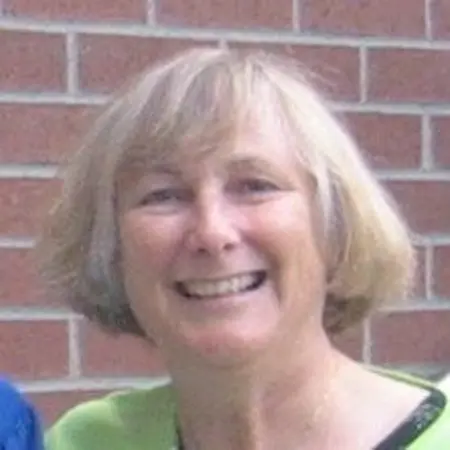
Her Story
About Connie
I started my engineering journey somewhat unexpectedly. I applied to Penn State's School of Architecture, but was admitted to engineering instead because my math SAT was almost perfect, though my verbal SAT was lower. This turned out to be perfect for me because I'm more of a technical writer and reader, and engineering had a clear process, unlike architecture where you're never really done with a design. I graduated from Penn State in 1977 and became the first female licensed mechanical engineer in the state of Washington, which required four years of practice and passing a test. This happened during a unique time when Caltech had just opened engineering to women about a year before I was admitted, and suddenly schools wanted women in engineering. My main area of expertise became HVAC design, and I specialized early in my career in smoke pressurization systems to pressurize elevator and stairwell shafts for smoke-free escape in case of fire. In 1985, I worked with the Seattle Fire Department and Dr. John Klote from Washington D.C., who had invented a computer program called ASCOS, and we tested four different buildings including the tallest one, the Columbia Center, comparing test results to computer simulations. Dr. Klote said Seattle was the first and only city in the United States actually testing these smoke control systems, so it was very cutting edge work. Throughout my career, I worked on about 20 hospitals in Washington state, plus projects in California and Oregon, though I kept my license specific to Washington state because I had plenty of work there. I also worked on the SFO air traffic control tower, maintenance buildings, medical clinics, and planning studies. My most notable achievement was a $360 million hospital in Everett that I designed almost single-handedly, doing all the design and controls. My youngest daughter told me at the time, 'Mom, you don't have a life,' because all I did was work, come home and sleep and eat. There were times I worked 60 to 70 hours a week, and I was very productive compared to the average mechanical engineer. I always kept my head down and worked, and the more I produced, the more they expected me to produce. By the time I got further in my career, I managed projects and had people working under me to do tasks while I managed the whole engineering design of a building. I got the bigger, more complicated projects and did all the controls for hospitals, which were really complicated. I remember spending 120 hours on controls for one hospital, creating 20 drawings with points lists, digital controls, control sequences, and control diagrams, and I had to defend that time to my boss because he'd never had anybody at his office who could do that level of work. I retired in 2018 after 41 years in the field, and by that time I was pretty tired. It took me a while to wind down, but it was a good profession.
Her Interview
Ten minutes with Connie
01What advice would you give to young women entering your industry?
I would say work really hard in your first 5 years and get a good technical base. I don't think any women, that would be for women, men, that would just be kind of in general. I mean, I was just one of the, I don't feel like I stood out any because I was a woman, it was just you had to do the work. As long as you can do the work, like the man, you just have to do the work. I don't think I was really extra recognized, except that I know that the management really gave me a lot of work because I could do it, and so I got the bigger projects, I got the more complicated ones, I got the control systems.
Join Influential Women and start making an impact. Register now.