Disability is the only community anyone can join at any moment. Universal design is not about special treatment; it’s about building environments that work for the broadest range of people from the start.
Verified Member
Influential Woman · Disability advocacy and accessibility consulting
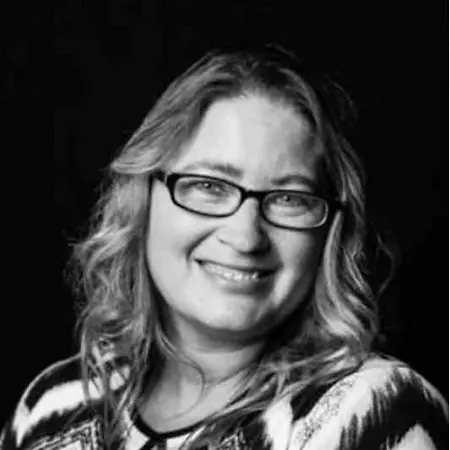
Courtney Wallace
Executive Director & Co-Founder, Access UpRising Foundation
Indianapolis, IN 46239
1Article published
2Awards received
Her Story
About Courtney
Courtney Wallace is a disability advocate, strategist, and founder of Access UpRising Foundation and Soul Sync Wellness. She works at the intersection of accessibility, systems reform, and human transformation, helping organizations move beyond minimum compliance toward environments that are intentionally inclusive.
Through Access UpRising Foundation, Courtney partners with schools, municipalities, businesses, and institutions to conduct accessibility audits, deliver inclusive design training, and develop long-term access strategies. Her work centers on practical, human-centered solutions that shift accessibility from an afterthought to a foundational design principle.
As a Certified Emotion, Body, and Belief Code Practitioner, Courtney also leads Soul Sync Wellness, where she helps individuals identify and release emotional and energetic patterns that impact health, leadership, and personal growth. Her approach bridges structural advocacy with personal empowerment.
Courtney serves as Acting Board Chair of Spina Bifida Indiana, where she provides strategic leadership to advance statewide advocacy, strengthen community resources, and improve systems of care for individuals and families affected by Spina Bifida. She also contributes as an accessibility writer for Visit Hendricks County and collaborates with faculty and students at Ball State University on applied accessibility initiatives.
Courtney’s leadership foundation was shaped in part by years of service within the military community, including board service with the Family Readiness Group and active involvement with the Navy-Marine Corps Relief Society, where she supported service members and families navigating complex systems during periods of deployment and transition.
Born with Spina Bifida, Courtney’s work is grounded in lived experience navigating inaccessible environments. She launched Access UpRising Foundation after a pivotal moment during a visit to Graceland with her daughter, Caylee Wallace, now an aviation student at Purdue University, when they witnessed firsthand how physical barriers excluded visitors from participating fully. That experience became the catalyst for her signature experiential method: placing homeowners and business leaders in wheelchairs to navigate their own spaces from the driveway or parking lot forward, transforming perspective into action. Her advocacy also addresses systemic transportation and infrastructure barriers, calling for greater accountability and innovation in mobility access nationwide.
With decades of entrepreneurial and nonprofit leadership experience including service with Indiana Wish, Make-A-Wish, We Promise Foundation, Give Kids the World and Spina Bifida Indiana,
Her work is driven by one core belief: accessibility is not a special feature or a favor, it is infrastructure.
Her Interview
Ten minutes with Courtney
01What do you attribute your success to?
I attribute my success to long-range vision and the refusal to accept exclusion as inevitable. I have spent a lifetime navigating systems that were not designed with disability in mind, which sharpened my ability to recognize structural gaps and reimagine what infrastructure could be. I do not build for attention. I build for durability. By pairing lived experience with disciplined strategy, I focus on redesigning systems, not reacting to them. Access UpRising is not a project; it is a movement toward environments where inclusion is engineered from the start.
02What’s the best career advice you’ve ever received?
The best career advice I’ve received didn’t come in the form of a single sentence. It came from watching my daughter pivot when her original plan didn’t work out. Instead of seeing change as failure, she treated it as recalibration. She adapted, redirected, and moved forward with conviction.
That resilience mirrors what people with disabilities do every day: modify, adapt, and overcome in environments that were not designed with them in mind. Watching her navigate uncertainty with courage reinforced something I already understood; progress requires flexibility and forward motion, not perfection.
Her example gave me the confidence to fully commit to launching Access UpRising Foundation. Building systems that work for everyone demands the same mindset: when something isn’t accessible, we don’t retreat, we redesign.
03What advice would you give to young women entering your industry?
My advice to young women entering this field is to build depth before visibility. Learn how systems function. Understand policy, economics, and design standards. When you speak, let your authority come from substance, not volume. Credibility is earned through preparation.
You will encounter rooms where accessibility is treated as optional or secondary. Do not internalize that framing. Accessibility is infrastructure. It influences who participates in education, who enters the workforce, who travels, who builds wealth, and who is seen. Speak about it with precision and confidence.
There will be moments when you are encouraged to be less direct, more patient, or “realistic.” Listen carefully, but decide intentionally. Change rarely happens because someone waited quietly. It happens because someone questioned what everyone else accepted.
And finally, do not underestimate the strength required to adapt. Especially for women and particularly for women navigating disability or exclusion. Adaptability is not compromise. It is strategic resilience. The ability to pivot, recalibrate, and move forward is leadership.
Build your expertise. Protect your integrity. And never apologize for expanding the standard.
04What are the biggest challenges or opportunities in your field right now?
The biggest challenges in accessibility right now are funding, enforcement gaps, and widespread lack of awareness. Many businesses and homeowners do not fully understand their ADA responsibilities, and compliance is often treated as reactive—addressed only after a complaint or legal action arises. Despite the ADA being in place for over three decades, proactive accountability remains inconsistent.
There is also persistent misinformation, particularly around historic properties. While certain limitations exist, historic designation does not automatically exempt a building from accessibility requirements. Unfortunately, that misconception often goes unexamined.
At the same time, the opportunity is significant. One in four Americans lives with a disability, and nearly everyone will experience a temporary or permanent mobility limitation at some point in their lives. Accessibility is not a niche issue—it is a market reality. When environments are inaccessible, businesses are not just excluding individuals; they are excluding families, networks, and long-term customers.
The aging-in-place movement further reinforces this shift. Universal design benefits everyone—curb cuts serve wheelchair users, parents with strollers, delivery drivers, and older adults alike. Inclusive design strengthens communities economically and socially.
That’s why education is critical. Future designers, architects, and planners are eager to build better systems. By working with students and institutions, we have an opportunity to embed accessibility into the design process from the beginning, rather than correcting it later.
The challenge is awareness. The opportunity is redesign.
05What values are most important to you in your work and personal life?
The values that guide both my work and personal life are integrity, stewardship, and responsibility to others.
Family is foundational for me. My daughter, an aviation student at Purdue University, challenges me to think bigger and act with courage. Watching her navigate her own path with resilience has reinforced the importance of alignment; building a life and career that reflect conviction rather than convenience. Time with family and close friends keeps my work grounded in what ultimately matters.
Professionally, I value advocacy rooted in education rather than accusation. Accessibility is often misunderstood, and many gaps stem from lack of awareness rather than intent. I believe in raising standards by raising understanding—helping individuals, businesses, and institutions recognize opportunities to improve and then equipping them to do so.
I am also deeply committed to fiscal responsibility and long-term sustainability. Whether leading a nonprofit organization or managing my personal life, I believe resources should be stewarded carefully. Impact requires vision, but it also requires discipline.
At the core of everything I do is a simple principle: access should not depend on circumstance. My work is driven by the belief that when we design environments thoughtfully and responsibly, we create communities where participation is possible for everyone.
Her Content Hub
Articles by Courtney
Accessibility Isn’t an Upgrade. It’s Infrastructure.
Why universal design is a risk management issue, an economic driver, and a human one.
The disability community is the only community anyone can join in the blink of an eye.
A car accident. A diagnosis. A surgical complication. Aging. A fall. A stroke. One ordinary Tuesday, and your relationship with the built world changes overnight.
And when it does, you quickly discover something uncomfortable: most spaces were never designed with you in mind.
Accessibility is often framed as a compliance issue or a courtesy. It is neither. It is infrastructure. It is risk management. It is economic strategy. And most importantly, it is human dignity.
For 46 years, I have navigated the world as a woman with a physical disability. I have experienced excellent design that allowed me to move independently and poorly planned spaces that made something as simple as using a restroom or entering a building unnecessarily complicated. Those design decisions were not minor inconveniences. They shaped access to healthcare, education, employment, travel, and community.
Universal design does not mean creating something special for one group. It means designing environments usable by the broadest range of people without requiring adaptation. Ramps help parents with strollers. Clear wayfinding helps people navigating in a second language. Automatic doors help delivery workers and aging adults. Flexible seating supports wheelchair users and guests with temporary injuries alike.
When design works for the margins, it works better for everyone.
At Access UpRising Foundation, our mission is simple: move accessibility from afterthought to starting point. We work with businesses, institutions, and community leaders to evaluate physical spaces, processes, and policies through a practical lens. Not just, “Does it meet minimum code?” but, “Does it actually work for real people?”
Because compliance is the floor, not the ceiling.
Accessibility also makes economic sense. The disability community represents significant purchasing power. Families make decisions based on where they can comfortably and safely participate. Inclusive environments reduce liability risk, improve public perception, and expand customer reach. This is not charity. It is smart planning.
But beyond economics and policy is something even more foundational: belonging.
When someone can enter through the same door, sit with their family, access a restroom independently, or travel without extraordinary effort, it sends a powerful message: you are expected here. You are valued here.
The truth is, accessibility is not about a small group of people. It is about future-proofing our communities for all of us. Because every one of us is temporarily able-bodied.
Universal design is not an upgrade. It is responsible leadership.
And the question is no longer whether we can afford to prioritize accessibility. It is whether we can afford not to.
Join Influential Women and start making an impact. Register now.