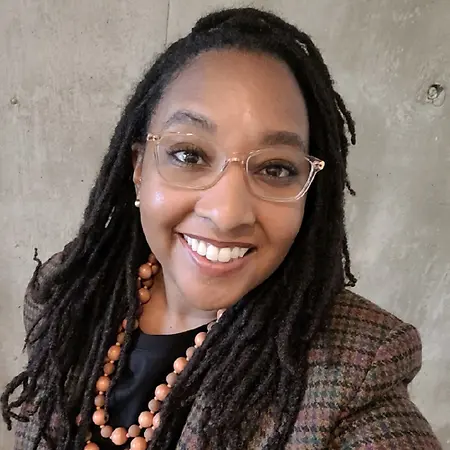
Her Story
About Crystal
I trained as a molecular biologist and earned my PhD in molecular medicine and translational sciences from Wake Forest University in 2017. I completed the usual postdoctoral training at The Ohio State University, but had to take a sabbatical due to physical injuries that required physical and occupational rehabilitation. Throughout that challenging time, I maintained my involvement in my career as best as I could by teaching and helping to run programs that facilitated access for STEM students to get additional training through internships and post-baccalaureate programs. I really enjoyed that aspect of higher education, and once I was as fully rehabilitated as I was going to be, I essentially pivoted away from the bench-side research and into higher education administration. I've been in research for about 15 years total, from my graduate education to current. I came into my current role at a small nonprofit research organization three and a half years ago as the first full-time person to fill this position. I've built out the role so that we now have a regular internship program, and I serve as PI for a post-baccalaureate program funded by the American Cancer Society to train post-baccalaureates and prepare them for graduate education in cancer research. I'm also the facilitator and supervisor of our trainees, which includes anyone employed in a technical, research-facing job that requires continual learning - graduate students, postdocs, post-bacs, research assistants, vet techs. That's about one-third of our current workforce. I maintain oversight of their engagement, enrichment, and continual education, as well as the programs that I run.
Her Interview
Ten minutes with Crystal
01What do you attribute your success to?
I attribute my success to being authentic in all of the spaces that I'm in. I really lean into my strengths, but I'm not afraid to work on the things that maybe I'm not so strong in. And then also some faith, and some knowing that things can work out in my favor as long as I'm applying myself. Being authentic means not feeling like I have to play a role in order to gain access to things. If I'm myself, the right doors will open. I don't want any door, I want the door that fits me. That's exactly what happened with the role that I'm in now. This job title didn't exist as a full-time position before I got here, but it's the door that I needed for what I was asking for.
02What’s the best career advice you’ve ever received?
The best piece of advice I ever received came from a mentor when I was considering whether to pursue a PhD. I had reservations because the lab where I was gaining my first research experience had some pretty unsavory personalities who had made disrespectful jokes about different populations. My mentor said to me, 'Crystal, disrespect is going to come in different forms throughout your life, but you can't let that limit the choices that you make.' In other words, I couldn't decide to stay where I was professionally or academically as a clinical laboratory scientist simply because I had not faced that type of discrimination yet. That was a 'yet' thing, not that I wouldn't, because I probably would have. If I had let that environment discourage me or really limit what I was willing to consider for careers, then I would not have gone to grad school. I would not have been on the path that I am now. She made it very clear that I shouldn't consider those things with my career choices or life choices.
03What advice would you give to young women entering your industry?
I would tell them to be authentic. Don't feel like they have to play a role in order to gain access to things. If they're themselves, the right doors will open. You don't want any door, you want the door that fits you. I would also tell them to review their own professional documents from time to time, not for updating or anything, but for confirming their identity. Imposter syndrome kind of runs rampant amongst women, and especially Black women or other women of color, and so looking back on professional documents and reminding yourself what you've been able to accomplish, who you are professionally, the identity that you have and that you're building, in my opinion, helps to quiet that voice of not being good enough or not being sufficient. So I would encourage them to review their documents to remind them of who they are, and to remain authentic, so that way they have the right opportunities presented to them. Those opportunities will come, and they want it to be opportunities that fit them well.
04What are the biggest challenges or opportunities in your field right now?
The biggest challenge in STEM higher education right now is encouraging students to stay the course and persist in STEM education when they understand the financial struggles or financial restrictions due to funding. For example, I'm PI on a grant right now, and even though it's funded by a private organization and not government-funded, the students were concerned about whether or not they should continue to pursue careers in STEM. These are students who are training and hoping to be competitive for graduate school and continue graduate education, but they're concerned about the stability of the field that they're going into. I think the funding makes it difficult to really recruit and maintain and retain competitive talent in the field. I also think AI is a challenge in education in general. I liken it to publication ethics. I teach ethics courses at my organization about the ethics of scientific publication and what it requires to gain authorship. We need similar agreed upon ethical guidelines for the use of AI in research. As it often happens, we don't do that proactively, we do it retroactively after something egregious happens. I'm encouraging my students to use AI responsibly and ethically so that nobody at my organization is caught up in it, but I'm kind of on the edge of my seat thinking it's gonna happen somewhere, and how horrible will it be, and then what guidelines will come together and be agreed upon.
05What values are most important to you in your work and personal life?
I am always looking for efficiency. I want to make the best use of my time. While there are things that I do that maybe other people can do, I'm aware of why I'm doing them - it's a conscious, intentional choice to do them. But efficiency is very high up on the list for me. The other one is fulfillment. Do I actually enjoy doing the thing? Because the moment that I don't enjoy doing a thing, then I can start building other paths and pursuing other doors that fit where I am. So fulfillment is very high up, and within that fulfillment category is how are the people that I'm working with, how are they doing? Are the students I'm working with reaching their goals? Are they developing and making a positive impact? A legacy, so to speak, in how they move forward and progress.
Join Influential Women and start making an impact. Register now.