Her Story
About Cyn
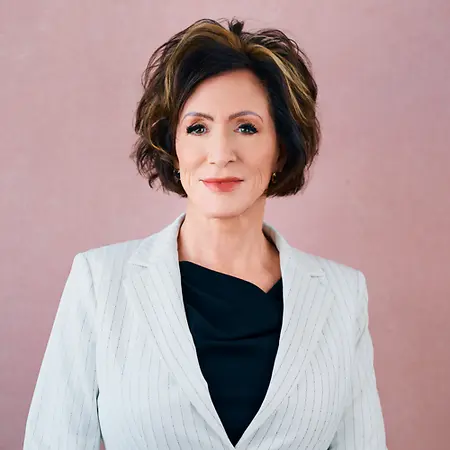
Cyn S. French is a nationally recognized leader in agricultural sustainability and a staunch advocate for the role of farmers in sustainability solutions. With a career spanning corporate, government, industry, and political sectors, she brings a unique ability to bridge the worlds of dairy, livestock, energy, and food security policy, delivering solutions that are both profitable and sustainable. Cyn is co-founder and Executive Vice President of Corporate Affairs at LF Bioenergy, where she leads brand reputation, industry and feedstock strategy, and alignment with government and industry stakeholders, helping dairy farmers navigate the lifecycle of renewable natural gas development. Cyn’s expertise is informed by constant engagement with top economists, policymakers, and producers, giving her a nuanced understanding of the economic and policy forces shaping U.S. agriculture. Her leadership has earned national recognition, including acknowledgment from former President Obama’s Energy Cabinet and former Colorado Governor Hickenlooper for her work in dairy energy efficiency, as well Colorado Commissioner of Agriculture’s Meritorious Service Award. Cyn has also served as the first female elected County Commissioner in Washington County, Colorado, and as a Senate-appointed Colorado Water Quality Control Commissioner, further cementing her reputation as a trusted, farmer-first voice in the clean energy transition. A dynamic speaker and mentor, Cyn is passionate about advancing leadership, collaboration, and sustainability in agriculture and energy. She has contributed to foundational life cycle assessments of U.S. dairy, advised global food security initiatives, and guides executives and organizations in aligning strategy with sustainability goals. Outside of her professional work, she dedicates time to mentoring young emerging leaders, promoting executive branding, and pursuing personal fitness, whether in the gym, on the golf course, or with her family. Cyn holds an MBA from the University of Denver and is committed to ethical, visionary leadership that drives positive change across industries.
Her Interview
Ten minutes with Cyn
01What do you attribute your success to?
I credit my success to a disciplined commitment to excellence, pride in delivering high‑quality work, and a focus on elevating others. Outside of my professional responsibilities, I stay grounded through family, golf, and a daily fitness routine that keeps me balanced and energized. I lead with clarity, accountability, and a people‑first mindset—empowering teams to perform at their highest level while advancing shared goals.
02What’s the best career advice you’ve ever received?
Women in leadership today carry both the privilege and responsibility of reshaping the professional landscape for the next generation. The path is rarely linear—women are often required to demonstrate readiness in ways their male counterparts may not, and too frequently their contributions are overlooked or credited elsewhere. Yet these challenges have also strengthened a powerful set of leadership traits that women bring to the table: clarity, emotional intelligence, resilience, and an instinct for building trust and connection.
My advice to women advancing their careers is simple but foundational: own your voice. Speak with conviction, set the tone in the room, and articulate your expectations with confidence. Avoid the instinct to over‑accommodate, dilute your message, or become everything to everyone. Instead, establish your purpose, stand firm in your expertise, and create the space for others to recognize the value you bring.
At the same time, invest in relationships. Strong leaders—especially women—excel at listening, supporting, and inspiring their teams, and those strengths are strategic advantages. Build strong coalitions, elevate the ideas of others, and foster a work environment where people can do their best work. Inclusive leadership creates healthier teams, driving better business outcomes.
Importantly, believe that you are complete with or without external validation. Your perspective is an asset. Your presence is earned. And your leadership has the potential to open doors not only for yourself, but for every woman who follows.
03What advice would you give to young women entering your industry?
If we were sitting together over coffee, here’s what I would tell you as you begin your career in this industry:
First, trust the value you already bring. You don’t need decades of experience to have a meaningful point of view. Speak up, your ideas matter the first time you share them. This is a dynamic many women still face, and the sooner you recognize it, the easier it becomes to push back on it with confidence.
I’ve seen so many talented women soften their voice to avoid being labeled as “too direct.” Be clear, be steady, and be you. People respect conviction delivered with professionalism.
At the same time, strength comes from building genuine relationships. Women are naturally strong listeners and supporters—and those traits are not weaknesses. They are differentiators. They help you build teams and partnerships that will carry you further than technical skill alone ever could.
I also want you to protect your focus. Don’t try to be everything to everyone. Set boundaries early. Hold yourself accountable and hold others accountable. Leadership isn’t about perfection—it’s about discipline, follow‑through, and showing people they can rely on you.
Importantly, You are complete with or without anyone else’s approval. Early in your career, external validation feels essential. As you grow, you’ll realize your strongest leadership comes from knowing your purpose, owning your expertise, and trusting your instincts. That’s where your real confidence—and your real influence—comes from.
04What are the biggest challenges or opportunities in your field right now?
The biggest Challenges in the renewable natural gas industry are volatile environmental credit markets - for Low Carbon Fuel Standard (LCFS) and Renewable Identification Numbers (RINS) – which directly underpin renewable natural gas (RNG) project economics. Prices have dropped sharply, from 5 years ago at $200 to now $59 per metric ton. This low pricing has impacted all US developers of dairy RNG, creating uncertainty for developers and farmers. This has resulted in slowing the industry’s ability to grow strategically.
Additionally, the lack of stable, national policy alignment is another crucial challenge. The need for Clean Fuel Standards across the nations states would add predictable federal incentives, allowing states to meet their climate mandates and allowing RNG to grow, supplying communities with an immediate cleaner energy and revenue streams for farmers.
Overall, the challenges consistently fall into four buckets: 1.Economic + market uncertainty; 2. Policy gaps + regulatory complexity; 3. Infrastructure + workforce limitations; and 4. Dairy farmer pressures + communication barriers.
The opportunities in the bioenergy industry are huge. With the serious swings in farm income and continued farm consolidations, bioenergy developments bring economic strength to communities and environmental benefits, modernizes a farms manure management system and savings on fertilizer and bedding via nutrient-rich byproducts. And, farmers view RNG as part of their environmental and economic future
05What values are most important to you in your work and personal life?
What we do personally, we do professionally and what we do professionally, we do personally!
Ethics and a moral compass are principles I strive for daily. They are the foundation of how I lead, how I build trust, and how I show up for people. In my professional and personal life, they serve as the guardrails that keep me aligned with my life’s purpose and ensure that my decisions honor both my responsibilities and my character.
Ethics builds trust, the “currency of leadership.” It’s the “truth telling,” of how we honor commitments in leadership. And, ethics strengthen decision-making in high-impact work. Being in agriculture and bioenergy industry involves community partnerships, safety, large capital investments and long-term consequences. It sets the tone for culture and team behavior and keeps my leadership human! What we do personally, we do professionally and what we do professionally, we do personally!
A moral compass is crucial today! The pace of change, the scrutiny leaders face, and the heavy decisions in industries like agriculture and energy, and climate policy make integrity not just a value but a strategic advantage. Trust is the foundation of leadership and it’s fragile.
Join Influential Women and start making an impact. Register now.