It took leaving corporate for me to realize how competent I truly was. That's when I stepped into my own as a consulting expert, and I've never looked back.
Turning Experience Into Expertise
Explore more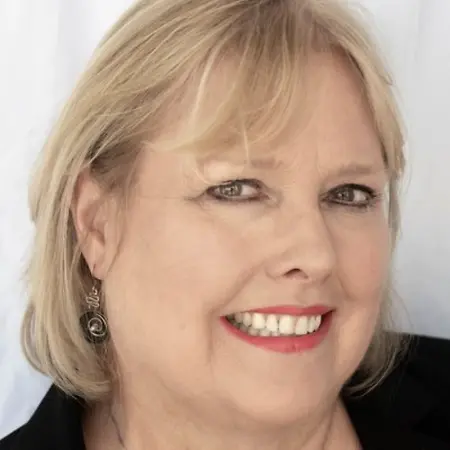
Influential Woman · Pharmaceutical Research and Consulting
Founder and CEO; Founder and President, CERobs Consulting, LLC; BeatSUD Foundation, Inc.
Asheville, NC 28759
I realized I was pulled in a million directions trying to please everyone. In the last 2 years, focusing on what's important to me has brought much more peace.
Cynthia J Girman · In Her Own Words
It took leaving corporate for me to realize how competent I truly was. That's when I stepped into my own as a consulting expert, and I've never looked back.
Turning Experience Into Expertise
Explore moreHer Story
Cynthia Girman is a highly accomplished leader in pharmaceutical research with approximately 45 years of experience specializing in real-world evidence (RWE), patient outcomes, and pharmacoepidemiology. Throughout her career, she has focused extensively on the design and execution of clinical trials and observational studies, with a strong emphasis on advancing methodological rigor, improving study design, and generating regulatory-grade evidence. She has contributed significantly to the development and validation of clinical endpoints and patient-reported outcomes (PROs), helping bridge the gap between clinical research and real-world application in healthcare decision-making. She is the Founder and CEO of CERobs Consulting LLC, where for the past 11 years she has built a collaborative, global network of expert consultants in biostatistics, epidemiology, and outcomes research. Her organization operates on a non-hierarchical, team-based model that emphasizes collaboration, flexibility, and remote engagement, enabling highly specialized experts to work together on consulting projects for pharmaceutical and healthcare clients. Previously, she dedicated over three decades to Merck & Co., Inc., where she led observational research and data analytics initiatives, shaping strategies for integrating real-world data and meaningful patient-centered outcomes into drug development and regulatory submissions. In addition to her industry leadership, Cynthia played an influential role in advancing patient-centered research through her 11-year service on the Methodology Committee of the Patient-Centered Outcomes Research Institute (PCORI). She is also an Adjunct Professor of Epidemiology at the University of North Carolina at Chapel Hill and an elected Fellow and former Board member of the International Society of Pharmacoepidemiology. Dr. Girman co-edited a text book released by Elsevier Sciences in 2021 on Pragmatic Randomized Clinical Trials Using Primary Data Collection and Electronic Health Records. She is also an award-winning co-author of A Voice from Heaven, co-written with her son, Alexander V. Girman. In the fall of 2024, she founded BeatSUD Foundation, Inc., a 501(c)(3) nonprofit dedicated to supporting innovative research into non-pharmaceutical treatments for substance use disorder. Inspired by personal experience following the loss of her son, she now devotes much of her time to this mission, while continuing her consulting work on a reduced schedule. Set to launch in 2026, she is co-principal investigator for a decentralized pragmatic randomized clinical trial evaluating the therapeutic effects of specially designed music, in addition to usual outpatient care, in opioid use disorder. This trial relies entirely on donations (www.BeatSUD.org).
Her Interview
01What do you attribute your success to?
I am a goal-oriented woman, and throughout my 45-year career, I was always pursuing more publications, presentations, symposia, and funding for studies. I was active in the methodology space and in real-world evidence for regulatory purposes, which gave me visibility within the professional societies of our field and for my employer. I organized countless symposia, spoke at conferences, moderated sessions, led working groups and delivered a plenary talk at an annual meeting and was on the Board of our international professional society in pharmacoepidemiology. I also served on the methodology committee of PCORI for 11 years, always maintaining a focus on improving methods and study design. My constant drive to improve methodology and study design in epidemiology and outcomes research led me to the success I've had. However, I now know that true accomplishment is not about how much you achieve in your job, what accolades you have, how many publications you have, or how much money you make. It's all about the peace you feel, how much love and compassion you have for others, and how much you give to others. I learned that the hard way, when we lost our son.
02What’s the best career advice you’ve ever received?
Professionally, the best advice I received was to 'tell a story'. Storytelling is what we should be doing with statistical reports, epidemiology reports, and reports for regulators. It's not just about presenting facts - we need to tell a story to convey what the data are really saying. Personally, the most meaningful advice came from my son after he died, when we were co-writing a book together. He said, 'Don't let life just happen to you. Make life happen for you.' He repeated this to me on several occasions. We all tend to get up and just go through the routines all day long and then collapse into bed - that's letting life happen to us. But we really need to grasp it, we need to make things happen for us, we need to make the life we want, and we need to do the things we enjoy. It's your life, not anybody else's. You are meant to enjoy it.
03What advice would you give to young women entering your industry?
I would say stay true to yourself, and stay true to what you know is right, and also to have the confidence to speak up, even in a still male-dominated world. But most importantly, don't just strive for work-balance, make it happen. If your employer expects you to work 50-60+ hours a week, find another job. If your employer doesn't expect that but you still work those hours, think hard about what your prioritizing in your life. After 45 years, I look back with 20/20 hindsight and regret the hours that I spent working on weekends and evenings instead of being with our kids, one of whom we lost. You are meant to enjoy this life not work all the time. The lessons that you were intended to learn in this life, won't be learned on the job. Make life what you want it to be, and enjoy most of it with family and friends.
04What are the biggest challenges or opportunities in your field right now?
The biggest challenge in my field is that it's evolving so fast. The FDA and payers are changing requirements and guidance constantly. For example, they went from requiring two well-controlled randomized clinical trials for approval to requiring one with confirmatory evidence, which is a huge change, making real world evidence potentially more acceptable for product approval. AI is changing the way everybody works. At CERobs, we can't yet trust AI for deliverables for my clients because AI truly hallucinates a lot - it makes up references and makes up data, so we have to be very careful. I use it daily in my personal life for things like getting organized or creating tables, but I don't use it for deep research from a medical point of view because I don't trust it quite yet. For regulatory-related or publication-related work, we have to do so much checking of AI after we use it that it actually takes more time. Our clients are using AI when they shouldn't and not using it when they should, so things are rapidly evolving. We also have to be careful about confidentiality agreements with our clients - if we use AI that learns from the information we're giving it, we could breach those contracts. AI is improving and our prompting is improving, but we're not quite there yet.
05What values are most important to you in your work and personal life?
Collaboration is the most important value to me in my work and personal life. People look to me as a leader, but I consider myself a collaborator because that's how I treat everyone that works with me. We're all a team working together to accomplish some goal or project. When you do that, I really think you get the most out of people because they want to work and they want to achieve as a team, as opposed to being told what to do or trying to compete with other team members. My business model in the consulting firm I run reflects this - I bring people in as collaborating consultants with no hierarchy. They all come in as contract employees, they're all part-time, they're all remote, and it's basically a network of expert collaborating consultants. We form a team when we get a project from pharma to consult on. I hope that I bring that collaborative spirit over to our marriage as well, and I think we are very much partners.
BeatSUD Foundation is completely about collaboration and giving. I've been fortunate to have some wonderful volunteers helping me planning and launch of our first clinical trial. We rely solely on donations (www.BeatSUD.org) and will be seeking funding over the next few years to launch clinical trials using music and guided meditation in various substance use disorders, after which we hope to launch trials in other brain disorders like autism, ADHD, post-traumatic stress disorder, anxiety, and depression.
Join Influential Women and start making an impact. Register now.