A powerful exploration of how leadership begins not with titles, but with early life experiences. This article traces one woman's journey from adoption and adversity to entrepreneurship, revealing how challenges transform into strengths and purpose.
Influential Woman · Education& Leadership Development
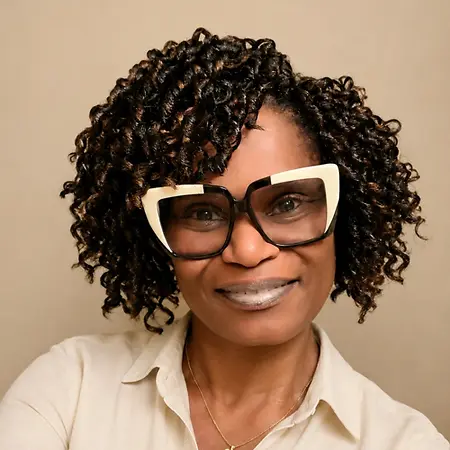
Cynthia Skyers Gordon
Education Leader, Founder & Author, SILWELL-C
Winchester, CA
31Years experience
1Article published
Her Story
About Cynthia
Dr. Cynthia Skyers-Gordon is an experienced early childhood education leader, author, publisher, instructor, and consultant with more than two decades of experience spanning program administration, educator preparation, curriculum development, and organizational improvement in the field of early learning and child development.
Currently, she serves as an Education Coordinator/Vice Principal within the Hemet Unified School District, where she provides leadership across multi-site early childhood programs. Her responsibilities include staff development, curriculum implementation, program evaluation, personnel supervision, compliance oversight, budgeting, grant development, and quality assurance systems that support large-scale early education operations.
In addition, Dr. Skyers-Gordon is the Founder and CEO of SILWELL-C (Staff-Inspired Leadership for Wellness and Calm), a leadership and wellness initiative dedicated to strengthening organizational culture through mindfulness, communication, wellness, and staff-centered leadership practices. Through this work, she provides consultation, training, and resources designed to improve workplace climate, leadership effectiveness, and staff well-being.
She is also the Founder and CEO of Kidz Exec Excellence, Inc., a nonprofit organization committed to supporting children, families, and educators through free educational resources, professional development, and community-focused initiatives that strengthen early learning environments.
As an Associate Faculty member at Mt. San Jacinto College, Dr. Skyers-Gordon prepares future early childhood educators through coursework in child development, curriculum design, and instructional practice. Her professional expertise includes curriculum frameworks such as HighScope, Creative Curriculum, DRDP, and Head Start models, along with consulting, training, program development, and organizational leadership across diverse early education settings.
Dr. Skyers-Gordon is also the author of I Love Being a Belizean!, a children's book that celebrates cultural pride, identity, and self-worth. She is the founder of SILWELL-C Publishing, an independent publishing company dedicated to creating books and resources that promote wellness, resilience, belonging, and personal growth for children, families, and educators.
Through her work as an educator, entrepreneur, author, publisher, and nonprofit leader, Dr. Skyers-Gordon remains committed to empowering others, strengthening communities, and creating opportunities that help children and adults thrive.
Her Interview
Ten minutes with Cynthia
01What do you attribute your success to?
I attribute my success to resilience, determination, and the people who gave my life purpose.
My childhood experiences taught me early lessons about perseverance, adaptability, and the importance of continuing to move forward even when circumstances are difficult. Those experiences helped shape a mindset that has stayed with me throughout my life and career.
I have always been a determined person. When others underestimate my abilities or question what I am capable of achieving, it does not discourage me, it motivates me. Challenges, obstacles, and even skepticism have often fueled my drive to learn, grow, and prove that our circumstances do not define our potential.
However, the greatest turning point in my life was becoming a parent. Before having children, I knew I was capable of more, but I had not yet fully committed to the future I wanted for myself. When I became a mother, everything changed. I realized that my decisions no longer affected only me. I was responsible for helping create a stable, meaningful future for the children who depended on me.
My children became my motivation to pursue higher education, continue growing professionally, and strive for goals that once seemed out of reach. More importantly, they inspired me to lead by example. I wanted them to see that success is not determined by where you begin, but by your willingness to keep moving forward, learning, and believing in yourself.
02What’s the best career advice you’ve ever received?
The best career advice I ever received was not a single piece of advice—it was a lesson I learned through experience and through the people who believed in me.
If I could go back and give my younger self advice, I would say: pay attention to the things you naturally love to do and find a career that aligns with those interests. Growing up, I was often told to go to college, but no one explained how important it was to connect your education and career to your passions and strengths. I believe people are most fulfilled when their work reflects the things that genuinely inspire them.
The second lesson came from a mentor who saw something in me long before I saw it in myself. Early in my career, I worked for the Los Angeles Urban League Head Start program under the leadership of Mary Idella Coleman. I began as an aide, was promoted to teacher, and then, within a short period of time, was offered a supervisory position.
I remember being overwhelmed by the promotion and questioning whether I was capable of taking on that level of responsibility. At the time, I did not see myself as a leader. I simply wanted to do my job well and support my family. However, Ms. Colman saw leadership potential in me that I had not yet recognized in myself.
Looking back, one of the greatest gifts a mentor can offer is the ability to see possibilities in someone before they see them on their own. Her confidence in me helped shape the trajectory of my career and taught me an important lesson: sometimes we are capable of far more than we believe.
That experience continues to influence how I lead today. I strive to encourage others, recognize their strengths, and help them see opportunities they may not yet see in themselves.
03What advice would you give to young women entering your industry?
My advice to young women entering leadership is simple: focus on people, not power.
Too often, leadership is viewed as a position, a title, or a level of authority. In reality, the most effective leaders understand that leadership is about service. It is about helping others grow, recognizing potential, and creating opportunities for people to succeed.
As leaders, we have a responsibility to look beyond personal preferences, assumptions, and biases. Our role is not to elevate only those who are most like us or those with whom we feel most comfortable. Our role is to recognize talent, nurture growth, and help people become the best versions of themselves, regardless of their background, race, personality, or circumstances.
I encourage young women to become selfless leaders. Be willing to see potential in others before they see it in themselves. Listen more than you speak. Lead with integrity. Create opportunities for others to thrive. The true measure of leadership is not how much power you hold, but how many people grow because of your influence.
The world does not need more leaders who simply manage people. It needs leaders who develop people, advocate for people, and genuinely care about helping others succeed.
04What are the biggest challenges or opportunities in your field right now?
One of the biggest challenges facing the early childhood education field today is the growing emotional and behavioral demands placed on educators. Classrooms have changed significantly over the years. Teachers are supporting children with increasingly complex social-emotional needs while often receiving less support and partnership from families than in previous generations.
As a result, educators are spending a significant portion of their day helping children develop emotional regulation, problem-solving skills, and positive behaviors. While this work is essential, it can also be emotionally demanding. Every challenging interaction, difficult conversation, and stressful situation requires educators to draw from their own emotional reserves.
I often compare it to a cup of water. Each day, educators pour into children, families, and colleagues. If they continue giving without opportunities to refill their own cup, eventually, there is very little left to give. This contributes to burnout, absenteeism, turnover, and challenges with staff retention that many early childhood programs are experiencing today.
At the same time, I believe this challenge presents one of the greatest opportunities in our field. Organizations have an opportunity to rethink how they support the well-being of the people who care for children. Wellness should not be viewed as an extra benefit or occasional activity. It should be part of an organization's culture and leadership approach.
This belief is one of the reasons I founded SILWELL-C (Staff-Inspired Leadership for Wellness and Calm). Rather than relying on top-down wellness initiatives, the framework empowers staff to take ownership of their well-being through staff-led wellness activities, peer support, and collaborative engagement. Leaders play an important role by providing three essential resources: time, space, and support.
When organizations invest in the well-being of their employees, everyone benefits. Educators feel supported, workplace culture improves, staff retention increases, and ultimately, children receive more consistent, high-quality care and education.
I believe the future of early childhood education depends not only on how well we support children, but also on how well we support the educators who serve them.
05What values are most important to you in your work and personal life?
The values that are most important to me, both professionally and personally, are respect, trust, authenticity, honesty, and the commitment to helping others grow.
Everything begins with respect. I believe people deserve to be treated with dignity, valued for their contributions, and recognized for their potential. Whether in leadership, education, or personal relationships, respect creates the foundation for trust and meaningful collaboration.
Trust and authenticity are equally important. I value environments where people can communicate openly, provide honest feedback, and work together toward shared goals. In my experience, the strongest teams are built on transparency, integrity, and genuine relationships rather than competition, favoritism, or personal agendas.
I also believe deeply in surrounding yourself with talented people and creating opportunities for them to succeed. One leadership principle that has stayed with me throughout my career is that leaders should not be threatened by the strengths of others. Instead, they should actively seek to build teams of capable, knowledgeable individuals who challenge ideas, contribute diverse perspectives, and help organizations make better decisions.
Perhaps the value that matters most to me is the elevation of others. Some of the most influential people in my life were those who saw my potential before I saw it in myself. Because of that, I believe leadership is not about holding people back; it is about helping them grow, develop confidence, and reach opportunities they may not have imagined for themselves.
Whether I am working with children, educators, families, colleagues, or future leaders, my goal is always the same: to create environments where people feel respected, supported, valued, and empowered to thrive. When people are given the opportunity to grow, everyone benefits.
Her Content Hub
Articles by Cynthia
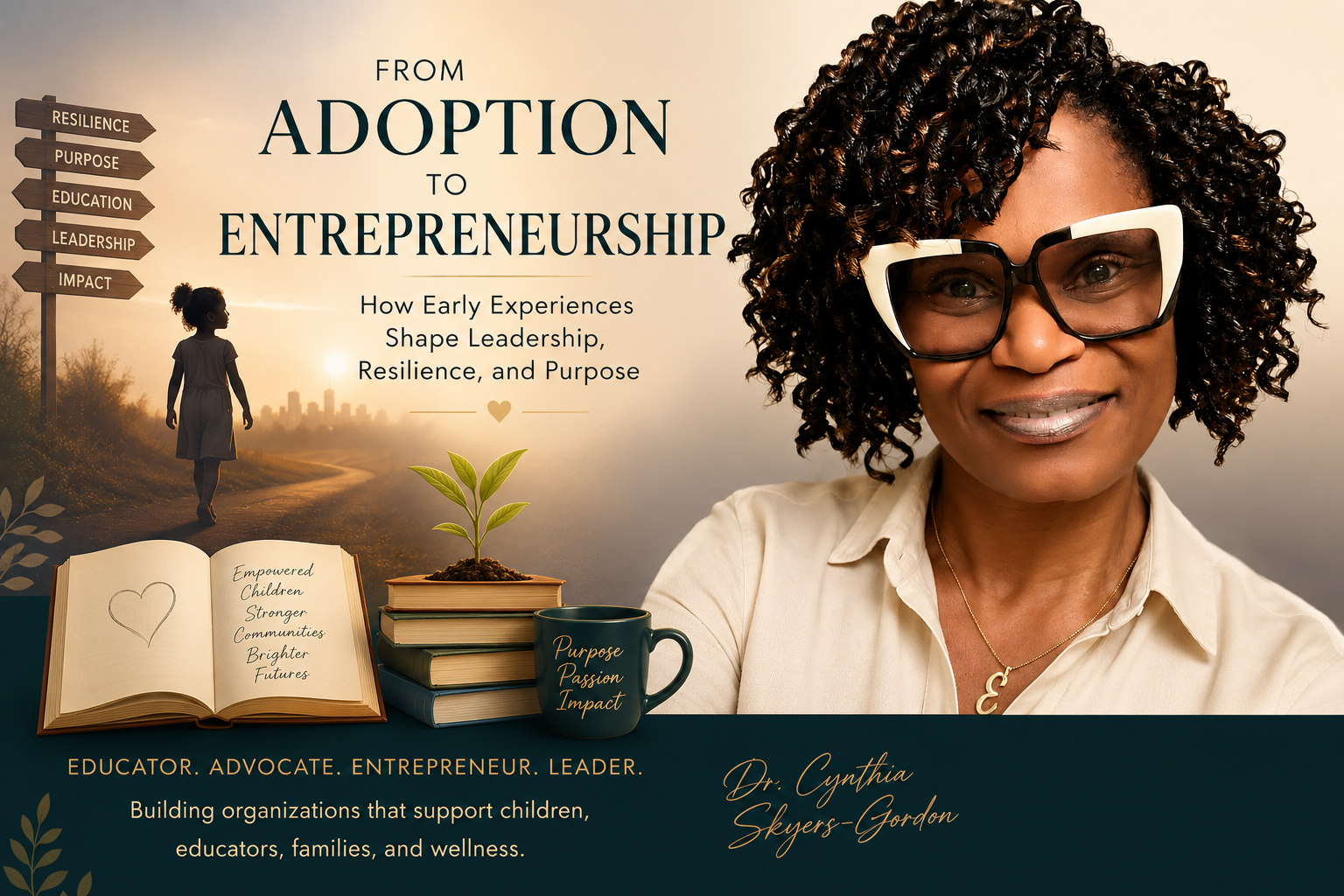
From Adoption to Entrepreneurship
How My Journey from Adoption to Entrepreneurship Taught Me That True Leadership Begins Long Before the Title.
People often assume leadership begins with a title.
They imagine it starts when someone becomes a director, manager, CEO, or business owner. But in my experience, leadership begins much earlier. It begins in the moments that shape who we are long before anyone ever calls us a leader.
I know this because my own journey to leadership began as a child.
A Journey That Began Early
I was born in Belize and later adopted by my aunt in the United States. At the time, I did not understand how profoundly that experience would shape my life. I was simply a child learning to navigate change, adapt to a new environment, and find my place in the world.
While adoption was part of my journey, it was not the only experience that shaped me. As a child, I also experienced abuse. For many years, I carried the weight of those experiences quietly. Over time, however, they became part of the reason I dedicated my life to working with children. I understood firsthand how important it is for children to feel safe, protected, seen, and valued.
Looking back, I realize those early experiences taught me lessons about resilience, perseverance, empathy, and purpose that would later become essential to my leadership journey.
Many Women Leaders Carry Similar Stories
While our circumstances may be different, many of us have faced experiences that required us to adapt, overcome uncertainty, or find strength during challenging seasons of life. Those experiences often become hidden gifts. They teach us how to move forward when the path is unclear and how to remain grounded when circumstances test us.
For me, those early experiences became more than memories. They became motivation. They helped shape my commitment to children, families, and educators and influenced the work I would eventually dedicate my life to.
Leadership Is About Service
For years, I dedicated my career to early childhood education. I worked alongside children, families, and educators, eventually earning a doctorate in Early Childhood Education. Throughout my career, I discovered that leadership is not about authority or having all the answers. Leadership is about service. It is about creating opportunities for others to grow, succeed, and feel valued.
The most influential leaders I have encountered were not necessarily the loudest people in the room. They were the people who listened deeply, consistently supported others, and recognized the importance of building meaningful relationships.
Those lessons eventually inspired me to create organizations focused on helping others thrive. Through Kidz Exec Excellence, I provide resources and support to educators and families. Through SILWELL-C, I focus on wellness, leadership development, and creating spaces where people can reconnect with calm, purpose, and growth.
My passion for supporting children also led me to become an author. Through children's books, I share messages of identity, cultural pride, self-worth, belonging, and resilience. Storytelling became another way to help children feel seen, valued, and proud of who they are. In many ways, writing allowed me to transform life lessons into something meaningful for the next generation.
Entrepreneurship Is About Recognizing a Need
Entrepreneurship is often described as taking risks, building businesses, or pursuing opportunities. While those things are certainly part of the journey, I have come to believe that entrepreneurship is also about recognizing a need and having the courage to respond to it. It is about seeing possibilities where others may see obstacles.
For me, entrepreneurship was never simply about starting organizations. It was about creating the kind of support, opportunity, and encouragement that helps others thrive. It was about turning purpose into action.
In many ways, the qualities that helped me become an entrepreneur were the same qualities I began developing as a child: adaptability, resilience, persistence, and the willingness to keep moving forward even when the future was uncertain.
Our Challenges Do Not Have to Define Our Limitations
What continues to inspire me is the understanding that our challenges do not have to define our limitations. Instead, they can become part of our preparation.
Too often, women underestimate the value of their experiences. We focus on what we lack rather than what we have overcome. Yet the experiences that once felt difficult may become the very foundation of our greatest strengths.
- Resilience becomes empathy.
- Adaptability becomes innovation.
- Perseverance becomes leadership.
Today, when I speak with educators, nonprofit leaders, entrepreneurs, and women pursuing their dreams, I often remind them that leadership is not reserved for those with perfect circumstances. Leadership is built through everyday choices to keep learning, keep growing, and keep serving others despite challenges.
My journey from adoption to entrepreneurship was not a straight path. It included uncertainty, setbacks, and moments of questioning whether I was capable of achieving my goals. Yet each experience contributed to the person, entrepreneur, author, and leader I am today.
Do Not Underestimate the Power of Your Journey
If there is one lesson I hope other women take away from my story, it is this:
- Do not underestimate the power of your journey.
- The experiences that once tested you may be the very experiences that prepare you to lead.
- Your story matters.
- Your voice matters.
- And your leadership may be growing long before you even realize it.
Your path does not have to be perfect to be powerful. The challenges you have faced, the resilience you have developed, and the compassion you have cultivated may become the very qualities that allow you to make a meaningful difference in the lives of others.
- Leadership often begins long before the title arrives. Sometimes, it begins with simply choosing to keep going.
Join Influential Women and start making an impact. Register now.