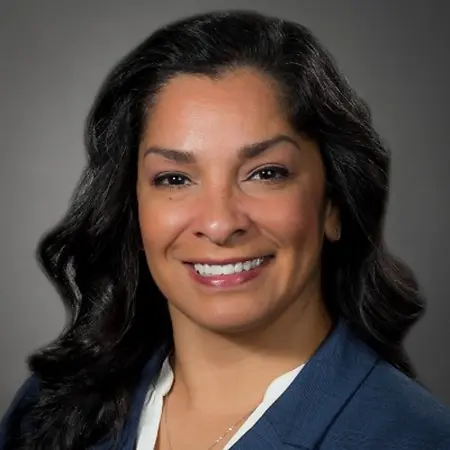
Her Story
About Dr. Cynthia
I started my career in the military as a pharmacy tech, which really steered me on my path for healthcare. I served for 8 years, and that experience was foundational for everything that came after. When I got out of basic training, I remember saying to myself that if I could do that, which was the hardest thing I'd ever done, I could do anything. That has been my mantra throughout my life. After the military, I became a nurse and worked in several different areas including cardiac, neuro, and rehab. From there, I transitioned into nursing education and eventually became a dean over a nursing school in New York. Later, I went back into the hospital setting as the director of education at two of Northwell's hospitals. Now I'm in military liaison services for Northwell Health, where I get to combine my military experience, my nursing experience, and my education experience. I create education programs to help clinicians understand how to care for veterans in a culturally appropriate way, and I also create training programs for veterans to be retrained into civilian careers. These programs allow veterans to get training for free, work while they train, get paid, and then receive a position when they're done. What I love most is that these programs create opportunities for people to start their life over and begin fresh in a career that can last them the rest of their life.
Her Interview
Ten minutes with Dr. Cynthia
01What do you attribute your success to?
I would say the military shaped me the most. It really shows you the kind of leader that I am, the kind of person that I am. For me, everything is helping others, helping in a bigger way than yourself, like something bigger than yourself. That was foundational for me. When I think about what really has shaped the way I think, the way I behave, the desire to help, it goes back to when I was a kid. When I went to church, we would make baskets for shut-ins, and that sense of helping someone else, even something as small as putting a fruit basket together, the feeling that you get from helping someone else and seeing them smile and seeing them say 'wow, thank you so much for thinking of me,' that really started me on that path of caring for others and having that service mentality. The military really solidified that for me. When I got out of basic training, which was the hardest thing I'd ever done, I remember saying to myself that if I could do that, I could do anything. And that has been my mantra throughout my life. The military, especially boot camp, really teaches you to push yourself out of your comfort zone in a way that you're like 'I don't know if I can do this,' and then when you do, you're like 'wow, I'm capable of more than I thought I was.' My mom has always been my first and biggest cheerleader. Her strength has led me to where I am today. Having someone behind you always to pick you up when you fall and be in your corner, cheer you on no matter what the consequence, no matter what the situation, it really does give you a lot of confidence that you can do anything.
02What advice would you give to young women entering your industry?
The one piece of advice that I wish someone would have told me when I was coming up would be to advocate for yourself. Be your best advocate. I think culturally, we had that mentality of 'oh, if I work hard enough, then people will recognize what I'm bringing to the table.' You really have to advocate for what it is you want and make sure that wherever it is you want to go in your career, that each step you take leads you closer to that goal. Advocating for yourself in a professional way is extremely important. It's what I taught my mentee, how to advocate with her instructors, her teachers, how to do that in a professional way so that they not only look at you as a high school student, but they look at you as someone who is articulate and can speak for herself and is very conscientious. Know where it is you want to go, and then advocate for yourself so that you can get there. The only thing that stops you from getting where you want to go is you.
03What are the biggest challenges or opportunities in your field right now?
I think the biggest challenge we have is fighting that uphill battle to be recognized as a profession. Recently, with this administration, they have wanted to take away that view of nurses of not being a profession. We've been fighting ever since Florence Nightingale to be recognized as a profession, and we are the most trusted profession there is. Each year they do the survey, and nursing comes back as that role that is the most trusted profession out there. The other challenge is in nursing education. We have a shortage, and there aren't enough incentives for teachers in general. There's not many incentives for nurse educators, those that teach at the school level, or even the nurse educators that teach in the clinical setting. People have forgotten that there's another set of educators in the clinical setting that are doing the job and teaching, but they don't ever get the same recognition as the educators that teach at the school level. We pick up the student when they graduate and we continue their education, but we don't get the same recognition. Recognizing how hard nurse educators work, both in school and in the clinical setting, is another challenge.
04What values are most important to you in your work and personal life?
For me, everything is helping others, helping in a bigger way than yourself, like something bigger than yourself. When I think about causes, I think anything related to equity and making sure that people are treated fairly and equally, and not just equally, but receiving what they need, which may be more than what someone else needs. Health equity in particular is important to me. That sense of helping someone else, that service mentality, has always been part of who I am. Serving in the military, doing something greater than you, greater than yourself, serving your country, there's no greater job that you can have in doing that. It's about creating opportunities for people to start their life over, to start fresh in a career that can last them the rest of their life.
Join Influential Women and start making an impact. Register now.