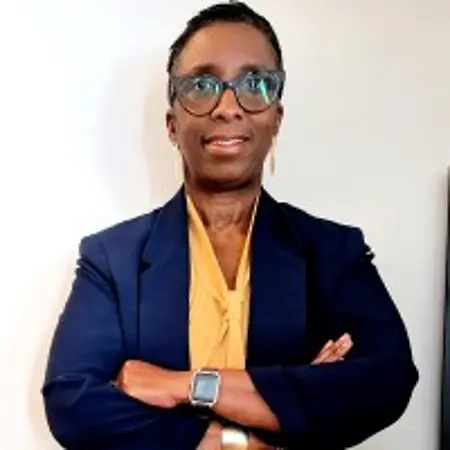
Her Story
About Cynthia
Cynthia Smalls-Middleton, RN, BSHA, CDP, CAPS, is an accomplished healthcare and clinical informatics leader with a career grounded in clinical excellence, operational strategy, and compassionate care delivery. Based in the Charleston, South Carolina metropolitan area, she brings extensive experience across acute care, long-term care, and managed care environments, with a strong focus on improving care coordination and patient outcomes. Throughout her career with organizations such as AmeriHealth Caritas and Cigna, she has led clinical informatics initiatives, optimized electronic health record (EHR) systems, and partnered with multidisciplinary teams to enhance workflow efficiency, regulatory compliance, and population health management. Her expertise spans clinical system configuration, HIPAA compliance, staff training, and operational leadership within complex healthcare systems.
Cynthia is the Co-Owner of Navigating Care with Joyful Energy, a care coordination and geriatric support business dedicated to assisting families caring for loved ones with dementia, Alzheimer’s disease, chronic illness, and aging-related needs. Alongside her business partner—both experienced nurses with backgrounds in acute care, long-term care leadership, and direct patient care—they step in when caregivers feel overwhelmed, stressed, or uncertain about how to safely support loved ones at home. Their process involves a comprehensive assessment of patient needs, caregiver stressors, and environmental barriers, followed by the development of individualized care plans. They also manage the vetting and connection of families to appropriate resources, including in-home care services, education, disease-specific training, and community support programs, with a strong emphasis on aging in place and preserving quality of life at home.
Her work is deeply personal and purpose-driven, shaped by her lived experience as a primary caregiver for her mother, who had Lewy body dementia, and her great-uncle, who had Alzheimer’s disease. These experiences strengthened her commitment to guiding families through the emotional, logistical, and clinical challenges of dementia care, including navigating resources such as day programs and financial assistance. Cynthia’s professional journey has included direct patient care in hospital settings, leadership roles in long-term care, and managed care experience supporting clinicians and members within health insurance systems. Across all roles, she is guided by a core mission to nurture, empower, and support others—believing that even in life’s most difficult health journeys, compassionate guidance and informed care can help individuals and families find strength, dignity, and hope.
Her Interview
Ten minutes with Cynthia
01What do you attribute your success to?
I would attribute my success first and foremost to my family. From an early age, my parents, grandparents, and the community around me consistently reminded me that I was capable of achieving whatever I set my mind to. They taught me the importance of being clear about my goals, staying focused, and finding my way back whenever distractions or setbacks pulled me off course.
I have also been fortunate to have mentors in many areas of my life—career mentors, spiritual mentors who help keep me grounded in my purpose, and others who have guided me in relationships and personal growth. Their wisdom and example have been invaluable in shaping both who I am and how I lead.
One of the most defining experiences in my life happened in first grade, when I was hit by a car after getting off the school bus. I spent more than a month in the hospital on a pediatric unit, and the nurses who cared for me left a lasting impression. Their compassion, professionalism, and dedication meant so much to me that even at that young age, I told my mother I wanted to become a nurse. Later, when I was old enough to volunteer as a candy striper, I returned to that same pediatric floor, where many of those nurses were still working.
Throughout my career, I have viewed every role as an opportunity to learn and grow. As I began thinking about business ownership and leadership, each leader I worked with taught me something—either by showing me the qualities of strong leadership or by revealing the kind of leader I did not want to become. I have carried those lessons with me and continue to draw on them as I prepare for future opportunities. I have always been naturally curious and eager to understand not just what we do, but how and why we do it. Looking back, my journey has been shaped by a strong family foundation, meaningful mentorship, and a commitment to learning from every experience—including the difficult ones.
02What’s the best career advice you’ve ever received?
One of the best pieces of career advice I’ve received is that, as a leader, you won’t always have all the answers—and no one expects you to. Being willing to acknowledge what you don’t know is not a weakness; it reflects self-awareness, humility, and confidence. I’ve also learned that knowing where to turn and whom to rely on for the right answers is just as important. To me, that mindset reflects a genuine commitment to growth, collaboration, and excellence.
03What advice would you give to young women entering your industry?
I would encourage them to put their dreams into motion. Don’t be afraid to reach out to someone who is doing the kind of work you hope to do one day or who holds a role you aspire to. It can be easy to assume that people in leadership positions are too busy to offer guidance, but many—especially women—are genuinely willing and excited to support the next generation. I believe it is important to stay grounded in who you are and to lead from a place of authenticity. Build your confidence around your own values and sense of purpose, rather than outside expectations. When you know who you are and what you want, you can move forward with clarity, courage, and intention.
04What are the biggest challenges or opportunities in your field right now?
One of the biggest challenges in my field right now is the growing number of families who need support caring for loved ones at home. For many working families, aging in place is the most practical and financially realistic option, but they often do not have a full understanding of the resources available to help make that possible. As a result, family members and friends frequently step into caregiving roles without the preparation, guidance, or support they need, which can lead to burnout very quickly. When the financial strain is added, many caregivers find themselves trying to balance their own household responsibilities while also absorbing the added costs of caring for someone they love.
Another challenge—and, in many ways, an opportunity—is how we view aging in this country. Too often, we underestimate the value and ongoing contributions older adults can make to the next generation. People are living longer, and many continue to play meaningful roles in their workplaces, communities, and families. I believe we need to give individuals the freedom to define what retirement looks like for themselves and to choose how they want to spend those years. Many older adults are using that season of life to reinvent themselves, pursue new careers, strengthen relationships, and explore interests they may not have had time for earlier in life.
A related opportunity is the need to continue reviewing and reshaping healthcare policies so they better reflect the needs of a population that is living longer and increasingly hopes to remain at home. That means investing in communities where people already live and making sure support systems are accessible, sustainable, and close to home. It also means equipping caregivers with practical tools, funding, and services such as day programs and short-term respite care, both in and outside the home. I also believe there is real value in creating more affordable senior day centers, expanding green spaces for connection and wellness, and encouraging multigenerational spaces that foster relationships, socialization, and mental well-being. At the heart of all of this is a simple goal: helping people remain active, connected, and supported rather than isolated.
05What values are most important to you in your work and personal life?
The values that matter most to me, both personally and professionally, center on compassion, service, and dignity. My perspective has always been rooted in making sure caregivers have the tools, guidance, and support they need to care for their loved ones well. I often tell the families I work with that when their loved one feels safe, supported, and cared for, it creates a greater sense of peace for everyone involved.
I believe caregiving often requires us to make adjustments and sacrifices—not to force a loved one into our routine, but to meet them where they are with patience and understanding. To me, support means walking alongside someone, offering reassurance and practical help, and then empowering them to move forward with confidence. My goal is always to help families reach a place where they can thrive while also ensuring their loved one experiences the highest possible quality of life at home.
At the heart of my work is a deep belief in how priceless time truly is. When someone is caring for a loved one, time becomes one of the most meaningful gifts—time to reflect on cherished memories, create new ones, and prepare for what lies ahead. That understanding is a large part of why I started this company and why I remain so committed to this work. Helping people through difficult seasons, while reminding them that there can still be goodness, strength, and hope in the midst of challenge, is not only my passion—it is my purpose.
Join Influential Women and start making an impact. Register now.