Her Story
About Cynthia
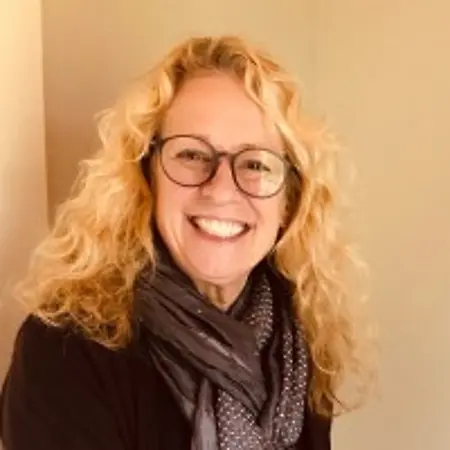
Cynthia (Cindy) Pope is the Dean of Enrollment and Strategic Initiatives at Franklin Academy, a premier boarding and day school in East Haddam, Connecticut, dedicated to serving neurodivergent students in grades 8 through 12, with a stand-alone Post Graduate program for young adults. As one of the school’s founders, she has spent nearly 25 years shaping a college preparatory environment that emphasizes strength-based, student-centered education. Her leadership focuses on supporting the whole child through flexible social-emotional programming, college- and career-readiness, and residential life instruction, ensuring that students not only thrive academically but also develop confidence and independence. With a background in fine arts and English, Cindy holds an MFA from Bard College and a BA from Wilson College. She combines her creative and analytical skills to design enrollment strategies, present at conferences nationwide, and educate families and schools on best practices for working with neurodivergent learners. Her role also includes interviewing prospective students, traveling to share Franklin Academy’s mission, and serving as a senior cabinet member, shaping policies and programs that directly impact student success. Cindy’s impact is evident in the outcomes of her students: Franklin alumni complete college at roughly twice the national average for neurodivergent learners. Beyond her work at the Academy, she is actively involved in her community, including serving on the Regional Agricultural Council and supporting equine retirement initiatives. She is also an artist, with her paintings and mixed-media pieces shown nationally and internationally and represented in both private and museum collections. Recognized as one of Connecticut’s Influential Women in 2026, Cindy continues to champion education that redefines what is possible for students who have historically been underserved by traditional schools.
Her Interview
Ten minutes with Cynthia
01What do you attribute your success to?
I attribute my success to a combination of energy, drive, and perspective gained over time. As a child, I experienced a great deal of anxiety and often held myself to perfectionist standards. Over time, I came to understand that perfection isn’t the goal—contribution is. That shift has been foundational for me. It allowed me to channel my energy into meaningful work, stay deeply engaged, and keep moving forward without being constrained by the need to get everything exactly right. Equally important has been my commitment to collaboration—working alongside experts, listening carefully, and continually refining my approach based on what truly works. I’ve learned to value best practices not as rigid models, but as evolving frameworks shaped by experience, research, and thoughtful partnership. I’ve also been profoundly shaped by the mentors I encountered during my undergraduate experience at a women’s college. At a time when I wasn’t yet fully confident in my own voice, I was surrounded by exceptionally smart, driven, and purposeful women who modeled what it meant to lead with both intellect and conviction. Many of those relationships have endured, and their influence continues to guide me. Ultimately, my success is rooted in a willingness to stay involved, work hard, and grow—while learning from others and contributing in ways that are both purposeful and impactful.
02What advice would you give to young women entering your industry?
I would encourage young women to trust their instincts and remain open to possibility. There are often external messages about what you should or shouldn’t do, but it’s important to stay connected to your own sense of direction. Curiosity matters – so does the willingness to take thoughtful risks, even when the outcome isn’t certain. Not every step will go as planned, and that’s not only okay, it’s essential. Some of the most meaningful learning comes from moments of challenge or misstep. Growth doesn’t come from staying within what feels comfortable; it comes from being engaged, trying, and continuing to move forward. Above all, I would encourage them not to default to playing it safe, but instead to approach their path with intention, resilience, and a belief that their contributions have value.
03What are the biggest challenges or opportunities in your field right now?
One of the most significant challenges in my field is that many traditional educational models are still not designed to effectively support neurodivergent students. Too often, these students are viewed through a deficit-based lens, with an emphasis on what they struggle with rather than what they bring. As a result, critical areas of development, such as executive functioning, social-emotional growth, and academic confidence, are not addressed in a meaningful or integrated way. Students may move through systems without fully developing the skills they need to navigate college, relationships, and independent life. There is also a broader systemic challenge: many schools are constrained by structures and expectations that make it difficult to implement individualized, strengths-based approaches at scale. Even well-intentioned educators may lack the training, resources, or flexibility to meet students where they are. At the same time, this challenge presents a powerful opportunity. There is a growing recognition that specialized, college-preparatory environments can successfully support neurodivergent learners, not by remediating them into a traditional mold, but by building on their strengths while intentionally developing areas of need. Expanding access to these models and sharing best practices more broadly could influence the broader educational landscape. Equally important is the opportunity to better educate families and partner with other schools. When families understand what is possible, and when schools begin to adopt more nuanced, student-centered approaches, the impact extends far beyond any single program. The field is moving in a promising direction—but there is still meaningful work to be done to ensure that all students are seen, understood, and supported in ways that allow them to truly thrive.
04What values are most important to you in your work and personal life?
The values that guide my work are deeply rooted in lifting others up and creating access to opportunity. I believe strongly in recognizing potential, especially in individuals who may not have been given the chance to fully demonstrate what they are capable of. For me, success is not individual; it’s collective. It’s about creating environments where others feel seen, valued, and able to contribute in meaningful ways. I am also deeply committed to supporting and advancing women. I believe in bringing other women forward with us, sharing opportunities, offering encouragement, and creating space for their voices to be heard. Some of the most meaningful professional relationships I’ve built are grounded not just in shared work, but in honesty and authenticity. When women come together, the conversations that matter most often go beyond the surface; they include real experiences, challenges, emotions, and aspirations. Ultimately, I value connection, authenticity, and purpose. I strive to create spaces where people feel both supported and empowered, and where success is defined not just by personal achievement, but by the ability to elevate others along the way.
Join Influential Women and start making an impact. Register now.