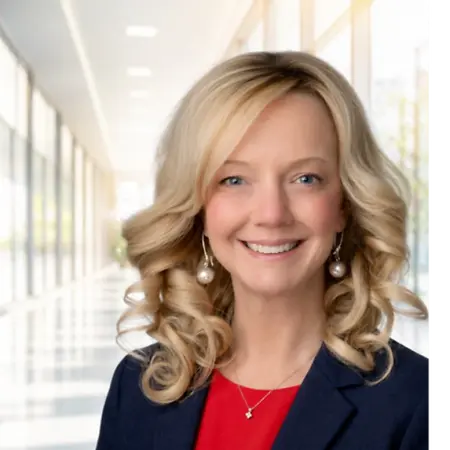
Finding the right mentor at different career stages has been pivotal. Their guidance helped me avoid mistakes, spot opportunities, and think bigger than I could alone.
The Skill She Taught Herself That Changed Everything
Explore moreAdvocating for myself isn't arrogance. No one is more responsible for making sure my voice is heard than me and that's where confidence is built.
Dana Caviness, MBA, CPXP · In Her Own Words
Finding the right mentor at different career stages has been pivotal. Their guidance helped me avoid mistakes, spot opportunities, and think bigger than I could alone.
The Skill She Taught Herself That Changed Everything
Explore moreHer Story
Dana Caviness, MBA, CPXP, is a seasoned healthcare leader and Enterprise Assistant Vice President of Patient Experience Operations at Wellstar Health System, where she leads systemwide strategies to elevate patient experience across a multi-market network of hospitals, medical practices, and emergency care services. With more than two decades of leadership experience, she is known for translating patient-centered values into measurable, operational practices that improve outcomes, strengthen organizational culture, and enhance trust between providers, patients, and the communities they serve. A data-driven and results-focused executive, Caviness has built a reputation for developing high-performing teams and driving initiatives that align empathy, quality, and performance. Caviness’ career path reflects both professional determination and personal resilience. She began her journey in training and development before transitioning into healthcare, where she steadily advanced through roles in volunteer services, patient experience coaching, and executive leadership. Alongside her professional growth, she pursued her MBA from Kennesaw State University - Michael J. Coles College of Business, strengthening her expertise in strategic leadership and organizational management. Her work centers on embedding empathy and human connection into everyday healthcare delivery, ensuring that patient experience is not viewed as an abstract ideal but as a core operational priority. A cancer survivor, Caviness brings a deeply personal perspective to her work as both a healthcare leader and patient advocate. Her experience navigating diagnosis, treatment, and recovery has reinforced her commitment to compassionate, accessible care—particularly for underserved populations. She is a vocal advocate for equity in healthcare and uses her platform to champion initiatives that prioritize dignity, humanity, and connection. Guided by resilience and purpose, Caviness continues to inspire those around her while shaping a more empathetic and patient-centered future in healthcare.
Her Interview
01What do you attribute your success to?
Much of my success is rooted in the values my parents instilled in me early on. They never expected perfection, but they demanded follow-through. Being an hour early was always better than being one minute late. And above all, they taught me to make decisions I could sleep peacefully with at night.
Those foundational lessons shaped my character and became the framework for how I lead today. As I grew in my career, I adapted and refined my leadership approach through experience. I learned what not to do from ineffective leaders, and I intentionally reinforced the behaviors that most supported my own growth.
I’ve always worked to fill in the gaps through continuous learning, asking questions, seeking perspective, and committing to personal growth. Leadership, for me, has never been about arriving at a destination—it’s about constantly evolving into the kind of leader others deserve, and the situation demands.
Much of my recent leadership growth I attribute to surviving cancer. It gave me the profound and humbling experience of living the very reality I am now charged with helping create for others. It forced some of the hardest conversations I’ve ever had—with the people I love most—about mortality, uncertainty, and what truly matters.
That experience fundamentally reshaped me. It deepened my empathy, sharpened my perspective, and forever changed how I define leadership. It’s given me courage to speak up when I may have previously hesitated. It taught me that leadership is not about having all the answers or projecting strength at all times; rather, it’s about showing up with courage and authenticity, acknowledging what you don’t know, and having the humility to ask for—and accept—help.
More than anything, it reminded me that all humans share one universal currency, regardless of job, position, title, or education: time. How we spend it, how we honor it, and how we show up for others within it defines the impact we leave behind.
02What’s the best career advice you’ve ever received?
Some of the best career advice I’ve ever received was to embrace authenticity, speak kindly of everyone, and live intentionally. You don’t have to understand people’s experiences to be kind. Kindness does not require logic, only grace.
Trust that every season of your career is shaping you for what comes next, even when the reason isn’t yet clear. And always trust your gut. More often than not, your intuition is pointing you toward what matters most, if you’re just willing to listen.
03What advice would you give to young women entering your industry?
1. Don’t chase titles. Chase competence. Focus less on becoming a ‘leader’ and more on becoming someone people can trust. Ask thoughtful questions.
2. Protect your integrity like it’s your most important credential. Skills can be taught. Trust must be earned.
3. Start at the beginning. Some of the strongest healthcare leaders I have worked with began in roles that taught them how patient care actually works – patient access, scheduling, transport. The closer you understand the real human impact that occurs in health care, the more credible you become.
04What are the biggest challenges or opportunities in your field right now?
Some of the biggest challenges in healthcare include navigating workforce shortages, demanding digital transformation, and growing patient expectations.
When patient experience is seen as a symbolic exercise rather than a strategic imperative, it directly compromises the safe and high-quality experiences all patients deserve.
Healthcare systems that get it right include patient experience at the executive table which always results in environments that are safer, more equitable, and ultimately more capable of delivering consistently high-quality outcomes.
05What values are most important to you in your work and personal life?
There are several values that guide me, but a few consistently rise to the top.
The first is integrity. I firmly believe that if I say I’m going to do something, I follow through. If I make an agreement with someone, I honor it. That doesn’t mean anyone is perfect—I don’t believe in perfection, but I do believe in taking ownership when mistakes happen. Being candid and transparent in those moments doesn’t diminish leadership; in my view, it strengthens it.
The second core value is grace. I think grace is an underrated but essential attribute. I’ve been fortunate to receive grace in my own life, which has shaped how I try to extend it to others. I’ve learned the importance of assuming positive intent. I may not always agree with someone, and there may be moments of frustration or disagreement, but choosing to pause and extend grace can completely shift a situation. It reminds me that we rarely know what others are carrying—their pressures, their challenges, or what’s happening behind closed doors. Grace doesn’t excuse behavior, but it does humanize it. It acknowledges that we all need it at different times.
The third is authenticity. In my field, authenticity can sometimes feel scary, but it’s something I deeply value and strive to embody. I don’t operate with different versions of myself depending on the setting. I’m consistent in what I believe, how I advocate, and how I show up each day. That authenticity has not only shaped the cultures I’ve worked in, but it has also grounded me personally and strengthened my relationships at work and at home.
Her Content Hub
Explores how healthcare professionals can enhance patient experience by recognizing the irreplaceable value of time in every clinical interaction, focusing on compassion and human connection beyond metrics.
How healthcare leaders can transform patient experience by honoring the irreplaceable moments that matter most.

And you can't stop it. You can't get more of it. You can only decide what you'll do with the time you have.
Every day in healthcare, we focus on metrics, dashboards, strategic plans, budgets, and operational challenges. Those things matter. They help us improve care, expand access, and build stronger organizations.
But for our patients, time often looks very different. It is the mother waiting anxiously for test results. The husband sitting beside his wife during chemotherapy. The adult child spending what may be one of the last afternoons with a parent. The patient receiving a diagnosis that instantly changes how they view tomorrow.
Patient experience is not just about satisfaction scores or survey results. At its core, it is about recognizing that every interaction occurs during a moment in someone's life that they can never get back.
This quote reminded me that while we cannot give people more time, we can influence how they experience the time they have, regardless of the circumstances they face.
Because beyond the metrics, people are counting on us.
A reflective piece on the transformative power of meaningful relationships in shaping our character and professional culture. Explores how the people we surround ourselves with influence who we become.
The people who make you better shape who you become.

Life has a way of convincing us that success is about finding the right opportunities, the right title, the right education, or the right salary. Those things matter. But so do the people standing beside us.
There are people who leave you feeling smaller—questioning yourself, second-guessing your instincts, or trying to become someone you're not.
And then there are the rare ones.
The people who make you laugh a little louder.
Who challenge you without diminishing you.
Who make you want to lead with more kindness, more courage, and more authenticity.
Who remind you what you're capable of on the days you've forgotten.
Those relationships don't just make life better. They shape who we become.
I've realized that the people I value most aren't simply the ones who support me. They're the ones who consistently bring out the version of myself I like best.
In healthcare, we spend a lot of time talking about culture, but maybe it's simpler than we make it.
Culture is built by people who make each other better—one conversation, one meeting, and one act of grace at a time.
Pay attention to those people. They're one of life's greatest metrics.
Dana J. Caviness
Healthcare Executive | Cancer Survivor | Speaker | Writer
Leadership Between the Metrics Healthcare leadership has become increasingly focused on dashboards, metrics, rankings, and financial performance. Those things absolutely matter. But after nearly 2 decades in healthcare, I've learned something else: The organizations people trust most aren't built on extraordinary moments.
Where Healthcare Leadership Meets Humanity

Healthcare leadership has become increasingly focused on dashboards, metrics, rankings, and financial performance.
Those things absolutely matter. But after nearly 2 decades in healthcare, I've learned something else: The organizations people trust most aren't built on extraordinary moments. They're built on ordinary behaviors, repeated every day with compassion and kindness.
Here are 10 principles I come back to over and over again.
Join Influential Women and start making an impact. Register now.