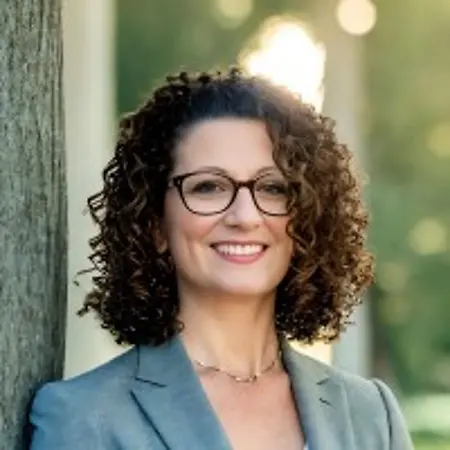
Her Story
About Dana
Dana Cohen is a commercial and marketing leader with nearly 20 years of experience helping pharmaceutical organizations modernize customer engagement through brand strategy, omnichannel innovation and data-driven commercialization.
As a Marketing Director at Bristol Myers Squibb. Dana leads brand and omnichannel strategy within Immunology, driving integrated HCP and patient engagement, AI-enabled personalization and enterprise measurement capabilities. Throughout her career, she has helped global and U.S. organizations transform how they engage customers by connecting brand strategy, digital innovation and commercial execution to deliver measurable business outcomes. Her current work also focuses on helping organizations evolve from channel-centric marketing to AI-enabled, customer-centric omnichannel engagement that delivers measurable commercial impact.
Dana has held leadership roles at Bristol Myers Squibb, Nestlé Health Science, Teva Pharmaceuticals, Ortho Clinical Diagnostics and Johnson & Johnson, where she has led global commercialization, launch strategy, digital transformation and omnichannel capability building across multiple therapeutic areas. She is passionate about helping organizations move beyond traditional reach-based metrics toward more meaningful measures of customer engagement and commercial impact.
Her Interview
Ten minutes with Dana
01What do you attribute your success to?
I attribute my success to my mother. She was a single parent who worked incredibly hard to provide for our family, despite not having many financial resources. From an early age, she instilled in me the importance of education, independence, and creating opportunities through hard work. She always told me, "You're going to go to college, you're going to be successful, and you're going to be able to take care of yourself." Those words became the foundation for how I've approached both my career and my life.
Watching her persevere through challenges taught me resilience, determination, and the value of earning everything you achieve. As a child, I promised her that one day I would be able to take care of her the way she had always taken care of me. Today, being able to fulfill that promise is one of my proudest accomplishments.
02What’s the best career advice you’ve ever received?
The best career advice I've received came from two people who have had the greatest influence on my life: my mother and a mentor who guided me for more than a decade.
My mother always gave me two simple pieces of advice: trust your instincts and do work that genuinely makes you happy. She believed that passion can't be faked—if you love what you do, it shows in the quality of your work, your relationships, and your leadership. That advice has shaped every career decision I've made.
Early in my career, my mentor taught me an equally important lesson. She told me that doing your job well simply means you're meeting expectations—not necessarily exceeding them. It was a difficult truth to hear, but it challenged me to honestly evaluate my own performance and continually ask myself how I could create greater impact. In a world where it's easy to assume we're all performing at our best, that mindset taught me the importance of humility, self-awareness, and continuous growth.
Those two lessons complement each other perfectly. I'm in healthcare because I genuinely believe in improving patients' lives. While every company has business objectives, my motivation has always been deeply personal. I want patients to have access to the information, treatments, and support they need to make confident decisions for themselves and their families. That purpose fuels my passion for marketing and reminds me that the best work happens when you're driven by both excellence and meaning.
03What advice would you give to young women entering your industry?
The advice I give young women entering the industry is rooted in the same lessons my mother taught me—and the same lessons I now share with the people I mentor.
First, trust your instincts. Your perspective matters, and you don't have to wait until you have all the answers to have a voice. Some of the best decisions I've made in my career came from trusting my judgment, even when it wasn't the easiest path.
Second, pursue work that genuinely excites you. Passion isn't something you can fake. When you truly believe in what you're doing, it shows in your work, your leadership, and the relationships you build.
I've chosen a career in healthcare because improving patients' lives is deeply meaningful to me. While every business has commercial objectives, I've always been motivated by the opportunity to help people better understand their conditions, their treatment options, and the care available to them. That sense of purpose has sustained me throughout my career. Also, don’t chase titles; chase opportunities to learn, grow, and make an impact. The titles will follow.
Finally, don't be afraid to advocate for yourself. Take on challenges that stretch you, ask questions, continue learning, and don't underestimate the value of your unique perspective. When you combine confidence with curiosity and a genuine passion for your work, you'll build a career that is both successful and fulfilling.
04What are the biggest challenges or opportunities in your field right now?
One of the biggest challenges—and opportunities—in healthcare today is empowering patients to become active participants in their own care. The healthcare system has become increasingly complex, and patients are often expected to navigate insurance requirements, treatment options and clinical decisions that can be overwhelming without the right information and support.
This perspective is deeply personal to me. Following a congenital spinal condition, I experienced firsthand what it means to advocate for your own care after my medically necessary surgery was initially denied by insurance despite the severity of my condition. It reinforced how important it is for patients to understand their diagnosis, ask questions, seek second opinions when appropriate and advocate for the care they need.
That experience strengthened my belief that our responsibility as an industry extends beyond developing innovative therapies. We also have an opportunity to educate, empower and support patients throughout their healthcare journey. Whether through clearer educational resources, stronger patient engagement or more accessible information, we can help people become informed advocates for themselves and their loved ones.
I believe the future of healthcare isn't just about delivering innovative treatments; it's about ensuring patients have the knowledge, confidence and support to access and benefit from them. I believe informed patients become empowered patients, and empowered patients make better healthcare decisions.
As marketers, we often focus on awareness and engagement. I believe we also have a responsibility to help patients become informed advocates for their own health. When we do that well, we're not just building stronger brands—we're helping people make better decisions during some of the most important moments of their lives.
05What values are most important to you in your work and personal life?
The values that guide both my work and my personal life are integrity, curiosity, compassion and family. My mother taught me from an early age to trust my instincts, work hard and pursue work that genuinely gives you purpose. Those lessons have shaped every decision I've made throughout my career.
Professionally, I believe in leading with empathy and never losing sight of the people behind the data. While I enjoy solving complex business challenges, what motivates me most is knowing that better communication, stronger education and more meaningful engagement can ultimately help patients receive the care they need and help healthcare professionals better support them.
Personally, my family has always been my foundation. Watching my mother overcome significant challenges taught me resilience and gratitude, while my own health journey reinforced the importance of advocating for yourself and others. Those experiences continue to influence how I lead, how I mentor others and how I approach every opportunity; with humility, purpose and a desire to make a meaningful difference.
Join Influential Women and start making an impact. Register now.