Her Story
About Dana
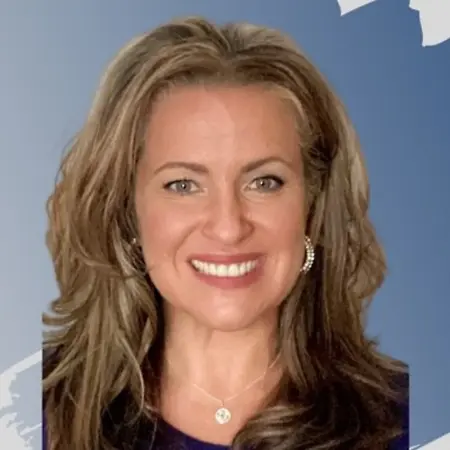
Dana Smith is a seasoned sales professional and Distributor Sales Engineer with Siemens Smart Infrastructure, bringing nearly three decades of experience in sales, electrical systems, and industrial controls. She began her career in October 1997, entering the industry at a time when both the field and her academic background were still evolving. A graduate of University of Illinois at Chicago with a degree in Biomedical Engineering—then a relatively new and not widely understood discipline—Dana demonstrated early initiative by forging her own path into the workforce. While traditional recruiting pipelines did not yet recognize her degree, she leveraged her sales acumen to secure an account management opportunity prior to graduation, quickly excelling and advancing directly into an outside sales role.
Throughout her career, Dana has remained dedicated to the industrial and electrical sales sector, building a reputation for navigating complex sales environments and delivering consistent results. Her ability to combine technical understanding with strategic relationship-building has enabled her to thrive in a historically male-dominated industry, where she was one of only a few women in her engineering cohort. Over time, she has witnessed—and contributed to—the industry’s evolution, including increased opportunities and representation for women. Today, she plays a role within Siemens’ structured and highly regarded sales training programs, supporting the development of emerging talent and helping to attract the next generation of professionals into the field.
In her current position, Dana continues to embrace growth and new challenges, recently stepping into a role that involves extensive travel and broader responsibilities. This transition reflects both her professional ambition and a well-timed personal milestone, as her children reach new stages of independence. Known for her integrity, adaptability, and commitment to excellence, Dana remains focused on delivering value to her clients while contributing meaningfully to the advancement of her industry.
Her Interview
Ten minutes with Dana
01What do you attribute your success to?
I don’t attribute my success to the absence of fear. I attribute it to choosing to move forward in spite of it. Anyone who has achieved anything meaningful didn’t get there because the path was easy—they got there because they had the grit, the desire, and the discipline to keep going anyway. Obstacles don’t disappear. Anxiety doesn’t magically go away. You learn to act in the presence of both.
For me, the difference has always been discipline over inspiration. I’ve never allowed personal struggles to derail my career. I’ve never had gaps in employment, and every transition I made was on my terms, because I had another opportunity waiting. Even after experiencing a horrific personal tragedy that left me with a long, painful recovery, I returned to work far sooner than anyone expected. I learned very quickly that the professional world keeps moving, no matter what you’re going through.
I still wanted this career. I still needed it. I had responsibilities, a life to rebuild, and a future I refused to let slip away. So I learned to carry my lowest moments quietly while still showing up. I learned to rebuild myself mentally and physically while maintaining my professional commitments. Navigating trauma, anxiety, and the long shadow of what I’d been through taught me how to keep my eyes on the bigger picture.
My success comes from that—choosing to move forward when it would’ve been easier to stop. Choosing resilience over retreat. Choosing myself, every single time.
02What’s the best career advice you’ve ever received?
I never really received formal career advice in the traditional sense, but I was deeply influenced by the women around me. My mom was my first example of what a successful working woman looked like. She built a strong career as the Director of Marketing for AT&T. She even went back to school for her MBA while raising a family. Watching her showed me that ambition and motherhood could coexist, and it set the tone for the kind of woman I wanted to become.
I also had a close friend—someone about 5 years ahead of me in the industry I was entering—who became an informal mentor and sounding board. We’re still friends today. I admired her because she was already succeeding in the space I was trying to break into, and having someone I respected to talk through decisions with made a huge difference. Many of the choices I made early in my career were shaped by those conversations.
But the best piece of advice I ever received came later: you have to put what’s best for you personally first. When you’re grounded, fulfilled, and aligned with your own needs, you show up as a stronger, happier, more effective employee. That mindset has guided me through every major decision since.
03What advice would you give to young women entering your industry?
Don’t be afraid to be heard and seen. There’s a mentality some people still push—keep your head down, do your job, don’t make waves. But if you want to grow in this industry, you can’t shrink yourself. Speak up. Contribute. Take up space. You worked hard for your degree, you earned your role, and you have every right to be in every room you walk into.
When you’re at a conference and the ratio is 100 to 1—or even 25 to 1—you have to remind yourself that you belong there just as much as anyone else. Don’t fade into the background because you notice you’re one of the few women. Make yourself visible. Your presence alone can inspire the next generation of girls coming up behind you.
Build your network intentionally. Connect with everyone, of course, but make a point to find the other women in the room. There’s real power in those relationships. I’m now 25 years ahead of many of the young women entering the company, and I reach out because I remember what it felt like to be the only one, especially while navigating my own challenges at 26. Having people to lean on makes the journey easier—and it makes you stronger.
So my advice is simple: be bold, be present, and build your community. You earned your seat at the table. Don’t be afraid to use it.
04What are the biggest challenges or opportunities in your field right now?
One of the biggest challenges in my field is that large, established companies (like Siemens, where I work) naturally have a deep internal talent pool. When a role opens up, there can be hundreds of qualified internal applicants. That level of competition can make advancement feel daunting, and it requires persistence, visibility, and a strong track record to stand out.
But the opportunities today are far greater than they were 25 years ago. The industry is finally recognizing the value of diverse perspectives, and we’re seeing more women enter technical and sales engineering roles than ever before. The pipeline is stronger, the culture is shifting, and companies are actively working to attract and retain female talent in ways that simply didn’t exist when I started.
So while the competition is real, the landscape is also more open, more supportive, and more aware of the importance of representation. That combination—high challenge and high opportunity—is exactly what makes this moment so exciting for women in our field.
05What values are most important to you in your work and personal life?
Integrity is the value that guides everything I do—both in my work and in my personal life. Honesty, accountability, and doing what’s right even when it’s hard have always been my compass.
A lot of that comes from perspective. After surviving a personal tragedy that changed the entire trajectory of my life, I learned very quickly what a “bad day” really is. Work challenges, stress, tough moments—they don’t compare to the hardest thing I’ve had to face. That perspective created a deep sense of gratitude. I’m grateful to still be here. I’m grateful I had the chance to build a family. I’m grateful to have a career I care about and to be trusted with the responsibilities I have today.
I also never wanted that tragedy to define me. I didn’t want pity, and I didn’t want anyone to question my capability or my strength. So I was relentless about rebuilding my life and my career. That experience gave me grit, resilience, and a determination to create a “normal” life on my own terms.
Those values—integrity, gratitude, resilience—shape how I show up every day. They remind me that I’ve earned my place, that I’m capable of more than I ever imagined, and that I can face whatever comes next with the same strength that got me here.
Join Influential Women and start making an impact. Register now.