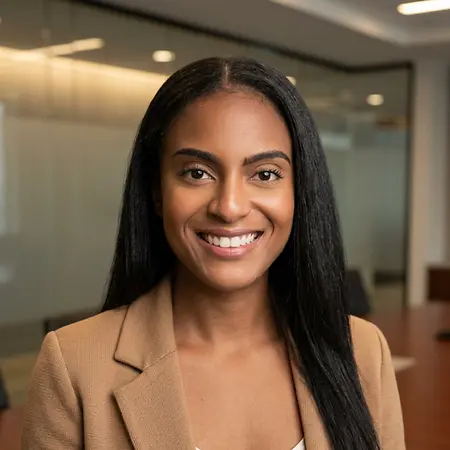
Her Story
About Danica
Danica Nestor, LCSW, CCM, is a healthcare leader, social worker, and emerging scholar dedicated to improving patient outcomes, advancing mental health advocacy, and strengthening care coordination within healthcare systems. Currently serving as Director of Case Management at Emory Rehabilitation Hospital in partnership with Select Medical, Danica brings more than a decade of experience in medical social work, complex case management, and interdisciplinary healthcare leadership. Known for her compassionate yet strategic approach, she is deeply committed to improving care transitions, supporting patients and families through critical healthcare decisions, and empowering healthcare teams to deliver high-quality, patient-centered care. Her leadership philosophy is rooted in courage, tenacity, and patience — values that have guided her personal and professional journey.
Danica’s path into social work was driven by both determination and purpose. Originally pursuing nursing to fulfill her Haitian immigrant parents’ hopes for a traditional healthcare career, she ultimately discovered her true calling in social work after recognizing her passion for advocacy, human connection, and systems-level impact. She earned her Master of Social Work from Clark Atlanta University, where she served in student leadership roles and intentionally pursued competitive healthcare placements that positioned her for long-term success. Her career has included impactful roles with Emory Healthcare, Children's National Hospital, Encompass Health, and Piedmont, where she developed expertise in behavioral health, rehabilitation services, complex discharge planning, and medical case management. Her ability to combine clinical insight with leadership and operational strategy has earned her recognition as a trusted advocate for both patients and healthcare teams.
In addition to her clinical and leadership work, Danica is completing her PhD in Social Work at Howard University, where her research focuses on mental health help-seeking behaviors among African American men utilizing mental health services. Her dissertation explores the barriers, attitudes, and facilitators influencing engagement with professional mental healthcare, contributing to the development of more culturally responsive interventions and policies. Passionate about prevention, advocacy, and community education, Danica plans to expand her impact through consulting and initiatives focused on proactive healthcare and mental wellness support. Whether mentoring others, leading care management teams, or conducting meaningful research, she remains committed to creating systems that better support vulnerable populations and underserved communities.
Her Interview
Ten minutes with Danica
01What do you attribute your success to?
People underestimate fear — especially fear of failure — but honestly, I think that’s what motivated me the most. I was so afraid of looking back on my life with regret that staying comfortable just stopped being an option for me. It wasn’t fear in the sense of thinking I’d fail completely; it was more the fear of never trying and always wondering “what if?”
A lot of the decisions that shaped my life came from that mindset. Leaving Florida, moving to another state, continuing to reach out to people even when I felt uncertain — those were all uncomfortable decisions, but I’m grateful I made them. I say all the time that if I had stayed where I was comfortable, I don’t think I would have grown the way I did.
I would always tell myself, “If you don’t do it, you’ll never know.” That really became the thing that pushed me. I’d rather take the risk and learn from it than look back years later wishing I had just tried.
02What’s the best career advice you’ve ever received?
One of the best pieces of career advice I ever received was from one of my professors in social work school. She told me, “Don’t ever let anyone tell you that social workers don’t make money.” That stuck with me because for so long the messaging around social work was always, “You do it for your heart, not for the pay.” And while I absolutely care deeply about helping people, I also remember thinking, “Why can’t I do meaningful work and still be successful?” Her saying that validated something I already believed but needed to hear out loud.
What’s interesting is that social work found me long before I realized it. My father passed away when I was 16, and I was in the hospital when it happened. Everything became chaotic when he coded, and there was one woman who noticed me sitting there alone. She pulled me out of the room and sat with me in her office until everything was over. Years later, I realized she was a medical social worker. Looking back now, it feels like one of those full-circle moments that aligned me with this field.
That experience also taught me how important people and connections are along the way. I honestly don’t think I would be where I am today without certain professors, mentors, coworkers, or even brief interactions with people who encouraged me at the right moment. Sometimes it’s someone giving you an opportunity, validating your potential, or even just saying exactly what you needed to hear that day.
I’m also a mother, so a lot of my motivation comes from wanting my daughter to see what’s possible. I want her to see that you can pursue meaningful work, take risks, build success for yourself, and still lead with compassion.
03What advice would you give to young women entering your industry?
One piece of advice I would give to young women entering this field is to never believe that you’re “too young” or not experienced enough to pursue opportunities that interest you. A lot of times there’s this idea that you have to “wait your turn,” spend years proving yourself, or reach a certain level of seniority before you can step into leadership or go after bigger goals.
What I’ve learned is that if you have the skills, the passion, and the willingness to learn, you should absolutely put yourself out there — even if you’re nervous. Do it afraid anyway. Some opportunities may tell you no, but every no brings you closer to the right yes.
I think a big part of growth is being willing to take chances on yourself before everyone else fully sees your potential. If I had waited until I felt completely ready, I probably wouldn’t have accomplished half the things I’ve been able to do.
04What are the biggest challenges or opportunities in your field right now?
One of the biggest things I’ve learned in healthcare is how important it is to understand the business side of healthcare — not just the clinical side. Once I started understanding how insurance, policy, reimbursement, and funding really work, it completely changed the way I viewed patient care and advocacy. It also made me realize how much public policy and even voting decisions directly impact healthcare access, especially for the elderly population.
A lot of families don’t realize how quickly benefits, coverage gaps, or financial barriers can affect them until they’re already in crisis. I find myself having difficult conversations with patients and families about long-term care, insurance limitations, Medicare, and planning for the future. Even as a millennial, it makes me think deeply about things like Social Security, aging, and what healthcare will realistically look like for future generations.
At the same time, I think that’s also where the opportunity is. Because I understand both the human side and the operational side of healthcare, I’m able to help people prepare earlier instead of only reacting during emergencies. Moving into leadership gave me the ability to think beyond the day-to-day caseload and focus more on education, systems, advocacy, and helping families make informed decisions before they’re in a crisis situation.
I think one of the biggest opportunities in healthcare right now is helping people become more proactive instead of reactive — encouraging families to plan ahead, understand their resources, and make informed decisions before they’re forced to make them during some of the hardest moments of their lives.
05What values are most important to you in your work and personal life?
The values that are most important to me in both my work and personal life are purpose, integrity, hard work, and legacy. I’ve never really been someone who was motivated by attention or recognition. For me, it’s more about knowing that I’m doing the work I’m supposed to be doing and making an impact that lasts even after I leave. I always say I’m just planting seeds, and eventually the garden grows. The recognition is nice because it validates that I’m on the right path, but the work itself is what fulfills me.
A lot of that comes from my upbringing. My parents immigrated to the United States to create a better life for our family, and education was extremely important in our household. Like many immigrant parents, they wanted stability and success for me, so naturally they hoped I would become a doctor or attorney — something they felt guaranteed security. When I chose social work, I think I carried this determination to prove that the profession was valuable, sustainable, and impactful. I wanted to show that you can absolutely build a successful life in social work while still helping people in meaningful ways.
Because of that, I’ve always been very intentional about the opportunities I pursued, the people I learned from, and how I carried myself professionally. I took internships seriously, networked intentionally, and always tried to present myself with professionalism and purpose. Even small things mattered to me — like showing up to interviews fully prepared and dressed professionally — because I understood early on that how you present yourself can set you apart before you even speak.
At the core of everything I do is the desire to create opportunities, stability, and impact — not just for myself, but for my daughter and for the people I serve.
Join Influential Women and start making an impact. Register now.