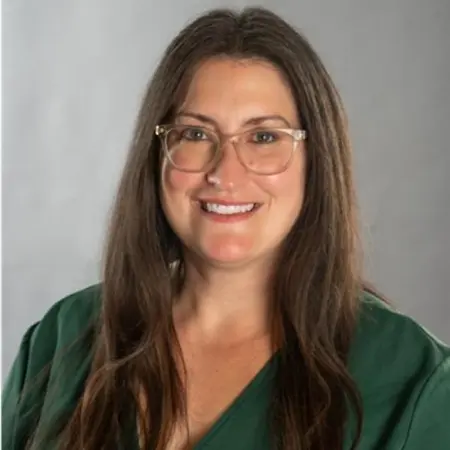
Her Story
About Danielle
My journey into toxicology started completely by accident when I was looking for a paid internship to work my way through undergrad. I found work with Aqua Surveys doing environmental toxicology and really enjoyed it. From there, I pursued more opportunities, including training at UC Davis as part of a training grant for environmental toxicology. I decided to take toxicology on as a career beyond my undergraduate degree and entered grad school as part of the joint graduate program for toxicology at Rutgers University, where I did my PhD work focused on respiratory and immunology. Through contacts I made on LinkedIn, I was able to find my work in the fragrance space with the Research Institute for Fragrance Materials (RIFM), where I've been for 11 years now in a variety of different roles. We're a non-profit that looks at the raw ingredients used by the fragrance industry to evaluate their safety and safe use levels for consumers. While I consider myself a respiratory toxicology specialist, I'm now at a point in my career where I'm helping develop and shape larger teams and organizational goals as a strategic planner and thinker, helping guide other scientists toward the goals we've laid out as an organization to address fragrance safety. I've been fortunate to be recognized as someone who can speak with authority on fragrance safety through a variety of conferences and platforms, and I really appreciate the partnerships we've developed in Europe with organizations like IKW in Germany, helping shape the education and continuing education of toxicologists not just in the U.S. but globally.
Her Interview
Ten minutes with Danielle
01What do you attribute your success to?
I think a lot of my success is just from people being willing to invest in me, and also being willing to say when I need help. I think that's when I've been my most successful, is recognizing that there's learning opportunities, there's growth that still has to happen, and it can't happen in a silo. So for me, it continues to be that people piece, the community-driven aspect of the work that I do. I've been very fortunate to have people that have continued to invest in me over time. I had a mentor at graduate school who was very supportive while at the same time encouraging a lot of autonomy, and that's been continued at my time at RIFM with my colleague who I co-manage with now as the president of our organization, Dr. Anne-Marie Appi, who has been lovely and just really very supportive and has helped guide and shape a lot of how I continue to grow as a manager and as a scientist. It's that learning from others that's been really critical.
02What advice would you give to young women entering your industry?
Just to never count themselves out. Very often, people look at opportunities and they don't match 100% of what's being presented to them. You know, they might not have all the traits or the skills to every single line item, and we may have an inclination, particularly as women, to opt out. And it's like, don't self-select yourself out. Pursue things, be willing to learn and grow, and rely on others, right? Avoid those silos, and make sure that you're getting out there and developing relationships that will foster your development, as well as help you give back to the different things that you're giving your energy to.
03What are the biggest challenges or opportunities in your field right now?
I think toxicology in general has the challenge of how do you communicate with clear, plain spoken language the certainty you can draw from strong exposure science. What I mean is there's so much that we have done beyond just trying to understand the hazard of a material. We have great exposure data, we understand how consumers are experiencing fragrances, and so being able to try and instill confidence in regulators, in consumers that they can trust that science, that it's real measured data, that's reliable, that's always kind of been a challenge. For us, I think that's something that we're just going to continue to endeavor to make the science even stronger on, and continue to really make sure that we're communicating clearly and succinctly so that anyone can find our science accessible.
04What values are most important to you in your work and personal life?
I would say collaboration is really critical for me. I love team-based environments, and that's at home or at work. Feeling a part of a team, I think, is really important. And I also just value, in my workplace specifically, strong scientific objectivity, and leading with authenticity and excellence.
Join Influential Women and start making an impact. Register now.