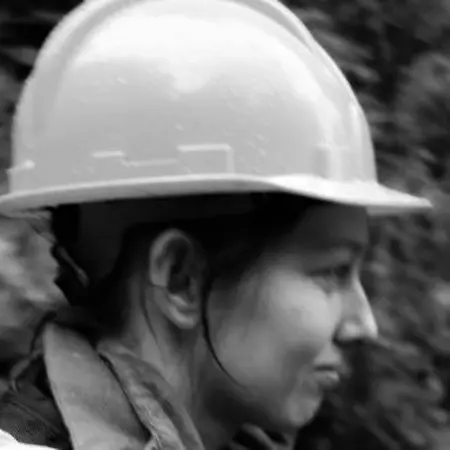
Influential Woman · Environmental Services / Natural Resources
Danielle Green
Noxious Weed Specialist - Field & Data Management, Lewis County Washington(Noxious Weed Control Board)
Chehalis, WA 98532
Her Story
About Danielle
Danielle Green is a dedicated Noxious Weed Specialist with the Lewis County Noxious Weed Control Board in Centralia, Washington, where she has served since 2023. In her role, Danielle leads field and data management efforts to control invasive species, employing GIS mapping, and community outreach to support sustainable land management practices, while hoping to bring her skills with drone technology into the future. She collaborates closely with local landowners, volunteers, and agencies such as the USFS to implement removal projects and educational programs, all aimed at preserving the biodiversity of Western Washington ecosystems. Danielle is recognized for her hands-on approach, from inspecting hay fields and gravel pits to hosting public webinars and volunteer events, bringing both expertise and infectious enthusiasm to her work. Danielle’s educational journey reflects her deep commitment to natural resources and environmental science. She earned a Master of Environmental Studies with a focus on invasive species ecology from The Evergreen State College in 2021, alongside certifications in GIS and drone flight and mapping, earning her FAA Part 107 drone license. Prior to Evergreen, Danielle completed a Bachelor of Applied Science in Forest Resource Management at Green River College and acquired four Associate degrees in Geographic Information Systems, Forestry, Water Quality, and Park Management. Her academic achievements are complemented by teaching experience as an adjunct instructor in natural resource studies, where she guided students through courses on plant identification, forest health, and invasive species management. Driven by both passion and personal resilience, Danielle’s work is guided by her motto: “Restoring biodiversity one noxious weed at a time.” Having overcome childhood trauma and serious health challenges, she credits her “tree people family”—colleagues and mentors in the natural resources field, especially those at the start of it in Green River College's Natural Resource Program—for helping her find strength and purpose. Beyond her technical expertise, Danielle brings creativity and energy to environmental education, producing videos, songs, and interactive materials to engage communities in invasive plant management. Her dedication to ecological stewardship and public engagement makes her a leading advocate for biodiversity and sustainable land management in the Pacific Northwest.
Her Interview
Ten minutes with Danielle
01What do you attribute your success to?
I attribute my success to community. I know I could not have achieved this by myself, as we work best when we work together. I'm lucky that my husband has been my absolute rock. He's been my support and the compassion that I needed when I was at my lowest... because we all hit our dark moments, and it's good to have friends, family, and people that love us in those moments to guide us towards finding our way again. Nature has also played a huge role in my journey. I came from a background where I was taught to be afraid of everybody and everything, while nature stripped that away providing comfort and peace. The people in the natural resources field, my 'tree people family,' are just the most beautiful people I've ever met. They helped me find my strength to overcome my childhood trauma and fear. I also owe a lot of my motivation to my beautiful daughter, Alexandrea, who I hope to reconnect with one day. Without this community of support, both personal and professional, I wouldn't be where I am today.
02What’s the best career advice you’ve ever received?
The best career advice I've ever received is... "in order to live, you've got to live outside your comfort zone", so you've got to always push yourself. I find that it is easy to want to stay comfortable, but life truly happens outside of that. With all my childhood fears and trauma, I tend towards isolation... so, that's always been the best advice for myself - to remind myself that life happens outside the comfort zone, if I want to actually be alive and participate in life... I need to get outside. Pushing beyond my comfort zone has allowed me to grow, pursue multiple degrees, overcome breast cancer, and build a career that I am passionate about.
03What advice would you give to young women entering your industry?
Please, don't hold yourself back. It doesn't matter if you're in a man's world, a woman's world, or any other world - just be you to the best you that you can be, and let your light shine. Don't let anyone or anything dim who you are or what you're capable of. I come from a place of fear and trauma, but I found my strength by surrounding myself with supporters and pursuing what I loved. The natural resources field welcomed me and helped me grow into who I am today. So my advice is simple: be yourself fully, don't hold back your passion or your unique perspective, and let your light shine brightly in whatever you do.
04What are the biggest challenges or opportunities in your field right now?
For women trying to get into this field, I think the biggest challenge is understanding that the pay is frequently less than a livable wage and the positions are often non-permanent, so you will likely need to find ways to supplement your lifestyle. It helps to have a detailed resume that can be rearranged to fit a variety of positions. The position that my agency is able to hire for is a seasonal position with no room for growth, so we are always having to retrain new hires every year. Beyond staffing, other major challenges include species and landowner challenges; for instance, dealing with invasive species like Bohemian knotweed, which is incredibly difficult to control. This knotweed has roots that go seven feet deep and twenty feet wide, grows through concrete and baseboards, increases erosion, and creates monocultures along waterways for miles, which also means having to navigate in uneven, sloped, and/or rocky terrain (and sometimes while carrying up to 4 gallons on our backs). The only effective control method for knotweed is chemical treatment, yet in a world where people are anti-chemical, this makes it even harder to manage such invasive species effectively.
05What values are most important to you in your work and personal life?
Positivity and inclusion are the values most important to me in my work and personal life. I'm currently learning ASL right now, not because I have any deaf or hard of hearing people in my life, but because I've heard some recent stories that inspired me to learn it. I'm doing that for a community that's not even in my life right now, but just in case - because inclusion matters to me. I want to be prepared to welcome and communicate with anyone who might need it. These values stem from my own journey of overcoming fear and trauma, and being welcomed into the natural resources community. I know how important it is to create spaces where everyone feels included and supported, and to approach life and work with a positive attitude even when facing challenges.
Join Influential Women and start making an impact. Register now.