Her Story
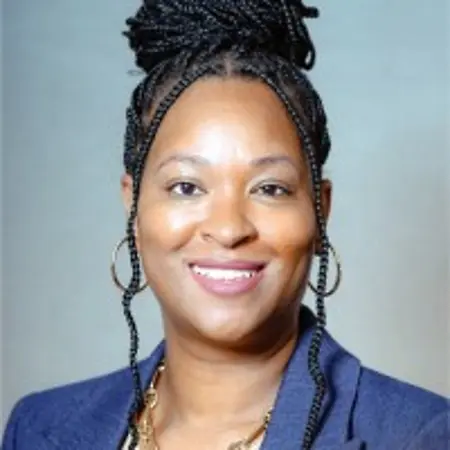
About Danielle
Danielle Whitmore Harris has built a distinguished 20-year career in intercollegiate athletics, starting in 2004. Originally a journalism major with aspirations to become a sports broadcaster, she discovered her passion for working inside sports organizations during a media relations internship with the Washington Mystics. Subsequent internships, including one with the Mid-American Conference, solidified her interest in collegiate athletics and set the foundation for a career focused on building strong athletic programs, driving brand and revenue growth, and elevating the student-athlete experience. Over the years, Danielle has progressed through leadership roles across conference offices and universities, developing a reputation as a skilled problem solver, mediator, and facilitator.
A nationally respected executive, Danielle currently serves as Commissioner of the Rocky Mountain Athletic Conference, a role she assumed in December 2024. In this position, she serves as the key link between the NCAA and member institutions, overseeing awards and championships, facilitating NCAA compliance, and ensuring that student-athletes thrive both on the field and in the classroom. Previously, as Commissioner of the Wisconsin Intercollegiate Athletic Conference and in leadership roles with the Great Lakes Intercollegiate Athletic Conference, she spearheaded initiatives that expanded championship opportunities, launched new sports programs, and unified conference platforms to maximize visibility and engagement. Her ability to build consensus and collaborate with diverse personalities has been central to her success in leading complex, multi-institutional initiatives.
Detroit-born and raised, Danielle brings grit, creativity, and a commitment to mentorship to every endeavor. She is a proud mother and a champion for developing the next generation of sports leaders, actively creating professional development opportunities for colleagues and student-athletes alike. Her leadership is defined not only by measurable accomplishments but by the lasting impact she has on individuals, institutions, and the broader collegiate athletics community—ensuring that sports programs inspire, unite, and provide meaningful opportunities for all involved.
Her Interview
Ten minutes with Danielle
01What do you attribute your success to?
I attribute my success to my praying grandparents and parents who sacrificed for me. I'm from Detroit, Michigan, with a blue collar background, and my parents were very hard-working, hard-nosed people who took pride in what they did. That's where my work ethic comes from. I always wanted to make my parents proud and never wanted to disappoint them, so honestly, that's where a lot of my drive comes from. The saying that you really don't appreciate your parents until you become a parent of your own is so true. There are some days where I'm just like, I don't know how my mom did it, and she had two kids, and I only have one! My dad would work double shifts and triple shifts to put my brother and I through private school. It takes a lot of mental sacrifice to want something better for your child, for their future, to set them up for success. A lot of my success I attribute to them, and it's not anything specific. A lot of things that I attribute to my success are things about how my environment shaped me, how it molds me. Through their hard work and sacrifice, I was able to see that. They weren't just telling me, Danielle, you gotta work hard, you gotta do this, you gotta do that. They actually did it. So they would say those things to me, but I knew that they meant it, because I could see the effort that they put in. It wasn't something that was foreign to me, so I attribute that to actually seeing what hard work looks like. A lot of people don't know what it looks like. I got a chance to see it up close and personal, and understand what it takes, and the sacrifice that it takes. Now that I'm a parent, I'm a mother to a soon to be 8-year-old, he's my driving force. I think about what legacy do I want to leave behind. I want him to be proud of me, and I want to make sure that I leave a legacy that he can be proud of.
02What’s the best career advice you’ve ever received?
The best career advice I've ever received is to be authentically you. Show up as you. I think that's so important in this day and age where we live with social media, and everything is a facade, or everything is what someone wants it to be. Be authentically you. Nobody else can be you. You have to be really confident to do that, and be sure, because you can be you, and if someone questions you, it could shake you. But if you know you're you, and you're the best version of you, you'll be able to stand firm. I think it starts at home, because here's the thing, I have to build you up. That's one thing that I try to do with my son. I have to build you up, because there are enough people outside of the home that will try to tear you down. So I have to affirm who you are, but not just who you are, but whose you are, so that you understand how important and how special you are. I think a lot of that has to start at home first, because if you don't, you can't let those outside experiences shape who you become, for good, bad, or indifferent. It becomes harder and harder now because we didn't have the pressures of social media and that social pressure when we were growing up.
03What advice would you give to young women entering your industry?
The advice I would give to a young woman entering my industry is to always know that you are being watched, and not only that, but evaluated. Now, because of the day and age that we live in, know that your social media reputation will precede you before you walk into the room. In this business, what I've learned is that all you have is your name and your reputation, and you gotta make good on it. I think it's extremely important to really work extremely hard the first 5 to 7 years out of college. I think the first 5 to 7 years out of college helps set you up for the rest of your path forward. You gotta work hard those first 5 to 7 years, because your 22 to 27, 22 to 28, those years can dictate how you want to move moving forward. Unfortunately for women, just how we're wired biologically, you have to make a decision on whether you want a family or not, and what does that look like working in this business. You have to start making some determinations on whether we want a family, what does that look like, what does your career path look like moving forward, whether you will have to travel or not with a small child, or do you have a community or a network of people that you can lean on to help you. Those things are more gender-specific than anything, because technically biological men cannot have children. The workplace is just different now. We've seen post-COVID a lot of work from home, and a lot of organizations are going back to work in the office now. I think those first 5 to 7 years out of college are extremely important to make sure that you grind the hardest that you can to get in a position to where it gives you a little bit more flexibility for family planning, if that is something you desire. If that is something you desire, then I think you have to start thinking about those things sooner rather than later.
04What are the biggest challenges or opportunities in your field right now?
I think some of the biggest challenges are that the world impacts our market. We just talked about it - people aren't having as many kids as they did. The birth rate has declined so much, and that's because of the cost of living. Working in higher education, it impacts it directly, because if your birth rate is low, that means 18 years from now, we don't have the same enrollment numbers from a population standpoint. That's a huge challenge for us. I think also in higher education, just from a standpoint in North America in general, we are becoming a more diverse country. The demographics of college presidents and college faculty are not really diverse in some aspects, and so we need to see some change. I think that is something else that may impact our enrollment rates as well. There's a reason why you see a lot of historical black colleges and universities, HBCUs, their enrollments have increased while your traditional university's enrollments have declined. We have to know it, we have to understand it, and I think we have to change with the times. We're still operating our school systems on a farmer's mentality, when does the harvest come in, the kids are off from school so they can help us with the harvest. We're still working 5 days a week versus other developed countries who are working 4 days a week and they're just as productive. But I think there's opportunity, right? There's opportunity to fix or adjust what some of our issues are. Whether or not we want to take heed to it, it's gonna take a collective effort and push. It's gonna take something catastrophic, like a COVID once again, to shift the mindset and the mentality of the thought leaders to say, hey, this really doesn't work anymore, we may need to look at doing something differently.
05What values are most important to you in your work and personal life?
The values that guide me in both my work and personal life are integrity, collaboration, and a strong work ethic. I believe in approaching every challenge with dedication, accountability, and a commitment to excellence, while fostering meaningful relationships built on trust and respect. Whether I am leading a team, mentoring the next generation of professionals, or balancing personal responsibilities, I strive to be intentional, empathetic, and solutions-oriented, always ensuring that my actions positively impact others and contribute to long-term growth and success.
Join Influential Women and start making an impact. Register now.