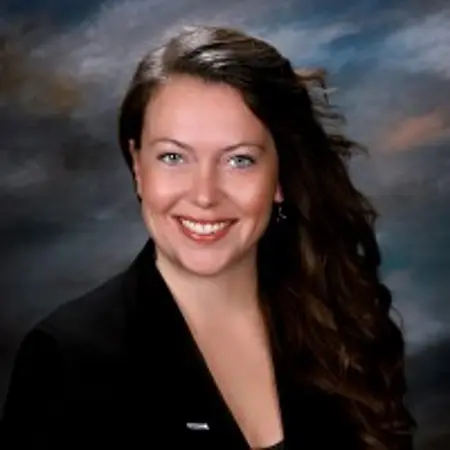
Her Story
About Danielle
Danielle Young is a seasoned benefits consultant based in Indianapolis, Indiana, with over eighteen years of experience in the American healthcare and employee benefits industry. She currently serves as Vice President of Business Development at ClaimDOC, specializing in reference-based pricing (RBP) solutions, and is dedicated to educating brokers and employers on effective self-funded healthcare strategies. A lifelong learner and healthcare system enthusiast, Danielle combines deep industry knowledge with a commitment to serving others, ensuring her clients are informed and empowered.
Beyond her professional expertise, Danielle is a recognized expert in marching bands, color guard, and drum corps, having coached and performed in nearly every NFL stadium over the past two decades. She enjoys mentoring young performers and helping them develop discipline, teamwork, and leadership skills. Danielle’s unique blend of education, coaching, and strategic thinking allows her to approach her career with creativity, precision, and a focus on long-term impact. Danielle is also an active advocate for her community, having worked as a volunteer as a Court Appointed Special Advocate for children, and supporting animal welfare through photography and promotion for the Humane Society of Indianapolis. She hosts the ClaimTalk Podcast, providing accessible education on RBP and healthcare trends, and is a proud 2025 Soha Sales Leader Award winner. Danielle’s career reflects a dedication to combining professional excellence with community service, mentorship, and lifelong learning.
Her Interview
Ten minutes with Danielle
01What do you attribute your success to?
I attribute my success to recognizing early that I was going to need to bring knowledge into every conversation in order to build credibility in a male-dominated sector of the benefits industry. When I decided I wanted to be a benefits consultant at 23, it was an extremely challenging landscape because I live in Indianapolis, Indiana, a very conservative state, and the decision-making panels tend to be older and male, so building rapport was very difficult. I've had a successful career primarily by focusing on knowing the discipline incredibly well. My mom raised me right: she taught me that it's important to never stop asking questions, never stop learning, and that you have to outwork everybody. That's the only option– for the position that we're in as women–in the consulting part of this industry to be successful. Truthfully though, I try to be as kind and gentle to our industry as possible, because I believe the people in it care about other human beings, for the most part.
02What’s the best career advice you’ve ever received?
I've gotten great career advice from multiple amazing women (and men!) in the space. Of course, my mother has always been a source of inspiration throughout my life. She was fearless, stubborn, and relentless–and I am probably more like her than I’d openly admit. But I wouldn’t be the person I am without her influence. I also owe a debt to Sherry Alexander, who initially hired me at Gregory & Appel. She took a great risk in hiring me - she didn't have any clue how that was gonna pan out, because there isn’t really a measuring stick for benefits knowledge. You either have a license and some years of experience, or you don’t. Luckily I had the former, but that’s still an opaque hiring decision. I’m so grateful she saw something in me worth the investment.
In that same organization, there was also a wonderful woman who took me under her wing right away so as to prevent me from stubbing my toe, Susan Rider. She is the president now of the National Association of Employee Benefits and Insurance Professionals on top of many other roles and accomplishments. While we don’t get to gather much anymore because we’re both so incredibly busy, she’s still a mentor of mine that I look up to immensely. She got me involved with an organization called Ellevate, an organization with a purpose is to foster leadership by providing tools, resources, and events for both existing and aspiring female leaders.
03What advice would you give to young women entering your industry?
First of all, make sure that you have a really tightly defined “why”. Why do you want to get into our space? There are large broker firms in the country that will recruit consultants based on tropes like 'let us help you build generational wealth.' While I want that for everyone, because that's the American dream, if the driving force behind getting into this space is a financial incentive, then that's perhaps misaligned with the fact that we're dealing with fellow human beings here. Now, if you're someone that really likes helping people, and you have that often maternal or paternal 'I want to look out for other people' feeling, male or female, if that's what gets you up in the morning, and you have a deep interest in changing the broken status quo around the healthcare system, then your heart is in the right place. Everything after that is gonna happen for you.
Doing things for the right reasons and having integrity will get you a lot farther than trying to skip steps, cut corners, and limit your focus to your own financial security. I’m always happy to talk to young people interested in getting into our space. If you’re ready to jump into the space, start interviewing at agencies and carriers and see where you might find a place you feel confident that you’ll learn and grow.
04What are the biggest challenges or opportunities in your field right now?
The biggest challenge in our field right now is the knowledge gap around reference-based pricing. Less than 5% of self-funded employers utilize reference-based pricing, because of the knowledge gap, and that's been a huge barrier in our space. The vast majority of employer plans in the country are self-funded, meaning they pay their own claims, and they're subject to the Employee Retirement Income and Securities Act of 1974– a 52-year-old piece of legislation that basically requires employers to be good stewards of their employees contributions to benefit plans, and that money being spent has to be in the best interest of the participant. We invoke that law to do the work that we're doing.
Legislatively, it doesn’t seem like there’s anything promising on the horizon. American businesses have to lead by example, and mid-to-large employers give us the opportunity to do that. Large employers are starting to take notice of the power that they have, and we're helping create change.. That's why I started our podcast two and a half years ago - to educate the consulting community about what we're doing at ClaimDoc and about the methodology of reference-based pricing, so they can listen to it in their car, while they mow their lawn, while they're making dinner, and they don't have to actually come to the table and say 'I don't know what I don't know.'
05What values are most important to you in your work and personal life?
The values most important to me center around having a servant's heart when it comes to leadership. I've always been someone who just likes helping–I’m the oldest of four. I've been involved in marching and pageantry arts for over twenty years, and it's really for me about giving students the confidence to feel like they can conquer challenges and that they can do hard things.
Join Influential Women and start making an impact. Register now.