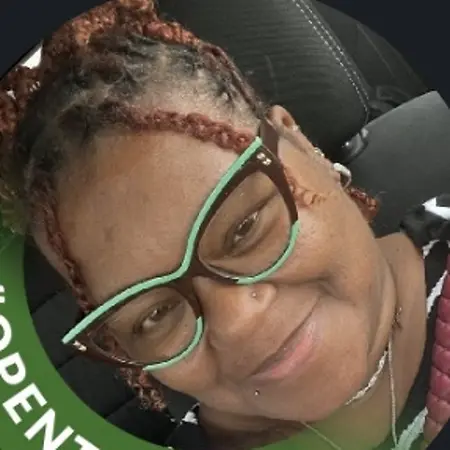
Her Story
About Dawn
Dawn M. Burns, BSW, LSW, is a dedicated social worker and behavioral health professional whose career has been defined by compassion, advocacy, and a commitment to improving the lives of others. With extensive experience serving individuals facing mental health challenges, substance use disorders, homelessness, and chronic health conditions, Dawn has built a reputation as a trusted and empathetic practitioner. She recently completed her Master of Social Work (MSW) degree and is beginning a new chapter in her career as a therapist, further expanding her ability to support individuals and families on their paths toward healing and growth.
Dawn's journey into social work began unexpectedly. Originally pursuing a degree in medical technology with aspirations of helping find cures for disease, she discovered her true calling while working in a group home for individuals with intellectual disabilities. Inspired by the meaningful relationships she developed and the impact she could make in people's lives, she changed her academic focus to social work. Throughout her career, Dawn has worked with diverse populations, including homeless families, adolescents, individuals living with HIV/AIDS, and those experiencing co-occurring mental health and substance use disorders. Her experiences helping families secure stable housing and witnessing the transformative power of support and advocacy strengthened her passion for mental health and therapeutic services.
Currently serving as a Medical Case Manager with Hektoen Institute and transitioning into private practice therapy, Dawn approaches her work with a philosophy grounded in empathy, dignity, and genuine human connection. She is particularly passionate about supporting youth, adolescents, and LGBTQ+ individuals, helping clients navigate life's challenges while building resilience and self-confidence. Beyond her professional responsibilities, Dawn is actively involved in community service through volunteer work supporting families, shelters, and outreach programs. Recognized as one of the Influential Women representing Illinois for 2026, she continues to dedicate her career to creating positive change and empowering others to achieve healthier, more fulfilling lives.
Her Interview
Ten minutes with Dawn
01What do you attribute your success to?
I feel like that I was called to do this type of work. I've always been - well, I know they say, you know, women are more nurturing anyway - but yes, I am a nurturer , people ask me what it is that I do, and they're like, oh, yes, I can totally see that. I can tell that you are that type of person to have that caring and empathy, and just wanting to help to make people better. When I first got into the field, I was working with the homeless population, homeless families. And I remember when I got my first family housed, how appreciative she was. And it was just a great feeling. We both ended up in tears, and I was like, oh, you're gonna make me cry, too! And it was just a wonderful feeling being able to just help people. I noticed that a lot of them also did have some mental health issues surrounding the way that they became homeless and things of that nature, so that kind of leaned me towards the mental health, behavioral health trajectory.
02What’s the best career advice you’ve ever received?
That every therapist needs to have their own therapist. And after working in this field, I totally agree. Every therapist needs to have their own therapist because holding space for others does not eliminate our own need for support, reflection, and care. Therapy helps clinicians remain self-aware, process the emotional weight of the work, maintain healthy boundaries, and show up ethically and authentically for the people they serve.
03What advice would you give to young women entering your industry?
My advice to a young woman entering this field would be to remember that your ability to care for others should never come at the expense of caring for yourself. Learn early that boundaries are not barriers—they are what allow you to sustain this work long term. Stay curious, stay teachable, and never believe that being a good therapist means having all the answers. Do your own healing, find mentors, seek supervision, and allow yourself to grow alongside your clients. Your presence, authenticity, and willingness to sit with people in difficult moments will matter more than perfection ever will.
04What are the biggest challenges or opportunities in your field right now?
One of the biggest challenges in the field right now is balancing the growing demand for mental health services with maintaining quality care and clinician well-being. Therapists are being asked to support increasingly complex needs while also navigating burnout, documentation demands, systemic barriers, and gaps in access to care—particularly for underserved communities. Another challenge is continuing to provide culturally responsive and trauma-informed care in a rapidly changing social climate.
At the same time, one of the greatest opportunities is the increased awareness and normalization of mental health. More people are seeking support than ever before, creating space for innovation through telehealth, integrated care models, community-based services, and more inclusive approaches to treatment. There is also an opportunity to advocate for equity and help shape systems that are more accessible, affirming, and person-centered.”
05What values are most important to you in your work and personal life?
The values that guide both my work and personal life are caring, empathy, service to others, and a strong commitment to family, as I believe meaningful relationships and helping others are at the heart of a fulfilling life.
Join Influential Women and start making an impact. Register now.