Influential Woman · Genealogy and Historical Research
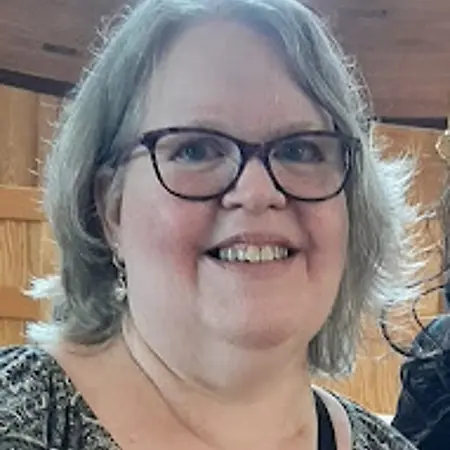
Debra Newton-Carter
Author, Genealogist, Microhistorian, Debra Newton-Carter
Amherst, MA 01002-2753
Her Story
About Debra
Debra Newton-Carter is an award-winning author, genealogist, and microhistorian with more than two decades of experience uncovering and preserving overlooked narratives in American history. Her work is rooted in a deep-seated passion for telling history from the perspective of everyday people—the "foot soldiers" rather than the generals.
Debra began her journey as a family historian for the George Family Reunion Committee in Harlowe, North Carolina. There, she documented generations of free Black families, tracing their lineage back to Revolutionary War patriots and documenting her husband’s family’s arrival from the African continent to Northampton County, Virginia. This meticulous research drew the attention of the North Carolina Society of the Sons of the American Revolution (NCSSAR), leading to her instrumental role in establishing the Patriot Isaac Carter Chapter—the only chapter in the world named after a Black “Forgotten Patriot.” Through this landmark project, she has helped countless descendants of early free African American soldiers reconnect with their heritage and reclaim their place in American history.
Her technical expertise is further evidenced by her work verifying twenty-seven ancestral lines to the Mayflower. Building upon the foundational research of her cousin, a former Historian and Governor for the Society of Mayflower Descendants, Debra meticulously traced and validated each generation to meet modern genealogical proof standards.
Following a period of personal loss during the COVID-19 pandemic, Debra returned to Amherst, Massachusetts, with a renewed sense of purpose. She joined the Forgotten Patriots Project through the Society of the First African Families of English America (SOFAFEA), quickly ascending from contributor to team leader and assistant editor. In this capacity, she guides fellow researchers through narrative development, peer review, and rigorous source citation. The first volume of the five-book series, Forgotten Patriots: Northern Theater (2025), received prestigious national recognition, earning both the Phillis Wheatley Award for historical nonfiction and the AAHGS International Book Award for military history.
With a professional background that includes fifteen years as a chef and a degree in English/Creative Writing and Psychology from Houghton University, Debra brings a unique blend of technical discipline and deep empathy to her storytelling. To complete this rigorous double major, she also enrolled in full summer terms at the University of Massachusetts/Amherst, demonstrating the persistence that now defines her research. Today, she is launching a dedicated coaching business to support writers of historical fiction, genealogy, and narrative nonfiction. By sharing her expertise in scholarly accuracy and narrative depth, she helps others bring their own overlooked stories to life. Alongside her coaching, Debra is currently developing two novels that continue her mission of amplifying the unheard voices of strong women met with adversity, reinforcing her belief that history is at its richest when told through those least expected to tell it.
Her Interview
Ten minutes with Debra
01What do you attribute your success to?
I attribute my success to finding my “tribe” and staying consistent with a vital message: that free people of color served with honor in the American Revolution. This journey took a major step forward when my research blog was recognized by the North Carolina Society of the Sons of the American Revolution (NCSSAR). This led me to help establish the Patriot Isaac Carter Chapter in 2016—the only chapter in the world named after a Black “Forgotten Patriot.”
My husband was inducted as a fellow charter member of that chapter alongside Ric Murphy, who later established the Society of the First African Families of English America (SOFAFEA) in 2019. This community of historians gave me the platform to amplify overlooked narratives. My passion is deeply personal; my husband grew up believing that all Black Americans of that era were enslaved. When my research revealed his own ancestors were free military men, it filled him with a pride that stayed with him for the rest of his life. Seeing that transformation in him—and now in the descendants I assist—is the true engine behind my success
02What’s the best career advice you’ve ever received?
The best advice I've ever received came from my mother, who served as an assistant editor for the Journal of Social Issues and later as an undergraduate secretary in the English Department at the University of Massachusetts/Amherst. She told me two things: back it up three ways, and verify, verify, verify. That is my mantra when working with my teams. Those principles have guided all of my research and editorial work.
03What advice would you give to young women entering your industry?
If you’re just starting out, my best advice is to find a mentor—someone who knows the records deeply but also has the imagination to see the 'person' behind the paperwork. A great mentor helps you move beyond listing names and dates to truly understanding what life was like for your ancestors. That is how you bring a story to life.
Don’t research in a vacuum; build a community. Engage with active Facebook groups where researchers solve puzzles together, or join lineage societies like the DAR or SAR. Even if your ancestor wasn't in the military, there are countless genealogy, writing, and lineage groups where you can find peers with similar interests and deep expertise.
Finally, lean on your local resources. My journey began with a librarian in a local history department who personally showed me the ropes. Whether it’s a town library or a regional history room, connecting with people who have years of experience in the records is your best shortcut to success.
04What are the biggest challenges or opportunities in your field right now?
The biggest challenge in my field right now is the shifting landscape of how we access our history. As researchers, we rely heavily on digital archives to verify the past, but we are seeing significant changes in how federal institutions, like the Library of Congress and the National Park Service, manage these online resources. When digital records are reorganized or moved, it creates a “moving target” that requires a great deal of persistence to navigate.
At the same time, the general public and our descendants rely on museums for the tangible side of history. There is a very real concern when physical displays are removed or archives are altered, because history needs to be something we can experience in person. Research truly comes to life when you can take your children to a museum and let them interact with the tangible evidence of their heritage.
The great opportunity, however, is the growth of local digitization. While national databases are in flux, smaller courthouses and local history rooms are receiving grants to put their 'hidden' records online. In Massachusetts, we have an incredible wealth of original records dating back to the 1600s. My goal is to use these digital tools to protect the tangible stories of the past, ensuring they remain accessible and real for the generations to come.
05What values are most important to you in your work and personal life?
I'd say faith, having an inquisitive mind, and connection with people are the most important values to me in my work and personal life. These values guide everything I do, from my research to my relationships with family and colleagues.
Join Influential Women and start making an impact. Register now.