Her Story
About Dedra
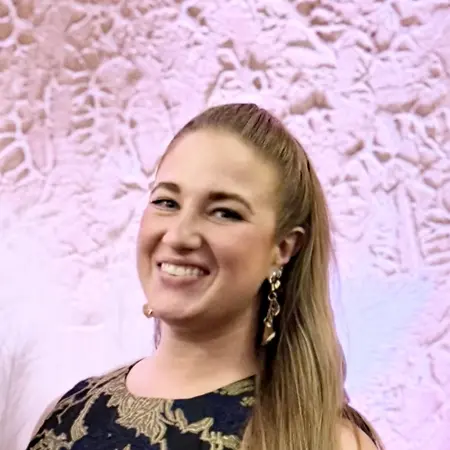
Dedra (Devereaux) Sobocinski is the Senior Manager of Walk to End Alzheimer’s for the Alzheimer's Association Wisconsin Chapter, where she leads and grows community-driven fundraising events across multiple Wisconsin communities. In her role, she supervises Walk managers, oversees event logistics and volunteer engagement, and manages budgets supporting 11 Walk to End Alzheimer’s events with a combined revenue goal nearing $800,000. Known for her collaborative leadership style, Dedra works closely with sponsors, volunteers and chapter leadership to align strategy, strengthen community partnerships and expand the Association’s reach. Among her most notable achievements is transforming the Fond du Lac County Walk from a three-person committee raising approximately $60,000 into a 40-member volunteer team generating nearly $160,000, with participant goals growing from 300 to more than 1,000.
Dedra joined the Alzheimer’s Association in March 2020, fulfilling a long-held professional goal to work directly in Alzheimer’s and dementia advocacy. She began her nonprofit career in 2017 with the Jewish Home and Care Center Foundation in Milwaukee, where she specialized in donor stewardship, data analysis and community engagement. Earlier in her career, she worked in education-focused roles, including with the Waukesha School District, supporting students who are deaf or hard of hearing. These experiences strengthened her expertise in communication, accessibility and individualized support—skills that now inform her approach to volunteer leadership and family outreach.
A graduate of the University of Minnesota, where she earned her bachelor’s degree in Speech-Language Pathology, Dedra was inspired by the work of speech pathologists serving individuals with traumatic brain injuries and dementia. Her passion for Alzheimer’s advocacy is also deeply personal, shaped by her grandmother’s diagnosis during her transition to college. As a result, Dedra centers her work not only on fundraising but also on combating stigma, increasing awareness and ensuring families know they are not alone. She remains committed to advancing research, expanding access to resources—including the Association’s 24/7 helpline—and fostering supportive communities for those affected by Alzheimer’s and other dementias.
Her Interview
Ten minutes with Dedra
01What do you attribute your success to?
Sharing my passion and compassion with and for others and not being afraid to discuss the hard topics. Empowering volunteers to help make Alzheimer's and other forms of dementia a point of discussion, not something to hide. Supporting all individuals impacted by the disease. Leading with inclusivity, accountability, community, agility and integrity.
02What’s the best career advice you’ve ever received?
If you don't ask, you don't get. Sometimes it feels intimidating to make the ask, but knowing the value in what your organization brings, it's worth it. Even if it's a really risky ask, feel confidence and know that the worst that will happen is they say no, and that you'll have the opportunity to ask again another time.
03What advice would you give to young women entering your industry?
Just go for it. You have to be your own biggest cheerleader. You have to advocate for yourself, and if you really want something, do everything that you possibly can to make that happen. Try to stay true to yourself and your values.
04What are the biggest challenges or opportunities in your field right now?
Working in the nonprofit sector, things are often unknown, especially with the current political climate. But specifically for working for the Alzheimer's Association, I would say it's the stigma around the disease. I'll stand at an expo or vendor fair at a table with meaningful materials, and the amount of people that pass me by and say, oh, I don't want to talk about that, is mind-blowing to me, especially because it impacts a massive part of this country (and the world). The stigma around this disease is certainly the biggest challenge, but it's also the biggest motivator for me. People don't want to talk about anything to do with the brain, and we're doing a disservice to ourselves by not talking about it.
05What values are most important to you in your work and personal life?
The values that guide me in both my work and personal life are honesty, integrity, and always doing the right thing. Equally important is my role as a mother, nurturing and raising my 21-month-old daughter.
Join Influential Women and start making an impact. Register now.