Her Story
About Dee
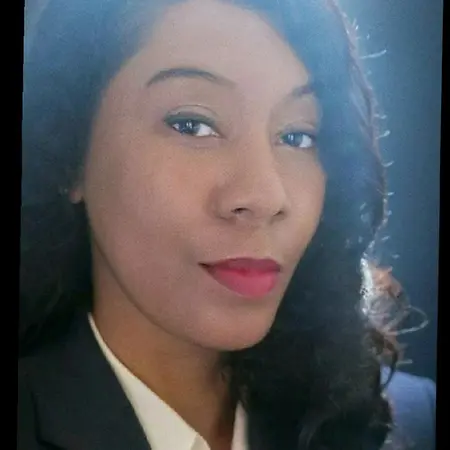
Dee Taylor‑Akins is a distinguished human capital and organizational transformation executive based in the Dallas–Fort Worth Metroplex. With more than two decades of experience leading workforce strategies across global, complex enterprises, she is known for advising executive teams on organizational design, workforce planning, talent strategy, AI integrations, and large‑scale change management.
Throughout her career, Dee has held progressive leadership roles at UnitedHealth Group, Optum, Cox Communications, UT Southwestern Medical Center, American Airlines, Smuckers, Procter & Gamble and Verizon. Her expertise spans organizational design, workforce integration, employee relations, performance management, and leadership development, with deep experience guiding Agile, Lean, and enterprise‑wide transformation initiatives. She has played a pivotal role in major transitions, including mergers, acquisitions, and operating model redesigns, helping organizations navigate structural and cultural change while strengthening performance and capability.
Dee holds a Master of Science in Human Relations and Business from Amberton University and a Bachelor’s degree in Psychology from Grambling State University, along with senior HR credentials as an SPHR and SHRM‑SCP. Today, she is a leading voice in AI‑driven workforce transformation, developing frameworks that help organizations redesign work, build new capabilities, and adopt AI responsibly. Her work centers on preparing leaders and HR professionals for the future of work with clarity, confidence, and purpose.
Her Interview
Ten minutes with Dee
01What do you attribute your success to?
I attribute my success to the village that raised me, which included my parents, my grandmother, my aunts and uncles, and the church community that poured into me from the very beginning. They taught me respect, confidence, and the belief that I could accomplish anything I set my mind to. Growing up in faith‑based programs and youth ministries gave me a strong spiritual foundation, while organizations like the Girl Scouts—where I remained active through high school—helped shape my leadership, communication skills, and sense of responsibility. Those experiences taught me how to connect with people, navigate different environments, and carry myself with purpose. I believe deeply in the power of grounding children in community, faith, and positive associations. The lessons learned in those spaces don’t just shape childhood—they become the foundation that guides a person throughout their entire life. And just as my village kept an open door for me, I believe every child deserves a safe place to talk, grow, and be supported as they discover who they are becoming.
02What’s the best career advice you’ve ever received?
The best career advice I’ve ever received is simple but powerful: never be afraid to ask questions. Early in my career, I learned that asking the right questions opens doors, accelerates learning, and helps you deliver results with clarity and confidence. Curiosity is not a weakness; it’s a strength that keeps you growing.
I was also taught not to sweat the small stuff. We all make mistakes, but every mistake carries a lesson, and every lesson makes you stronger. Sharing what you’ve learned with others not only builds trust, it creates a culture where people feel safe to grow. Being an overcomer matters, but so does giving yourself grace along the way.
Another piece of advice that has stayed with me is to stay grounded in who you are. In fast‑paced environments, it’s easy to lose yourself in expectations, pressure, or comparison. But staying rooted in your values, your integrity, your purpose, your voice keeps you steady no matter what’s happening around you. When you lead from a place of authenticity, you don’t just succeed; you elevate everyone around you.
03What advice would you give to young women entering your industry?
If I were offering advice to young women entering the HR field, I would begin by reminding them that HR is an ever‑evolving discipline with limitless pathways. The beauty of this profession is that it allows you to explore multiple specialties—talent acquisition, employee relations, organizational development, workforce planning, operations partnership, and more. There is no ceiling on where you can go.
HR also provides a strong foundation for moving into broader areas of the business. In my own career, I experienced this firsthand. While working for Folgers, I stepped into a hybrid role that required me to wear both an HR hat and an operations hat. That experience reinforced how transferable HR skills truly are communication, problem‑solving, leadership, and the ability to understand people and processes.
For those who are not yet in HR, there are multiple entry points. Many professionals begin in operations and transition into people leadership roles. Others, like me, start recruitment. Recruiting was my doorway into the field, and from there I moved into HR specialist and employee relations and business partner roles, eventually expanding into organizational development, organizational design, strategy, and culture work. HR is a field with a wide runway, and every step builds capability for the next.
I also encourage young professionals to stay curious and committed to continuous learning. Today, understanding AI is no longer optional. Building a foundational knowledge of what AI is, how organizations are using it, and how it will shape the future of work is essential, not just for HR roles, but for any career path. The future belongs to those who understand how technology and people strategy intersect.
HR is a powerful launching pad. With the right mindset, curiosity, adaptability, and a willingness to learn, you can build a career that evolves with you and opens doors across the entire organization.
04What are the biggest challenges or opportunities in your field right now?
One of the most significant challenges facing the HR field today is the rapid acceleration of artificial intelligence. Executives are increasingly looking to HR—not just IT—to guide the organization through AI adoption, workforce transformation, and the cultural shifts that accompany new technology. AI is not solely a technical initiative; it is a people, process, and change initiative. And without HR at the center, organizations will struggle to implement it responsibly and effectively.
HR leaders must be prepared to help their organizations navigate this transition. That includes understanding which roles AI can augment, which roles will evolve, and how work itself will be redesigned over the next five to ten years. Contrary to the misconception that AI simply replaces people, the reality is far more nuanced. Organizations will still need people—just in different capacities. Roles will shift, skill sets will evolve, and leaders will need clear workforce plans that anticipate the future rather than react to it.
This is one of the reasons I am launching Org Movement, a firm dedicated to equipping HR professionals, business leaders and organizations with the frameworks, tools, and strategies needed to lead AI‑driven transformation. HR teams need support in understanding how to position their organizations for AI adoption, how to prepare employees for new ways of working, and how to partner with executives to build a sustainable, future‑ready workforce.
The HR function has a critical role to play in assessing the impact of AI on jobs, identifying where automation creates opportunity, and guiding executive teams through long‑term workforce planning. Over the next decade, HR leaders will be expected to articulate what the workforce should look like, how many people will be needed, where AI will add value, and how to ensure employees remain engaged and capable in a technology‑enabled environment.
AI is reshaping the future of work, and HR must be at the forefront leading with clarity, strategy, and a deep understanding of both people and technology.
05What values are most important to you in your work and personal life?
For me, treating people with respect is foundational to effective leadership. During my time with the Smucker’s organization, I had the opportunity to engage directly with the company’s CEOs, and one of their core values left a lasting impression on me: always look for the good in others. That principle has shaped the way I lead. Whether in the workplace or in everyday interactions, I believe we should approach people with the assumption of positive intent. Most individuals are not operating from a place of harm, and often, misunderstandings arise simply because someone is unaware of how their words or actions were received. When we lead with grace, curiosity, and open communication, we create space for healthier relationships and stronger teams.
Another lesson I learned from that experience is the undeniable truth that people are the heartbeat of every successful organization. In the pursuit of revenue, efficiency, and growth, companies can sometimes lose sight of the fact that their greatest asset is their workforce. When people feel valued, respected, and supported, performance follows. Culture is not a “soft” concept, it is a strategic driver of organizational success. A strong culture fuels engagement, innovation, and long‑term sustainability. When leaders prioritize people, business thrives.
Join Influential Women and start making an impact. Register now.