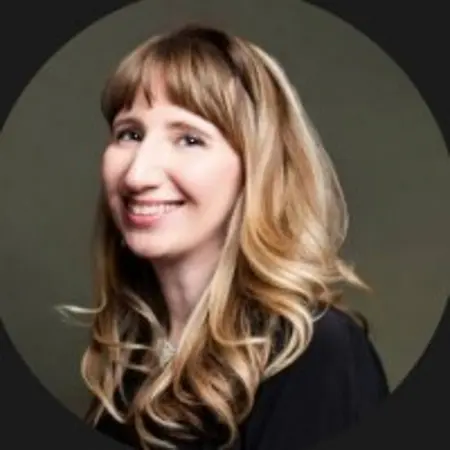
Her Story
About Denise
My journey into public health began unexpectedly when I was hospitalized for 3 months after a car accident in first grade. That experience made me want to help people in vulnerable situations, and I initially thought I'd change the healthcare system from the inside as a physician. At University of Maryland College Park, I was a biochem major on the pre-med track, but I discovered courses in public health and health behavior that opened my eyes to prevention. I got my EMTB certificate and worked as a first responder at a local firehouse to gain patient hours, and that's where I really saw that we weren't solving problems - we kept responding to the same accidents at the same intersections, the same issues at the nursing home. I studied abroad in Denmark and lived with a doctor of internal medicine, which deepened my interest in public health systems. I worked in a research lab during my last year of undergrad on a study reducing harm from binge drinking among college freshmen, and we found that the intervention we changed the most, taking into account the experience of the population we were trying to help, was the most successful. That led me to pursue my PhD focusing on community-based participatory research, which is essentially about listening to the people you're trying to help first and including their voices in the research process. I started a peer education program at University of Maryland to support local communities with health education outreach, and worked on a mentoring program for high school students from lower-achieving schools that successfully helped more of them apply and get into college. After my doctorate, I spent 5 years at Insight Policy Research, a small women-owned company that was later bought by Westat, where I gained project management skills. I always thought I wanted to be my own boss, which is part of why I got my PhD, and I finally opened my LLC in November. I joined up with Eversted Strategies because the owner and I really enjoyed working together and we're practically neighbors. We focus on what we call human-centered decision-making - I'm a methodologist who focuses on the approach rather than a specific topic area, though health is what I'm most excited about. Right now as Senior Director, I do project leadership, business development, and business strategy as we grow this small business. Throughout my 22 years in the field since 2004, I've maintained this commitment to research and evaluation that emphasizes listening to communities and deriving insights that can influence policy and programs to have larger scale impact.
Her Interview
Ten minutes with Denise
01What do you attribute your success to?
I think discipline and work ethic are really important. You have to work hard to get all the way to the doctoral level. I also think you need to have some self-awareness that you don't know everything, which is ironic because most people think that PhDs have a lot of ego and think they know everything, but in truth, you could know a lot about a specific topic, but you have to have a bit of humility. I think that's important because for me, it drives you to continue to keep learning. I would say, just for general advice for most people, it's probably network and maintain your relationships well. Make a good first impression, and then the other piece of it is you have to put the effort in. I don't think I know anybody that's been very successful without working hard. And then somewhere while you're doing all of that, if you have a family, you've got to try to balance that, and I think that comes with having a very supportive partner to allow you to do what you do.
02What advice would you give to young women entering your industry?
I would say, actually, look for a really good mentor. Take advice from people who are in places where you would want to be. There's gonna be a lot of people who will try to give you advice, but take advice from the people that you think have a career and lifestyle that is one that you would want. If you get advice from people who have a lifestyle or career that doesn't interest you, then you can take that with a grain of salt. I've worked with a lot of people I looked up to, and I've also worked with people who I came to a point and I said, you know what? I don't want their life. I don't want to be like them. I would also say do a lot of self-reflection. I would say journal, too. That's advice that I didn't take myself all the time, but I think it's helpful to think about what it is that you want, what you're good at, and explore a lot of different options. Do a lot of self-reflection when you're earlier in your career. And another one I think young women probably need to know is that you do not have to say yes to everything. Maybe that's one that some people might benefit from. It's okay to say no if it's not serving your purpose.
03What are the biggest challenges or opportunities in your field right now?
I think the biggest challenge right now is twofold. If you took all of the philanthropies in the country and combine their resources, they would have a tiny fraction of impact compared to what the federal government is able to do in its programs and policies to support vulnerable populations. While we can still do great work with foundations and nonprofits and state and local governments, the scale of the impact at the federal level is much greater, and I've supported a lot of those contracts over the years. But in the past year, there have been a lot of changes, and a lot of funding got cut. It's not just that the programs got cut, it's that our role as evaluators and researchers is to try to make sure that whatever programs exist, that they're held accountable to the taxpayer, and that decisions about those programs are informed by evidence and research. Most of us, like myself included, are trained to be very objective and not partisan when we're doing research - that's the whole point. We're people who are trying to find truth without bias. So I think the biggest challenge right now is that most people don't understand that our position exists in the first place, and that we have a significant role. And two, that the entire system's kind of been gutted. The future is very unclear right now.
04What values are most important to you in your work and personal life?
In my work, being objective and finding truth is really important to me. I also have a commitment to putting your best foot forward and doing good work - we used to call it a commitment to excellence. And then in my personal life, I would just say being kind to other people is an important one.
Join Influential Women and start making an impact. Register now.