Influential Woman · Financial Services | Business Consulting
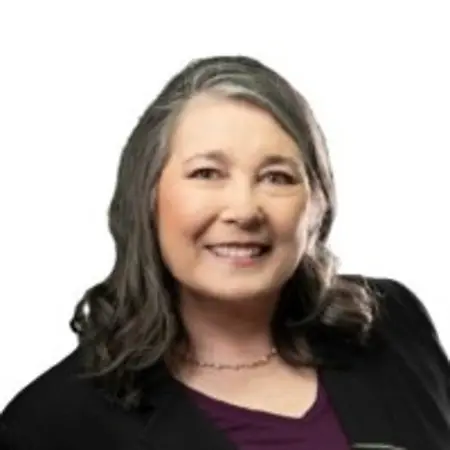
Denise W. Grove, CPA, CGMA
Fractional CFO | Financial Speaker | Money Coach | Founder & CEO, CFO Support, Inc.| Grove Solutions, LLC
Newnan, GA 30263
Her Story
About Denise
Denise W. Grove, CPA, CGMA is a seasoned financial expert, Fractional CFO, and professional speaker with decades of experience helping business owners, entrepreneurs, and organizations achieve financial clarity and long-term success. As the Founder and CEO of CFO Support, Inc. and Grove Solutions, LLC, she specializes in cash flow management, financial strategy, and practical financial coaching. With a background that spans Big Four accounting at KPMG, Fortune 500 leadership, and executive roles in privately held companies, Denise brings a well-rounded, real-world perspective to complex financial challenges, translating them into clear, actionable solutions.
Known as “The Money Lady,” Denise is recognized for her ability to simplify financial concepts and make them accessible to non-accountants. As an Advanced Certified Profit First Professional and Dave Ramsey-trained financial coach, she equips clients with proven systems to manage cash flow, improve profitability, and build sustainable financial habits. Her engaging speaking style and relatable approach have made her a sought-after keynote speaker, where she inspires audiences to take control of their finances by “telling their money where to go instead of wondering where it went.”
Driven by a passion for financial literacy and community impact, Denise actively supports philanthropic initiatives and mentorship programs, with a focus on empowering individuals and future generations. She attributes much of her success to the early financial lessons instilled by her mother, which continue to influence her work and mission today. Through her consulting, coaching, and speaking, Denise remains committed to helping others gain confidence, control, and clarity in their financial lives while creating lasting, meaningful change.
Her Interview
Ten minutes with Denise
01What do you attribute your success to?
I attribute so much about money to my mama. She was my primary money mentor. When I was 10, she encouraged me - in other words, she said I was going to put my birthday money in a savings account. I assure you, I was not crazy about that, because I'm sure there was a doll or something I wanted with that birthday money. But her doing that, and then explaining to me how your money in the bank earns interest, I learned about compound interest at an early age. Thanks to her coaching, I've always saved money, because mama said you had to save. That's really kind of my first mentor story, and I attribute a lot of my good financial habits to her. My mama, Josephine Whitlock, who passed away in 2000, is not with us anymore except in my voice. I'm actually using, as part of the theme of my keynotes, things that Mama said about money. My favorite one was Mama, especially when I wanted designer jeans as a teenager, would say, money doesn't grow on trees. I did not get the designer blue jeans. My most recent business keynote, I'm actually using 'Mama Says You're Robbing Peter to Pay Paul.' I didn't invent that one either, but she said it a lot, and it sticks with you what they tell us.
02What’s the best career advice you’ve ever received?
The most impactful guidance I’ve received came from my mother, whom I lovingly refer to as my “Mama.” She was my first and most influential mentor, shaping not only my financial habits but also my overall approach to life and career. From a young age, she taught me the importance of saving—encouraging me to put my money in the bank so it could grow through interest rather than spending it impulsively.
Her lessons instilled discipline, foresight, and respect for money, which ultimately guided me toward a career in finance. Even though she passed away in 2000, her legacy continues to live on through my work and the way I help others. I’ve taken those foundational principles she taught me and expanded on them, using my experience to guide individuals, families, and business owners toward building stronger financial futures and creating lasting impact for the next generation.
03What advice would you give to young women entering your industry?
I have the good fortune to be able to mentor students at Auburn, majoring in accounting and finance, and when they ask me this question, I tell them all that the biggest key is being able to work with other people. Back when I graduated, they would have called that people skills, but I'm going to expand upon that and say it's communication skills. And by that, I mean all forms of communications, including my ability to work with people that never even went to business school and explain to them in plain English what's going on with the cash and what needs to go along with the cash in order to keep the doors open. That, to me, is where I'm able to serve. So you can be technically smart, but if you can't explain that to, let's just say, the president of the nonprofit you're volunteering with, you just won't go very far, because you've blocked yourself in to only being able to communicate with people that have your same expertise.
04What are the biggest challenges or opportunities in your field right now?
One of the biggest challenges is that many small businesses fail due to poor cash flow management—often within the first five years. This presents a major opportunity to educate business owners, improve financial literacy, and implement clear systems that increase long-term sustainability and success.
05What values are most important to you in your work and personal life?
The most rewarding moments for me are when I work with my clients and I see the light bulb go on. Most of my clients are very smart people, and they are very good at what they do. For example, I often work with speech therapists who have their own practice, and they're great at helping their clients, a lot of times working with youth, overcome whatever speech impediment they may have. But when it comes to making sure that insurance gets billed, and how much to charge, and did the insurance get collected, and is it going to take 60 days before that's collected, and they're trying to pay the therapist for their work but they haven't quite collected it from insurance - when I can actually explain in my southern English, you know, how to look at the money in a way that a non-accountant can understand it, and I see the light bulb go on, it might be over Zoom nowadays, but I see the light bulb go on because I have explained it in such a clear English manner that not only do they understand it, but they can own it. That's what makes me keep going and why I don't retire. Beyond helping clients, being honored by your peers is quite an accomplishment. Being selected as the outstanding CPA in industry for the Georgia Society of CPAs was a big honor - to think out of 13,000 CPA members in the state, with 50% of them working in industry, that was significant. But the one that really got me and caught me completely off guard was when I was the volunteer Vice President of Finance for a local nature center. I love animals and wildlife, and they're an environmental education organization. They knocked my breath out because they gave me Volunteer of the Year. All I did was help them get their bank account balanced and made sure their payroll taxes were okay, which in my profession is like riding a bicycle. But it took that off the Executive Director and the team that were teaching the classes. That's probably what made me realize that I had a gift that other people didn't have.
Join Influential Women and start making an impact. Register now.