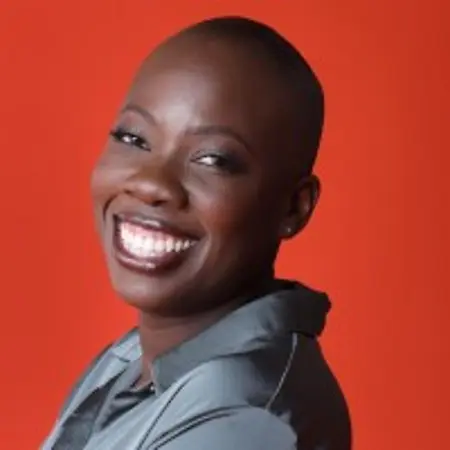
Her Story
About Denise
I've been working in the entertainment industry for 15 years, and I've been freelancing since 2018 when I decided to take the leap and bet on myself after leaving my 9-to-5. I run my own production company called Mnandi Productions, and I'm currently a producer and voice actor for an animated series called The Matumbila's, which just started streaming on Tubi. The show is about an African family living in the U.S. trying to stay true to their African roots while navigating life here, and I voiced the lead character, the mother of the show. I specialize in documentary filmmaking because I believe, as Samuel L. Jackson said, that people watch movies to be entertained and people watch documentaries to learn. I make documentaries because I want to help people learn about different cultures, different people, and different areas. I also work as an intimacy coordinator, a role that emerged from the Me Too movement to protect actors during intimate scenes. I'm there to make sure talent feels safe and comfortable, whether it's physical intimacy or just bodies touching. I won the Tribeca Festival Best Audio Fiction Award in 2023 as the intimacy coordinator for 'The Very Worst Thing That Could Possibly Happen.' I come from a long lineage of storytellers who are women from my tribe in Zimbabwe, the Ndebele, and I honestly believe my ancestors passed the baton onto me. I didn't choose this field, it chose me. It's just part of my DNA at this point.
Her Interview
Ten minutes with Denise
01What do you attribute your success to?
I honestly attribute my success to my parents. They've always shown drive and tenacity. My dad would always say if anything ever happened to him, God forbid, he wanted me to promise him two things. First, make sure I get myself a master's degree, because the minimum degree for all his kids was a master's. It wasn't a discussion, we knew from when we were babies. That's why my bachelor's is in communications, TV, film, and digital media, and my master's is in filmmaking with an MFA. I was always just driven to be great. I did choose entertainment and film because I find it very easy to connect with people, people feel comfortable talking to me, and I like hearing stories and sharing stories. That's why I make documentaries, because as Samuel L. Jackson said, people watch movies to be entertained and people watch documentaries to learn. I make documentaries because I want to help people learn about a different culture, different people, different areas. I come from a long lineage of storytellers who are women from my tribe in Zimbabwe, and I honestly just feel that my ancestors have passed the baton onto me to share stories, because that's what we've always done in my culture. I can't say I chose it for myself. I was in university, I was exposed to certain things, and I liked it, so I just kept gravitating towards it without realizing. But now, after it's been a couple of years, I know that it's just a calling that I was supposed to do. It didn't choose me, I think it's just part of my DNA at this point.
02What’s the best career advice you’ve ever received?
The best career advice I've ever received is to believe in yourself and trust your gut. I know it might be cheesy and not as poetic, but it has helped me so many times. In freelance, people are not taken as seriously. It's like, oh, you're not stable, you don't have a 9-to-5, so people don't treat you with respect. When I meet people and say I have my own company, they ask how many people I have, but if I was working at a big company, no one would question me just because I'm backed by them. So I've learned to just believe in yourself. You know you're good at what you do, it doesn't matter whether you have a team of 5 or 500. Believe in yourself, do what you're supposed to do, make the films that you want to make. A lot of people told me, oh, unscripted is dead, no one wants to watch documentaries anymore. They said that. And then what happened? Documentaries blew up, and now everyone's doing a docuseries. If I had listened to people, I wouldn't have made documentaries and I wouldn't be here. And then trust your gut, because sometimes on sets or when you're working with certain people, you can feel something is off, and sometimes you just need to listen to that. I've heard a lot of crazy stories of people being harassed and treated badly on set, so make sure that you at least tell someone, have a paper trail for that, because it's always your word against theirs, which is unfortunate. That's why I became an intimacy coordinator, because I wanted to be another layer of protection, someone who could talk to the other person to make you feel safe.
03What advice would you give to young women entering your industry?
I would say definitely find a mentor. You need guidance because you're younger. I wish I had one earlier, though I did eventually get a mentor. The advice I said before is believe in yourself and trust your gut, and then get a mentor. Find someone who has been in the game, who's done this, and just ask them to be a mentor. There's so many times where I was offered jobs and I was just like, yeah, I'm gonna take it. I never negotiated my rate or anything because I was just so happy to have it. And then my friend's like, oh, they're paying you below the normal rate. So you need to have someone that lets you know, hey, know your worth and add tax, because they're offering you too low. I needed that guidance. They help you with their connections too. They might not have the answer, but they'll say, hey, I'll refer you to so-and-so. How I stay alive and relevant in the industry is because of your network. For freelance and just film in general, your network is so important because you're only as important as your last project. You have to stay working because if you disappear, people forget you exist. You have to have your network that's constantly engaging with you, offering you opportunities, because that's how I've done it. Classmates from years ago will say, oh hey Denise, we know you do this, are you available? And then posting on social media as well. People need to see what you're doing because your social media is now your resume. If people see what you're doing, they're like, hey, we don't even have to question, we know she's a filmmaker, we see she's winning awards, she's doing this, we see it at the red carpet, so people don't question what they can see.
04What are the biggest challenges or opportunities in your field right now?
The biggest challenge right now, honestly, is we've never recovered from the pandemic. The film industry has always been competitive, but the pandemic really took us down. We have never fully recovered. A lot of people lost their jobs. A lot of people moved out of Los Angeles because there were no jobs. Once it opened up again, there were limitations, and then the rise of streaming services has really made a hit. Back in the day, to make a movie was always the big companies like Disney, but now with streaming services like Tubi, you can make a film for a lower price and for a shorter time. So the big studios are finding it hard to compete with that, so it still means less job opportunities. Before, at least you kind of stood a chance, but now, honestly, you're one in a thousand. I've seen that they've lowered the pricing for how much they are willing to pay you, and so a lot of people are saying no, but some people have to take it because you have to survive. It has not been easy. I know a lot of my friends and acquaintances have left Los Angeles because of that. You can't find jobs anymore. The job industry has definitely gone down. I did see last year that it was a high rate of unemployed people, not just in film but in general. The job industry is just really bad right now.
05What values are most important to you in your work and personal life?
For me, I keep it very simple: treat others the way you would like to be treated, and vice versa. I treat the janitor the same way I treat the CEO. I show respect to everyone because it's the nice and normal human thing to do, and also in the industry, someone who's a PA today can be the CEO of Paramount in 10 years. You just need to be a good human being, a kind human being. People want to work with people who are good. You're on set for so many hours, like 12, 14, 16-hour days, so you want to make sure you're working with someone that is enjoyable. The more enjoyable you are, the more opportunities you have. Honesty is just treat people with respect. That's it, because it'll take you a really, really long way. If you treat people bad, then you have a reputation of treating people bad, and then people don't want to work with you. Your reputation is king in LA. If you have a bad reputation and you are actually doing those things, you won't get far. Of course, people might lie and make up stories, but if people know you, if your integrity is established, then they'll know, oh no, Denise would never do that. People can make up rumors and lies, but if they know you, they know that that's not possible. You can't please everyone. People always have a problem with something. You can't please everyone. So just do the best you can with your ability. That's it.
Join Influential Women and start making an impact. Register now.