Influential Woman · Aerospace
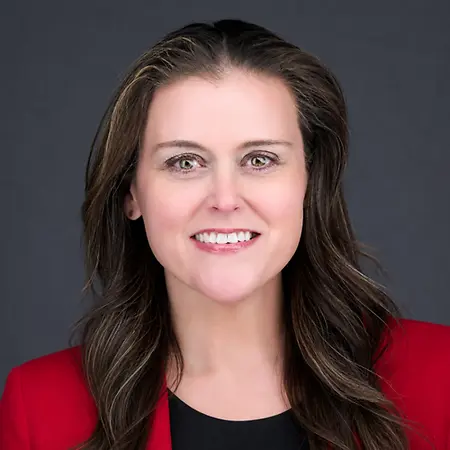
Desiree M. Baccus, PMP
Business Administration Communications Consultant, Radiant Waves Consulting
Castle Rock, CO 80109
I stopped doubting my voice when I realized confidence isn't given; it's earned through action, integrity, and results, and that shift changed my entire career.
Desiree M. Baccus, PMP · In Her Own Words
Her Story
About Desiree M.
Desiree M. Baccus, PMP, is a mission driven program strategist and resilience leader whose 20-year career reflects the power of purpose in action. Spanning federal aerospace, public sector operations, nonprofit emergency radio frequency (RF) communications, and cross-agency collaboration, she has built a reputation for turning complexity into clarity and vision into measurable impact. With a strong foundation in business administration within high-stakes technical environments, her work centers on strengthening governance, improving operational processes, and building resilient communication infrastructures that serves our local communities when it matters most.
Her journey began at National Aeronautics and Space Administration's (NASA) Dryden Flight Research Center (DFRC), where she supported the Chief Information Officer (CIO) and quickly grew into roles of increasing responsibility within the Information Technology (IT) organization. From there, she advanced to NASA Ames Research Center (ARC), managing the IT communications warehouse with large-scale asset management, before ultimately supporting the highest Senior Executive Service (SES) leadership within the Office of the Center Director. Even during the uncertainty of the COVID-19 pandemic, Desiree remained a steady force, working remotely from Colorado for three years while continuing to drive critical coordination and communication across the agency.
In 2022, she led one of the agency's outreach efforts, NASA on the Air (NOTA). This global amateur radio initiative connected all ten NASA center amateur radio clubs, two facilities, and the International Space Station to bring NASA’s stories of past, present and future missions directly to ham radio operators around the world. To demonstrate how communication can bridge distance, inspire curiosity, and unite people through a shared global purpose.
Following her time at NASA, Desiree expanded her impact into nonprofit marketing, public relations, and community engagement, focusing on amplifying emergency radio frequency (RF) communications and public access to the inspiration of science and technology. Through her work and Extra Class License, callsign N3DEZ with ARRL The National Association of Amateur Radio and Amateur Radio on the International Space Station (ARISS), she helped connect Colorado students with astronauts on the ISS during live orbital passes, creating unforgettable moments where young minds could ask real-time questions and see themselves as part of humanity’s future in space. Her commitment to service extends through various board roles with nonprofit organizations such as ARRL's Public Relations Council, the Colorado Federal Executive Board's Emergency Preparedness Council (CFEB EPC), Rocky Mountain Ham Radio (RMHAM), and the Deep Space Exploration Science (DSES), where she contributes to strengthening amateur radio communications and advancing humanity's connection for collaborative initiatives.
Across every chapter of her career, Desiree has remained focused on one core mission... connecting people, systems, and resources through purpose for the greater good. Whether improving processes, supporting executive leadership, managing assets, or building bridges between space and humanity on Earth, she transforms strategy into action and collaboration into lasting impact to ensure that innovation not only advances, but also reaches and empowers every community it is meant to serve.
Her Interview
Ten minutes with Desiree M.
01What do you attribute your success to?
I attribute my success to a strong sense of purpose and a commitment to serving something larger than myself. Throughout my career, from my early days at NASA to my work for amplification of radio frequency communications and ensuring emergency community resilience, I’ve been driven by the belief that effective communication fosters effective collaboration. Which can truly make a positive impact for our project management efforts, for our local communities, and in our everyday lives. That mindset has kept me grounded, focused, and willing to step into complex environments where I can bring clarity, structure, and forward momentum.
I’ve learned to embrace change and grown in my ability to embrace and harness adaptability. I have been most successful because I have always been willing to grow beyond traditional boundaries. Whether it was moving from executive support into operational leadership, supporting Senior Executive Service leaders, or expanding into public nonprofit outreach through organizations like ARRL and ARISS, I’ve consistently leaned into opportunities that challenged me to think differently and lead with both strategy and heart. I don’t see roles as boxes... I see them as opportunity platforms to create impact. I do the job that is needed and grow to streamline, and improve the processes for the greater good of the agency.
Equally important has been my focus on building stakeholder relationships built on reliability and trust. The work I’ve done, especially across government and private sector agencies, academia, nonprofits, and local communities all hinges on bringing people and resources together around a shared mission. I’ve learned that when you invest in people, listen closely, and follow through with integrity, you build the kind of partnerships that construct safe collaborative environments that have the best potential of achieving meaningful outcomes.
Ultimately, my success comes from staying adaptable, mission-focused, and committed to turning ideas into action while never losing sight of the people and communities those efforts we are meant to serve.
02What’s the best career advice you’ve ever received?
One of the most impactful pieces of career advice I’ve received came at a pivotal moment when I was pushing myself beyond my comfort zone to earn my amateur radio General class license. Coming from a business administration background, I initially questioned whether I truly belonged in the highly technical space. Before I successfully passed the exam, a mentor offered a perspective that has stayed with me ever since.
I was nervous and afraid of going into the test. I was standing in the hall getting ready to enter the exam room and this rare gem of a gentleman put his hand on my shoulder and said in a low calm steady voice of reason, “Do you know what they call a doctor who graduates last in their class? Doctor! Don't stress on being the top scoring 1% in the room, just go in there, own it, do your best, and move forward. If you want a higher score take the test again later as many times as you want until you are happy with your achievement. Take the time to have fun.”
That insight did not just get me through that particular test, it totally reframed how I approached growth and achievement. It shifted my focus away from having to be the top performer, demanding perfection which put me into a paralysis of self made pressure and doubt and move instead toward focusing on the progress, reinforcing that capability has been built through persistence, experience, and a willingness to keep advancing. When I later pursued the most prestigious Extra Class license, I approached it with confidence and clarity, no longer weighed down by self-doubt but instead motivated strictly by momentum. This one piece of advice fundamentally shaped how I navigate challenges and reframe them as opportunities in my mind. It taught me to trust the process, embrace continuous learning, and take decisive action based on my level of understanding in unfamiliar territory. It’s a reminder I carry with me... progress, not perfection, is what drives meaningful success.
03What advice would you give to young women entering your industry?
The advice I would give to young women entering this field is to not wait until you feel “fully ready” before you step forward. In aerospace, federal service, emergency communications, and mission-driven environments like NASA or nonprofit organizations such as ARRL, there will always be something new to learn. Confidence doesn’t come before action... it comes because of it.
I would encourage them to trust that their perspective has value, even if they don’t think their idea has the weight that it needs to be viable. I have witnessed time and time again that a seed of an idea in a collaborative team setting has found meaningful traction when others add to the initial suggestion. The seed is just a launchpad for the final solution. Some of my most meaningful growth came from stepping into spaces where I didn’t initially see myself as “enough,” and learning that capability is built through experience, mentorship, and persistence. You don’t need to have every answer on day one... you just need the willingness to keep showing up and learning.
Most importantly, I would express how important it is not to shrink themselves. Bring your ideas, your voice, and your curiosity into the room. You belong in it, even if it takes time to fully realize it. And once you’re there, use that space not just to succeed individually, but to lift others as well... because that’s where the real meaningful impact happens.
04What are the biggest challenges or opportunities in your field right now?
The biggest opportunities in my field right now come from how quickly communication, aerospace, and community resilience are evolving together.
In mission environments like NASA, there is a strong focus on modernizing how we connect systems, share information, and engage the public in more meaningful and accessible ways. Programs like ARISS continue to show how space exploration can directly inspire and educate people in real time, turning complex missions into shared human experiences.
At the same time, organizations like ARRL are helping expand the role of STEM Education through amateur radio and emergency communications as both a resilience tool and a bridge for community connection. The opportunity today is not just about maintaining systems, but also equally importantly about making communication more inclusive, responsive, and impactful across everyday life and resilient during critical events.
At the same time, the aerospace industry is evolving explosively quick, which brings a healthy challenge to stay adaptable. Technology alone is advancing rapidly with advances in quantum computing, AI integration, ever evolving IT Security challenges, and advanced network architectures as expectations for real-time communication are increasing, and the need for clear, trusted information has never been higher. I don't consider it a barrier... but see the challenge as more of an invitation to continue learning, improving processes, and building bridges between complex systems and the people who rely on them.
05What values are most important to you in your work and personal life?
What inspires my work and defines my core values is connection, adaptability, and purpose-driven service.
My career foundation was shaped during my time at NASA, where I had the opportunity to work alongside the nations most humble, highly skilled managers, innovative engineers, detail oriented scientists, intelligent IT professionals, and alongside the most amazingly inspirational communications experts in an collaborative environment built on having fun with solving problems. Within a ecosystem that encouraged, fast paced creativity, slow and steady precision, and revolutionary innovation all within the constant churn of evolution. Being immersed in that culture taught me how critical it is to stay adaptable in the face of change and to remain open to opportunity.
Over time, I came to value the role of communication as much as technology itself. Supporting IT operations and the executive leadership team reinforced for me that behind every policy, process, or system are people who rely on clarity, structure, and trust. That is where my strengths in business administration, process improvement, and organizational coordination truly took shape. Where I found my niche in ensuring that complex environments remain functional, understandable, secure, and accessible to the people they serve.
At my core, I believe in helping each other navigate the evolution of progress with confidence, building opportunities for people to collaborate in authentic and impactful ways so we can move the ball forward together. Ultimately, I am driven by the understanding that when we strengthen communication, whether it be for mission critical systems or in our human relationships, we strengthen everything else built upon it.
Join Influential Women and start making an impact. Register now.